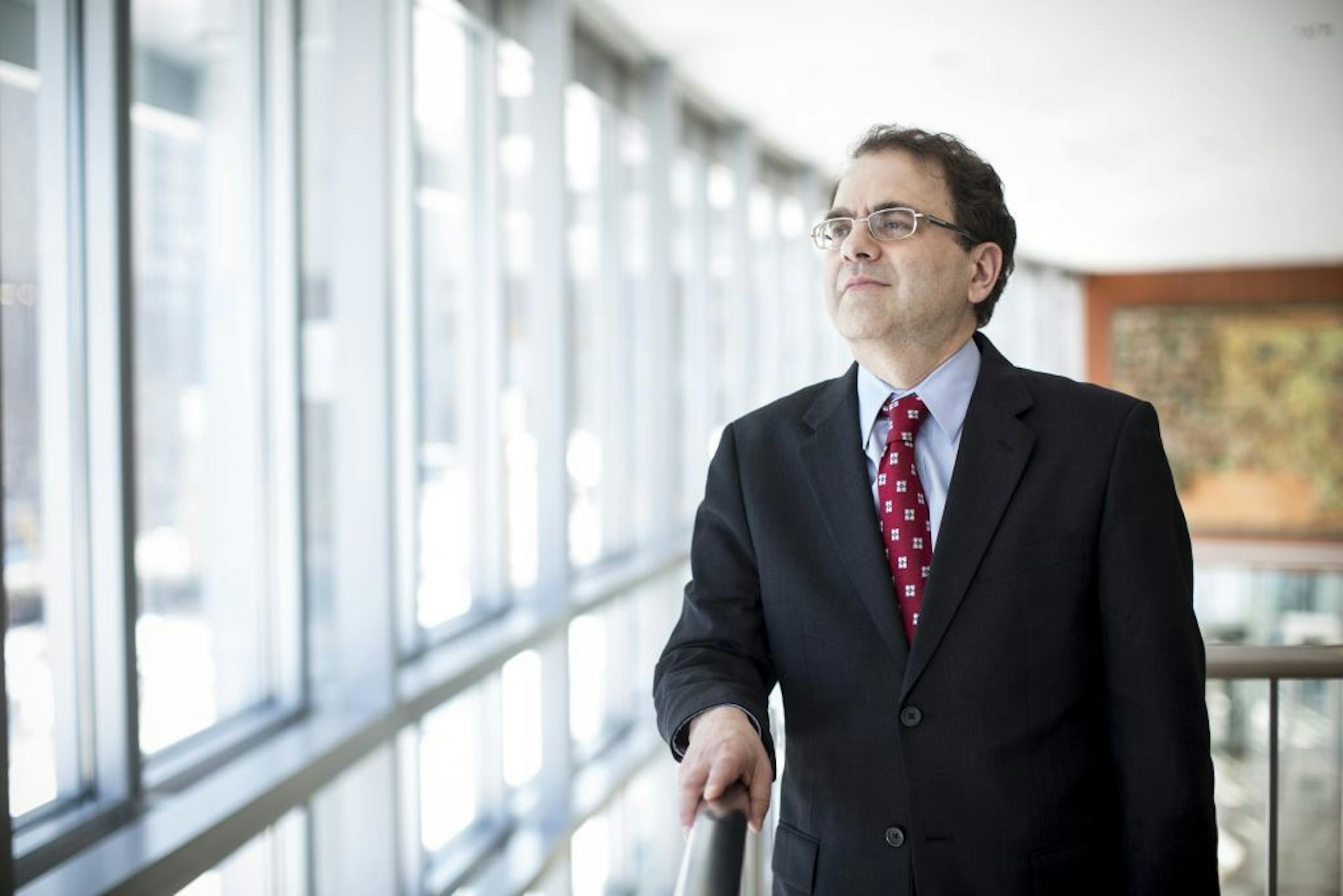
In a surprise move, the president of the Federal Reserve Bank of Minneapolis announced Friday that he will step down in 2016.
Narayana Kocherlakota, who emphasized regional outreach and monetary policy transparency and presided over a high-profile shake-up at the Minneapolis Fed's research division, told the board of directors that he will leave when his term ends in February 2016.
The former economics professor took over in 2009, "so that I could be of service to my country in an economic emergency," he said.
"I have been honored to play a role in shaping the response to that dire situation," he said in a statement. "While challenges lie ahead for the Federal Reserve System, the state of crisis has passed, and I have decided not to continue my service into a new term."
Kocherlakota, 51, has made a name for himself as one of the most dovish members of the policy-setting Federal Open Market Committee — meaning he is in favor of aggressive monetary stimulus and keeping interest rates low. Once considered an inflation hawk, he re-evaluated the data over his first two years as president and emerged in the past three years as a strong voice for continued economic stimulus.
He also has been an advocate for the Fed to articulate its aims and strategies more explicitly.
His exit won't have much obvious effect on monetary policy. He has been consistently overruled since becoming a voting member of the FOMC at the beginning of 2014. He dissented in October when the committee voted to end the bond-buying program known as quantitative easing. Yet a majority of members appear more anxious than he is to tighten monetary policy and raise interest rates.
"His dissent or his views won't be enough to prevent the Fed from continuing to raise rates if the majority sees fit to do so," said Craig Bishop, a fixed income analyst at RBC Wealth Management. "The Minneapolis Fed is not necessarily one that is looked at to move the needle."