
Minn. job postings leap by 32% in 2nd quarter

Most of the new vacancies in Minnesota are for part-time and seasonal work.

September 2, 2011 at 2:01AM
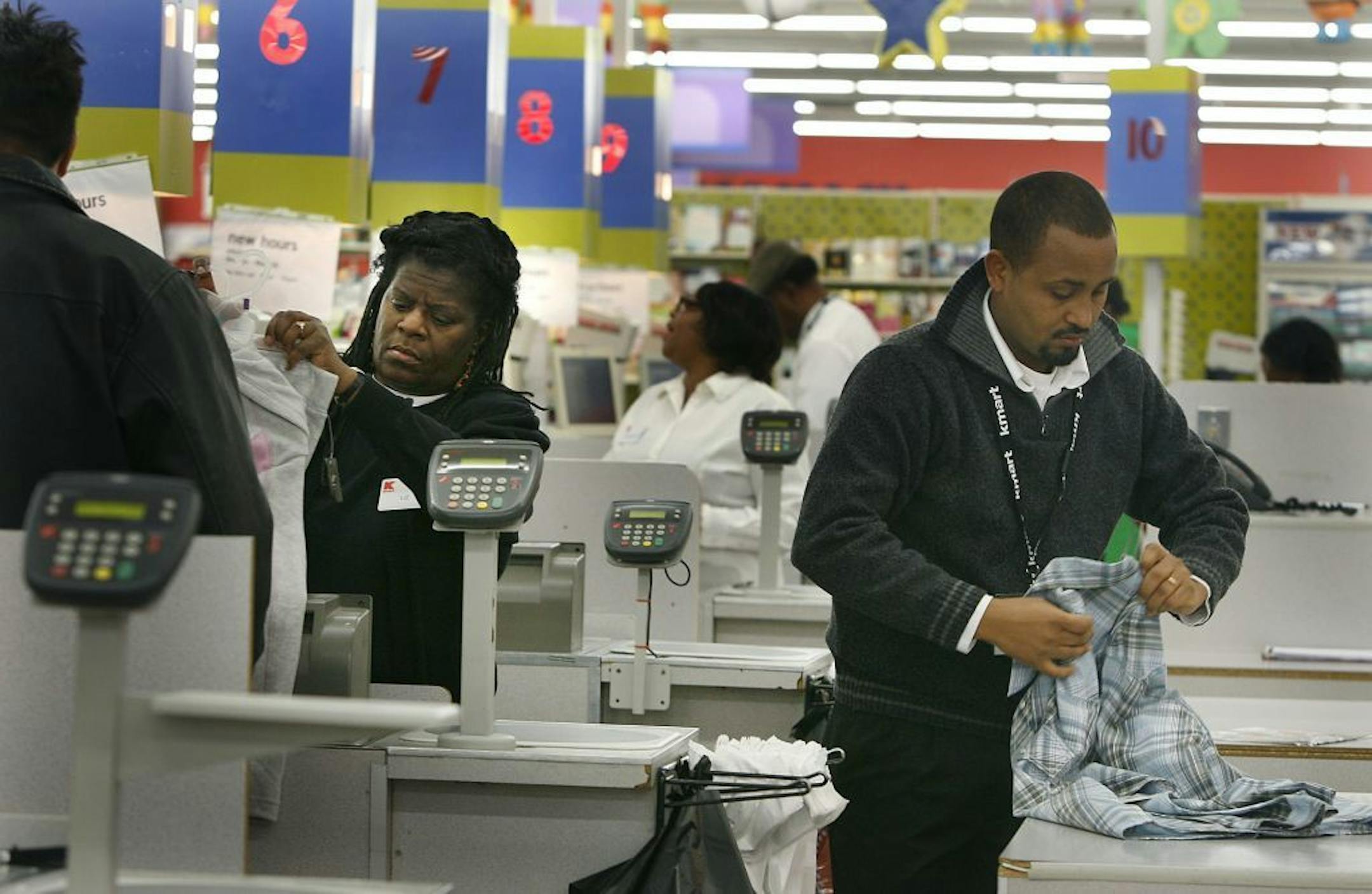
ELIZABETH FLORES eflores@startribune.com November 27, 2008 - Minneapolis, MN - Kmart employees Liz Carmon, left, and Getachew Mechegia, cq, worked the cashiers during an early morning shift at Kmart. Regional manager Dan Lawler said they were at full capacity with employees and that there were at least 50 people when the doors opened at 7 a.m., and that electronics were the most popular buys.
ELIZABETH FLORES eflores@startribune.com November 27, 2008 - Minneapolis, MN - Kmart employees Liz Carmon, left, and Getachew Mechegia, cq, worked the cashiers during an early morning shift at Kmart. Regional manager Dan Lawler said they were at full capacity with employees and that there were at least 50 people when the doors opened at 7 a.m., and that electronics were the most popular buys. (Star Tribune/The Minnesota Star Tribune)

Job vacancies in Minnesota shot up 32 percent in the second quarter, creating the highest number of job openings since the second quarter of 2007, state officials announced Thursday.

A surge in health care, social assistance and retail jobs lead the trend, followed by job growth in hotels, food-related businesses and factories. In all, there were 54,670 job openings during the quarter, up from 41,397 a year ago.

While impressive, a sobering 38 percent of the openings were for part-time jobs and 23 percent were for seasonal hires, such as vacation resorts and golf courses.

The findings are based on the latest survey of 13,000 employers by the Minnesota Department of Employment and Economic Development (DEED). The bump in job openings means there were 3.6 unemployed applicants for every vacancy. While not great, it's better than the 4.8 applicant-per-job ratio in the last survey.

More than half (54 percent) of the second quarter's 29,500 job openings were in the seven-county Twin Cities metro area.

Twin Cities total job vacancies climbed 23.8 percent on a year-over-year basis. For outstate Minnesota, the figure rose 43.2 percent.

Regardless, economists were not blown away by the report.

"I saw the data. And I think it's a little early to be running victory laps here," said Wells Fargo senior economist Scott Anderson.

"Higher job vacancies is certainly an encouraging sign that this labor market continued to grow through the second quarter," he said. "But we know we have seen a big financial shock in the third quarter and [we] know that consumer confidence has been shaken. So there certainly could be a deterioration in job openings and growth in the second half of the year."

The DEED report comes at an unusually fragile time in Minnesota's economy. The state lost 19,800 jobs in July, raising the unemployment rate to 7.2 percent. Most of those July job losses were the result of the thousands of jobs temporarily lost during July's three-week state shutdown. Still, more than 200,000 unemployed Minnesotans continue to scrounge for work.

DEED Commissioner Mark Phillips took solace in the higher number of jobs openings, saying the "findings point to an improving economy that is returning to levels not seen since before the recession."

Waiting on housing sector

Of the employers surveyed, 10 percent said they expect to increase hiring in the next six months.

Augsburg College Economics Chairwoman Jeanne Boeh said the state probably won't see a big spike in the growth of full-time jobs until the housing sector recovers. She noted that new-home construction remains anemic and that commercial construction also remains weak.

Minnesota's Labor Market Office will release the state's August unemployment data and latest job vacancy information on Sept. 15.

Dee DePass • 612-673-7725

about the writer

about the writer

Dee DePass

Reporter

Dee DePass is an award-winning business reporter covering Minnesota small businesses for the Minnesota Star Tribune. She previously covered commercial real estate, manufacturing, the economy, workplace issues and banking.

See Moreicon

More from Business

See More
card image
iStock

Prioritize making financial gifts to your children and grandchildren now to both help the future generations and avoid potential taxes.

card image
card image