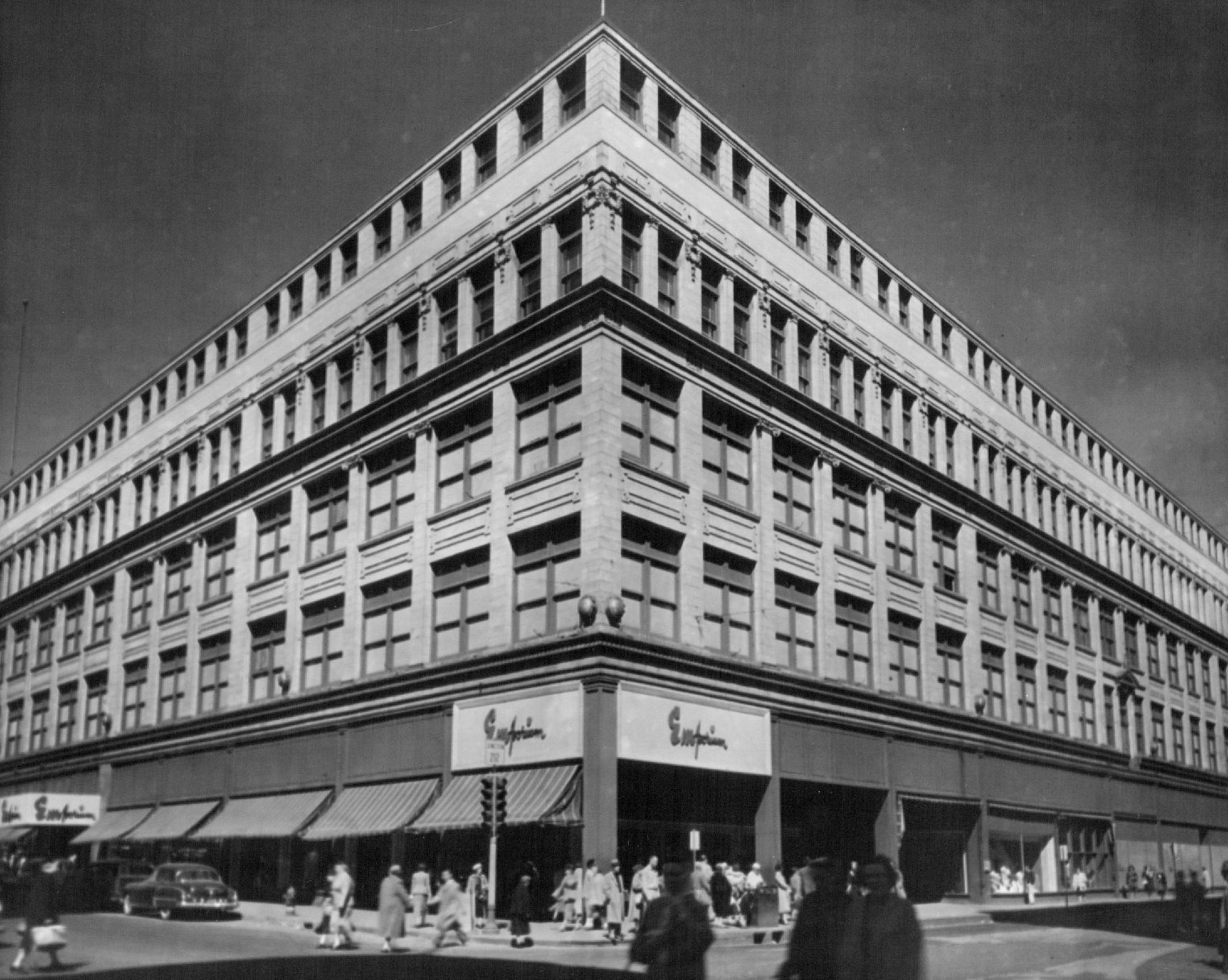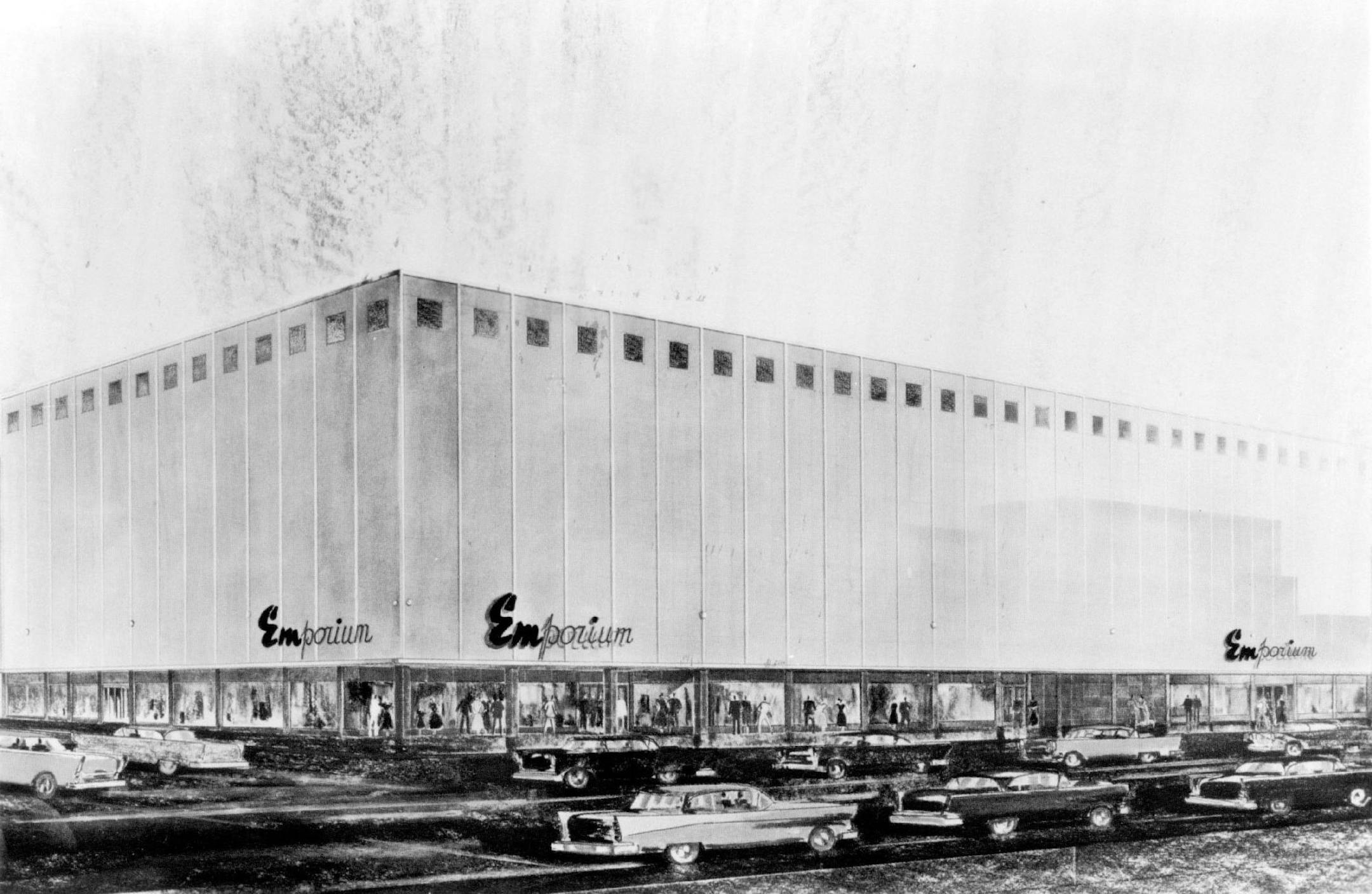
The period between the late 1930s and early 1960s might well be called the Face-Lift Era in American architecture.
During this time, thousands of old buildings, most commonly retail stores, were sheathed in new facades to make them appear more up-to-date.
Sometimes this full frontal surgery produced elegant results, in other cases, the finished products were atrocious. Most of these facade jobs are now gone, along with the buildings they once purported to enhance, but their history offers a fascinating glimpse into an architectural age obsessed with modernism.
In Minnesota, the most prominent face-lifts occurred in downtown Minneapolis and St. Paul, where department stores in particular sought to convey a fresh new image. So did at least one major downtown Minneapolis hotel, the Radisson, which traded in its fine old Beaux Arts facade for a simplified modern look in 1961. (A new Radisson was built downtown in 1987.)
Before the Face-Lift Era, exterior remodeling of commercial buildings typically was limited to ground-floor shop fronts, except in special cases. In downtown St. Paul, for example, scores of new building fronts were installed along the west side of Robert Street in 1913 as part of a massive street-widening project.
But it wasn’t until the 1930s, with the arrival of the sleek Moderne style, that business owners began to invest in complete face-lifts as a way to create an up-to-the-minute look.
In downtown Minneapolis, one of the first big face jobs occurred around 1940, when the Davis and Ruben Furniture Co. put a slick Moderne-style front on its old four-story building at 87 S. 7th St., where the IDS Center now stands.
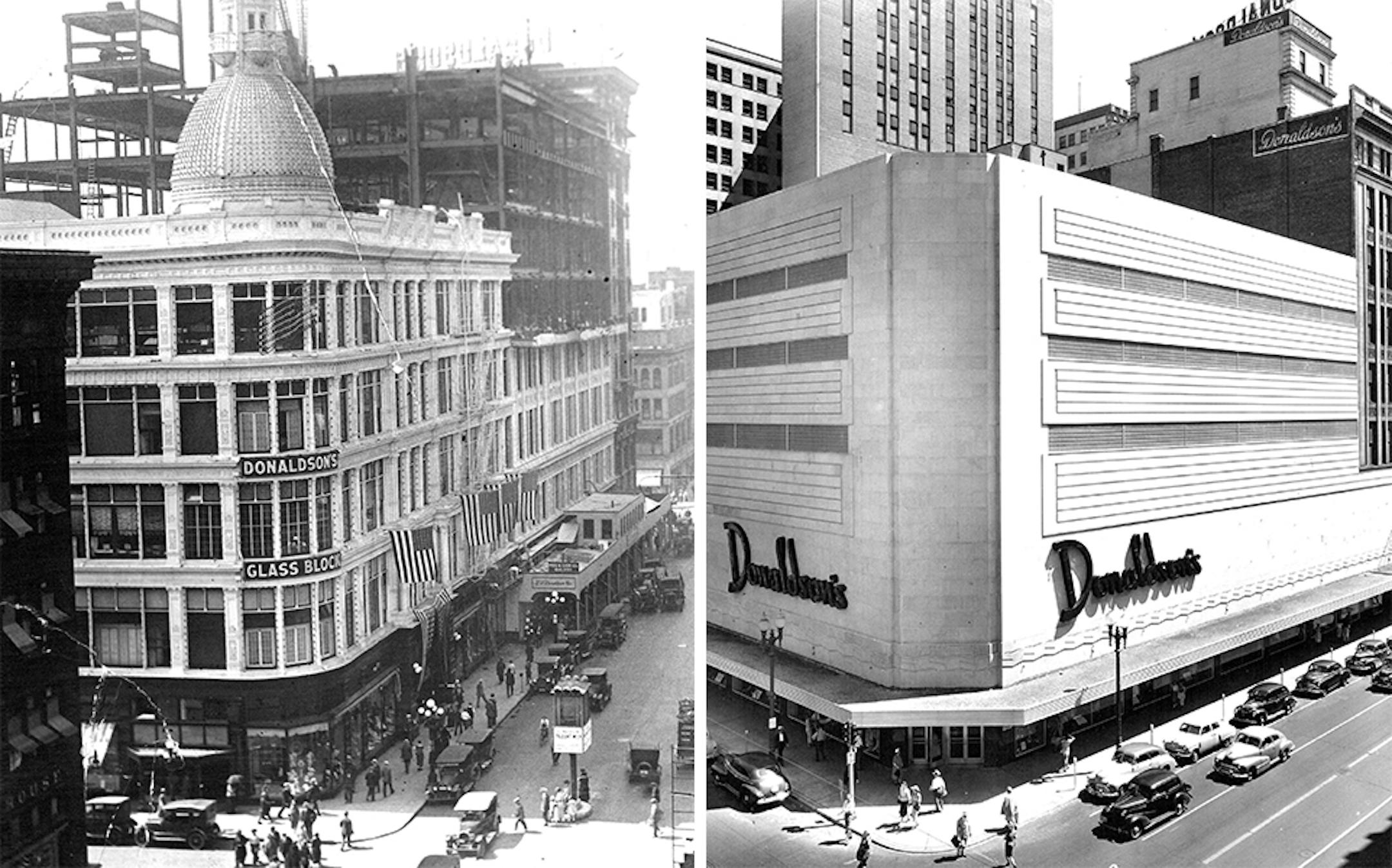
Eight years later, a much larger face-lift transformed the iconic Donaldsons department store on Nicollet Avenue between 6th and 7th streets.