

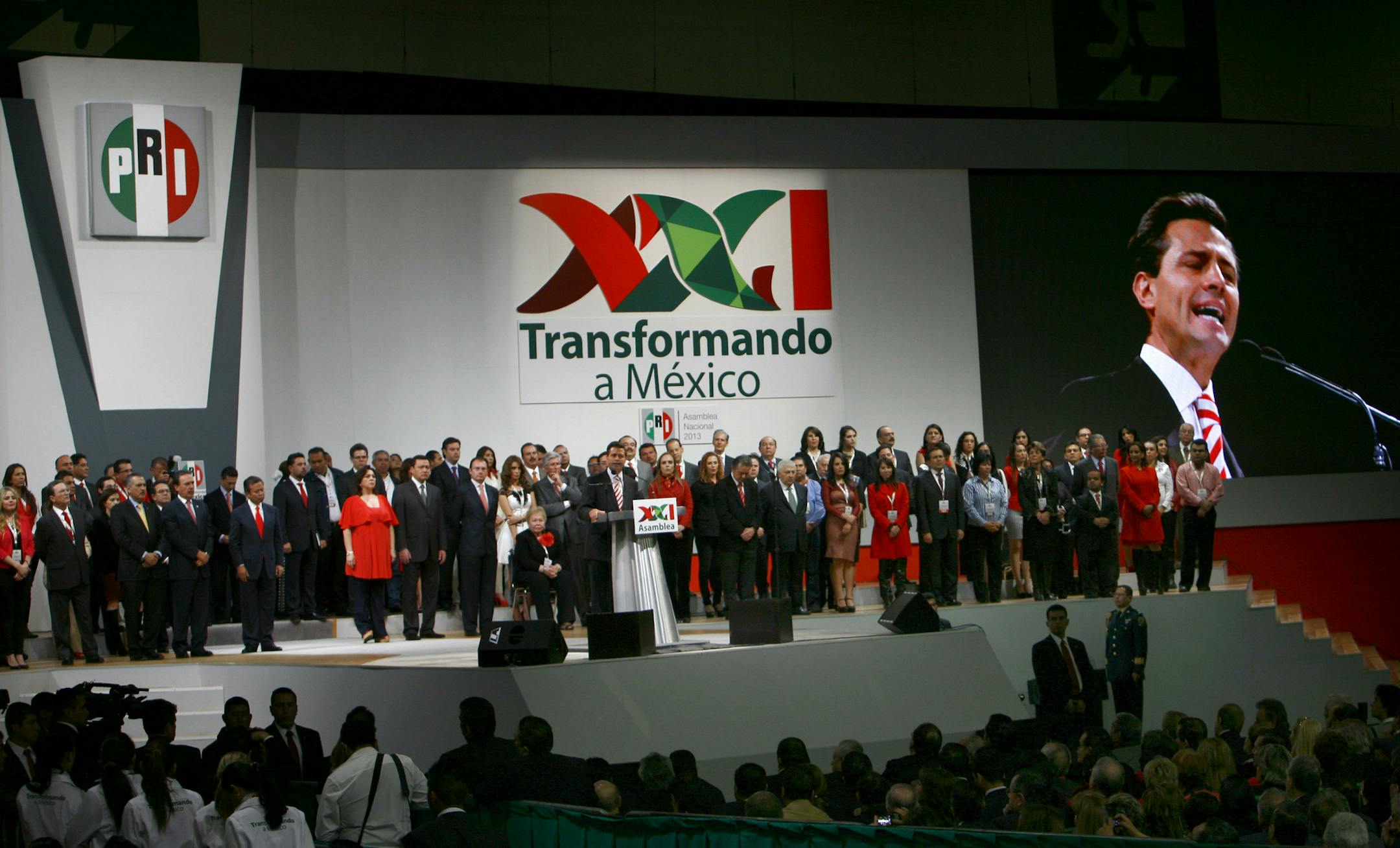
When Enrique Peña Nieto won Mexico's presidential election last year, the Institutional Revolutionary Party (PRI), which had run the country for 70 years, was restored to power after a 12-year gap. Many of those who liked the telegenic 46-year-old's reformist rhetoric were worried that once the PRI was back in power, it would revert to its old, authoritarian ways.
So Peña deserves praise for his first four months in office. Having signed a pact with the two main opposition parties to overcome the gridlock that had prevented reforms, the new president has targeted the monopolies that hold Mexico back.
An education reform is aimed at seizing control of schools from the teachers union, whose longtime leader, Elba Esther Gordillo, was promptly arrested on charges of embezzlement, which she denies. Then came a potentially far-reaching measure to force more competition on the telecommunications firms that have made Carlos Slim the world's richest man, and on Televisa, a mighty television network that his critics claim did Peña favors during the campaign.
Last week, the president signed a new law restricting injunctions, which have been abused by the rich and powerful to block regulatory or legislative measures.
Peña is not the only one who deserves credit. So does the opposition: It has recognized that Mexicans want change, and is behaving better than the PRI did when out of office.
A new optimism surrounds Mexico's prospects. The peso has risen by 16 percent against the dollar since last June. If Peña is to keep his promise to raise his country's rate of economic growth to 5 percent or 6 percent a year, however, the president will need to make some harder decisions still.
First, passing a law to make telecommunications more competitive is only a first step. It must be implemented effectively.
Second, a great deal rests on a proposed energy reform. Mexico has the potential to be an energy superpower, but oil production has slumped since 2004, and the country imports oil and natural gas from the United States. The blame for this falls on Pemex, the state monopoly.


