A mermaid, a snowman and a raspberry: What quirky landmarks bring to the suburbs

The Mounds View mermaid recently rose again, rejoining other Twin Cities landmarks that give suburbs a sense of place, from Eden Prairie to Hopkins to North St. Paul.

The Minnesota Star Tribune
October 15, 2025 at 3:58PM
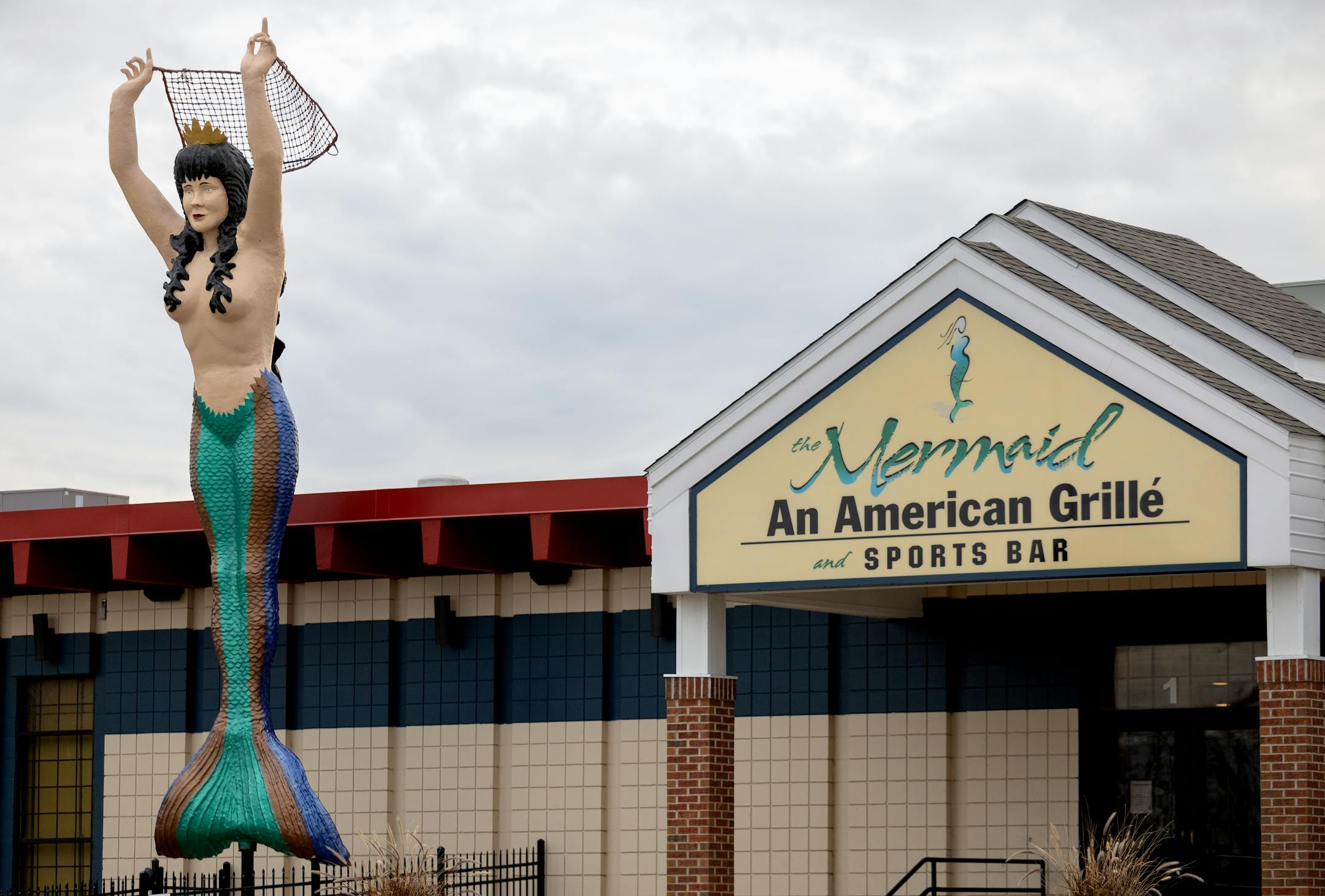
The restored mermaid statue is back at the Mermaid Entertainment and Event Center in Mounds View. (Carlos Gonzalez/The Minnesota Star Tribune)

The 38-foot fiberglass mermaid that had beckoned motorists speeding down Mounds View Boulevard for decades is back.

She’d been shot at, battered by weather and possibly started sinking into the building’s roof before she came down in 2018. And Dan Mueller, a longtime resident who helped purchase the statue for restoration, said Mounds View just wasn’t the same without her.

“You always kind of looked over, at least I did,” Mueller said. “There was always something missing.”

As Twin Cities suburbs bleed one into the next, he said, the mermaid atop the Mermaid Entertainment and Event Center was how people found Mounds View.

Such landmarks, some quirkier than others, foster a sense of place amid big-box stores and chain restaurants often found in the suburbs, according to people who track them. Many of them popped up as highways and development sprawled in the early- and mid-1900s — a dinosaur statue, a polar bear and numerous others — and have endured into the era of social media as backdrop of selfies.

“I hate that word, ‘kitschy,’ because they’re cultural landmarks, really, important to both locals and tourists,” said Debra Jane Seltzer, whose Roadside Architecture website chronicles thousands of statues, signs and buildings around the U.S.

Statues like the Mounds View mermaid, which dates to the 1960s and is now on the ground near the Mermaid, not on the roof, have their origins in the early days of car travel, Seltzer said: Suddenly, people were speeding by and businesses wanted to catch their eyes.

But a standardization of roadside aesthetics, from Lady Bird Johnson’s Highway Beautification Act of the 1960s to local ordinances governing sign design, make giant statues and unusual signs more rare today, Seltzer said.
“With sign code, you can’t even, but barely, build anything fun,” she said.

That hasn’t stopped cities from trying to build local landmarks in more modern ways, or at least capitalize on the interest of the unusual monuments they have.

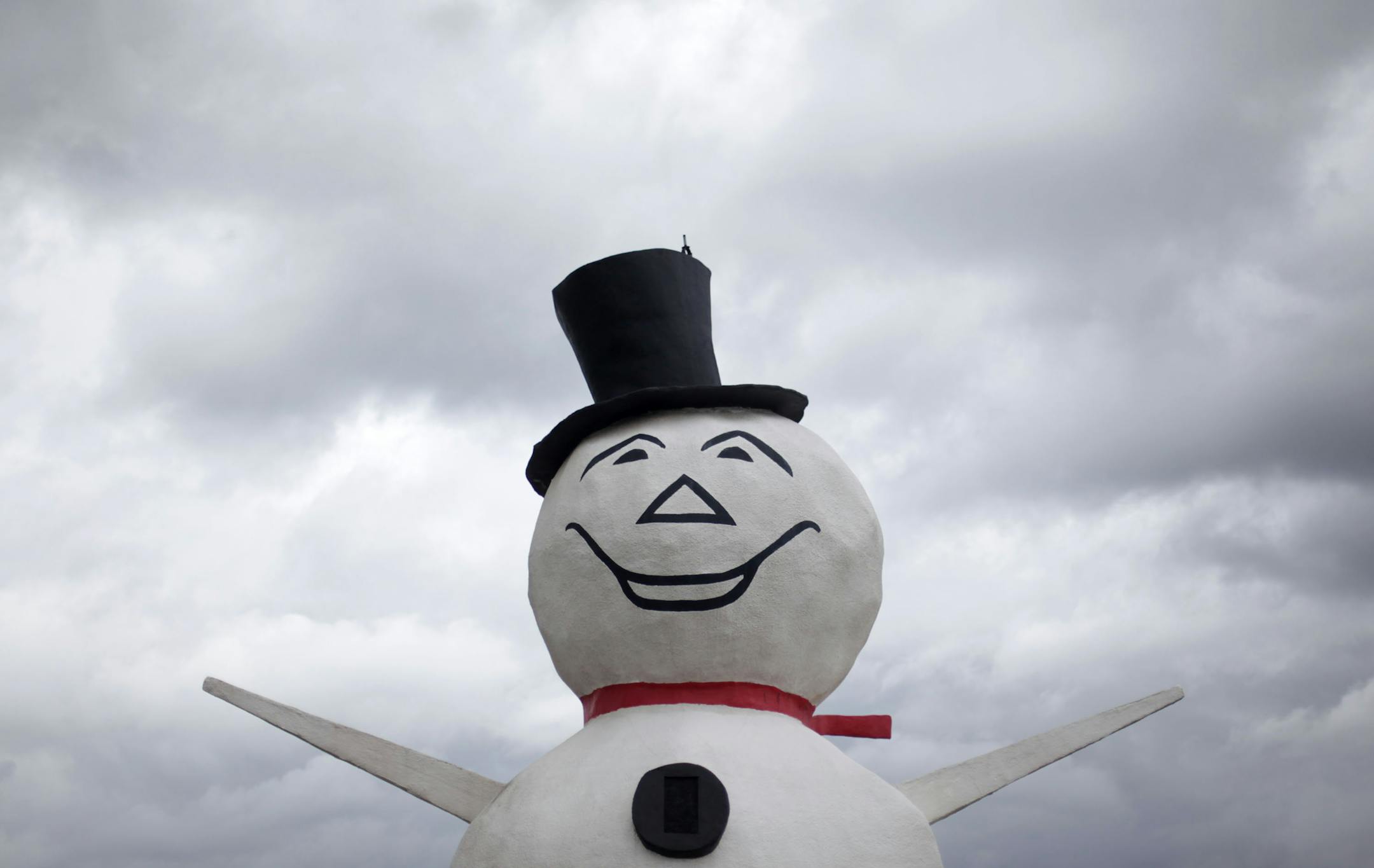
The giant snowman of North St. Paul can be seen from Hwy. 36. (Monica Herndon)

Snowman in North St. Paul

A four-story stucco snowman greets North St. Paul visitors with a smile and a wave just off Hwy. 36.

“We need more of that nowadays,” former North St. Paul Mayor Terry Furlong said. “We need more landmarks that’ve got a big smile and a welcoming attitude.”

The snowman, finished in 1974, was the brainchild of local barber Lloyd Koesling, who had visited Disneyland and thought North St. Paul needed a symbol. The city’s Jaycees had made a huge snowman for a winter festival every year, so why not a permanent version?

Decades later, locals and tourists alike love to stop by to take selfies, Furlong said. The snowman was even featured in a Super Bowl broadcast shot when it was held in Minnesota.

The snowman has become a bigger part of North St. Paul’s self-image over the years, on the city’s logo and on street signs, and in smaller snowmen statues, decorated by artists, downtown.

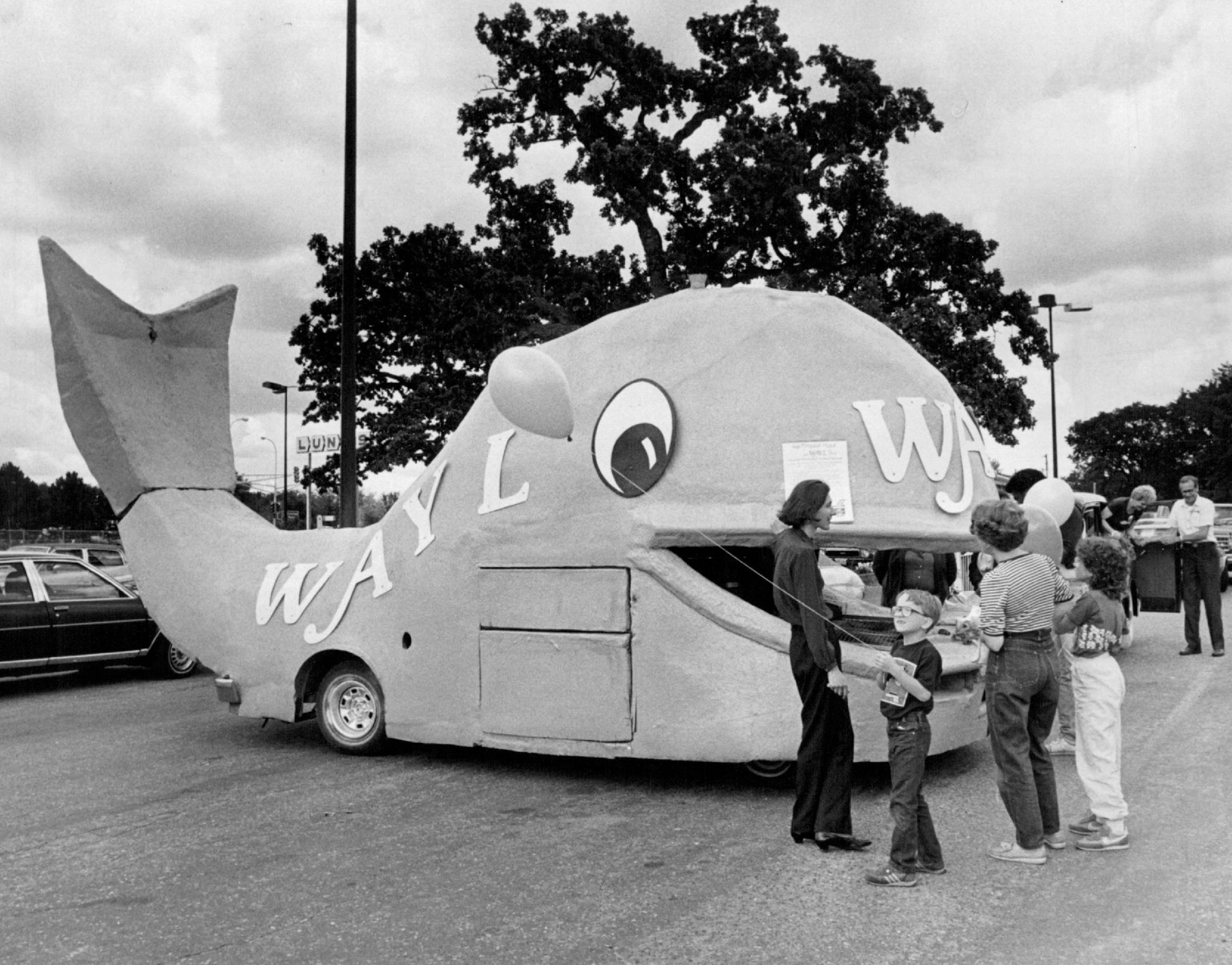
WAYL Radio's Mobile Mammal stops at Lunds' Penn Avenue store on Aug. 7, 1985, in Richfield. (Donald Black)

Whale car in South St. Paul

Less obvious but no less loved is the whale car parked outside South City Motors in South St. Paul’s warmer months.

The whale was built out of fiberglass on the chassis of a 1980 El Camino and originally served as a mascot for the WAYL radio station, said Mike Madland, who found the whale car in a Newport junkyard about two decades ago and restored it.

Madland, who owned South City Motors before passing it on to his grandson, said the whale car might have been the best investment he’s ever made.

“People ask, ‘Where is your place located?’” he said. When he asks if they know where the whale car is — and they usually do — he doesn’t have to give them directions.

Madland also drives the whale to parades, like Kaposia Days, and to other local events — often by request and to the delight of adults and kids alike.

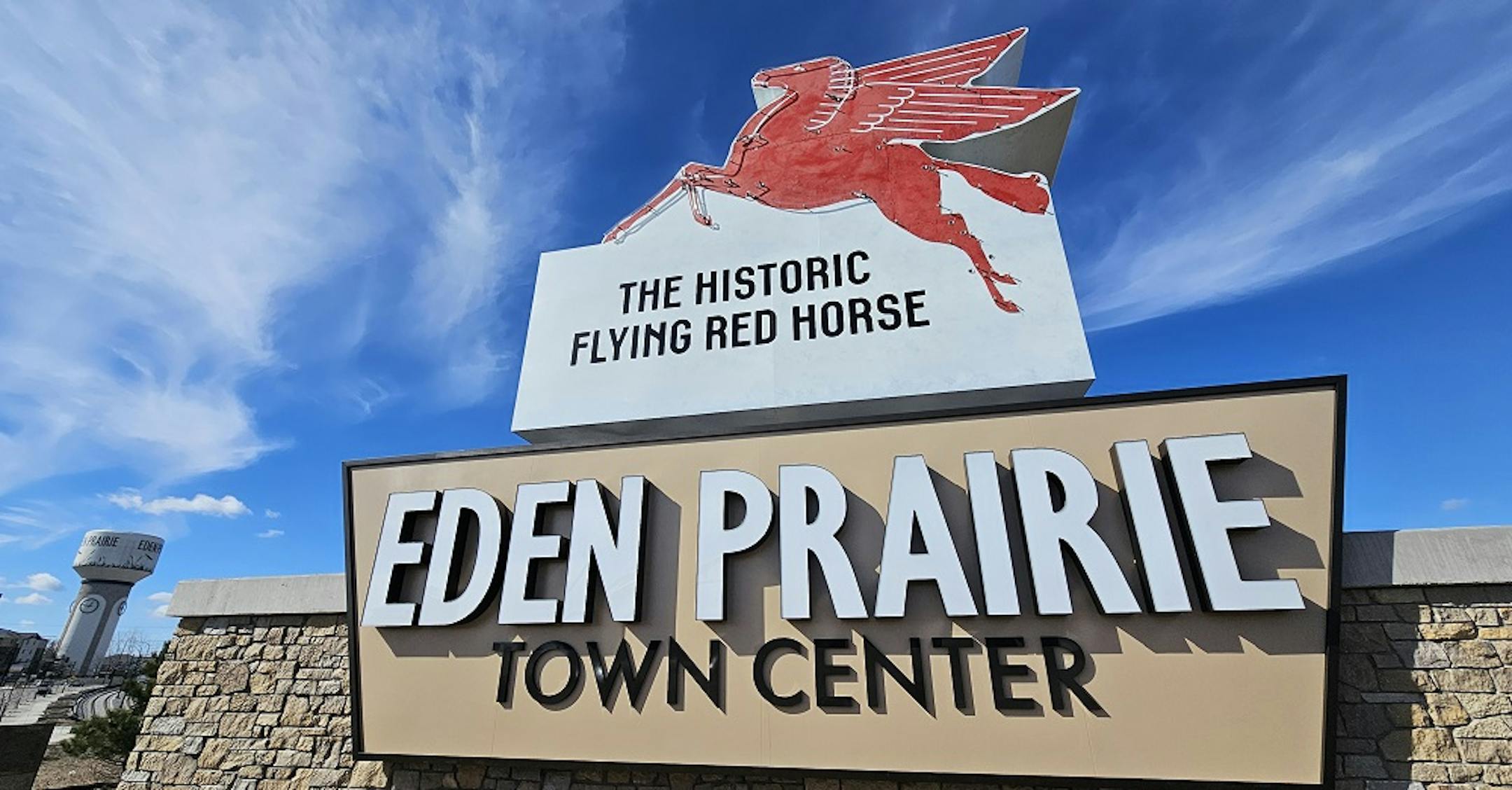
The flying red horse sign from the old Mobil gas station now welcomes visitors to Eden Prairie's Town Center. (City of Eden Prairie)

Neon flying horse Eden Prairie

Back when Eden Prairie was largely farm fields, the red neon Pegasus sign outside the Mobil gas station at Flying Cloud Drive and W. 78th Street told travelers by road and sky where they were.

First installed in the 1930s, the sign beckoned motorists to the gas station and its Wye Cafe, named for its location on the Y-shaped intersection, said Kathie Case, president of the Eden Prairie Historical Society. It also told pilots landing at Flying Cloud Airport they were almost there.

The sign went into storage after the gas station became a Holiday. When the family that owned it offered it to the Historical Society, the city helped fundraise to restore it.

The restored horse sign was reinstalled as part of a sign for Eden Prairie’s Town Center, the development on Metro Transit’s Green Line extension. It’s a new location, but a throwback to its original purpose of welcoming visitors.

“That will be one of the first things they see when they enter Eden Prairie,” Case said, when trains start running in 2027.

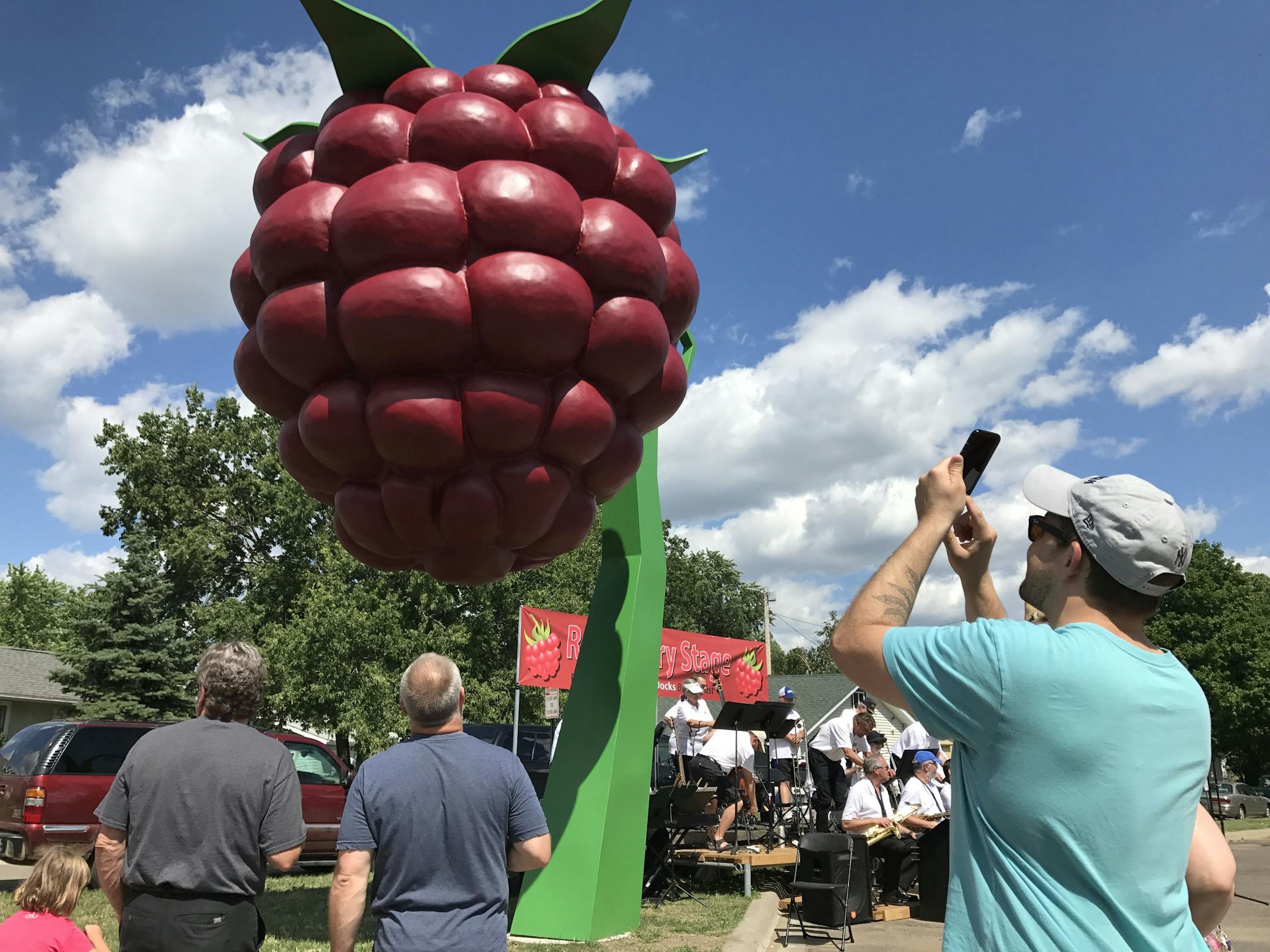
Spectators look up at Hopkins' new raspberry monument, unveiled just off of Mainstreet Hopkins on July 8, 2017. (Miguel Otarola)

Raspberry in Hopkins

Eden Prairie isn’t the only city commemorating its history — and recognizing people’s love of landmarks.

In 2017, Hopkins unveiled a new, 22-foot “World’s Largest Raspberry” sculpture off Mainstreet near the terminus of the Lake Minnetonka Regional Trail, a symbol of the city once called the raspberry capital of the world.

Peter L’Allier, then-owner of the Hopkins Health & Wellness Center, came up with the idea to build the raspberry on his business’ land. The western suburb hosts an annual Raspberry Festival and features a raspberry on its logo.

He told the City Council in 2016 he wanted the sculpture to be a destination. In the age of social media, he also wanted to make sure it was ripe for selfies, with proper angles and lighting for photos.

Mayor Patrick Hanlon said the statue complements the city’s other public art, including murals, that make walking the city enjoyable.

“It’s a nice stop and nice attraction for people here in the city,” he said.

Correction: This story has been updated to correct the location of a Lunds’ store in Richfield.
about the writer

about the writer

Greta Kaul

Reporter

Greta Kaul is the Star Tribune’s built environment reporter.

See Moreicon

More from Twin Cities Suburbs

See More
card image
Minnesota State Patrol

The Minnesota State Patrol said the driver of another vehicle was injured in the crash in Bloomington on Saturday night.

FILE - This March 19, 2013 file photo shows a pedestrian walking past the Lululemon Athletica store at Union Square in New York. Lululemon yanked its popular black yoga pants from store shelves after it found that the sheer material used was revealing too much of its loyal customers. (AP Photo/Mary Altaffer, File)