

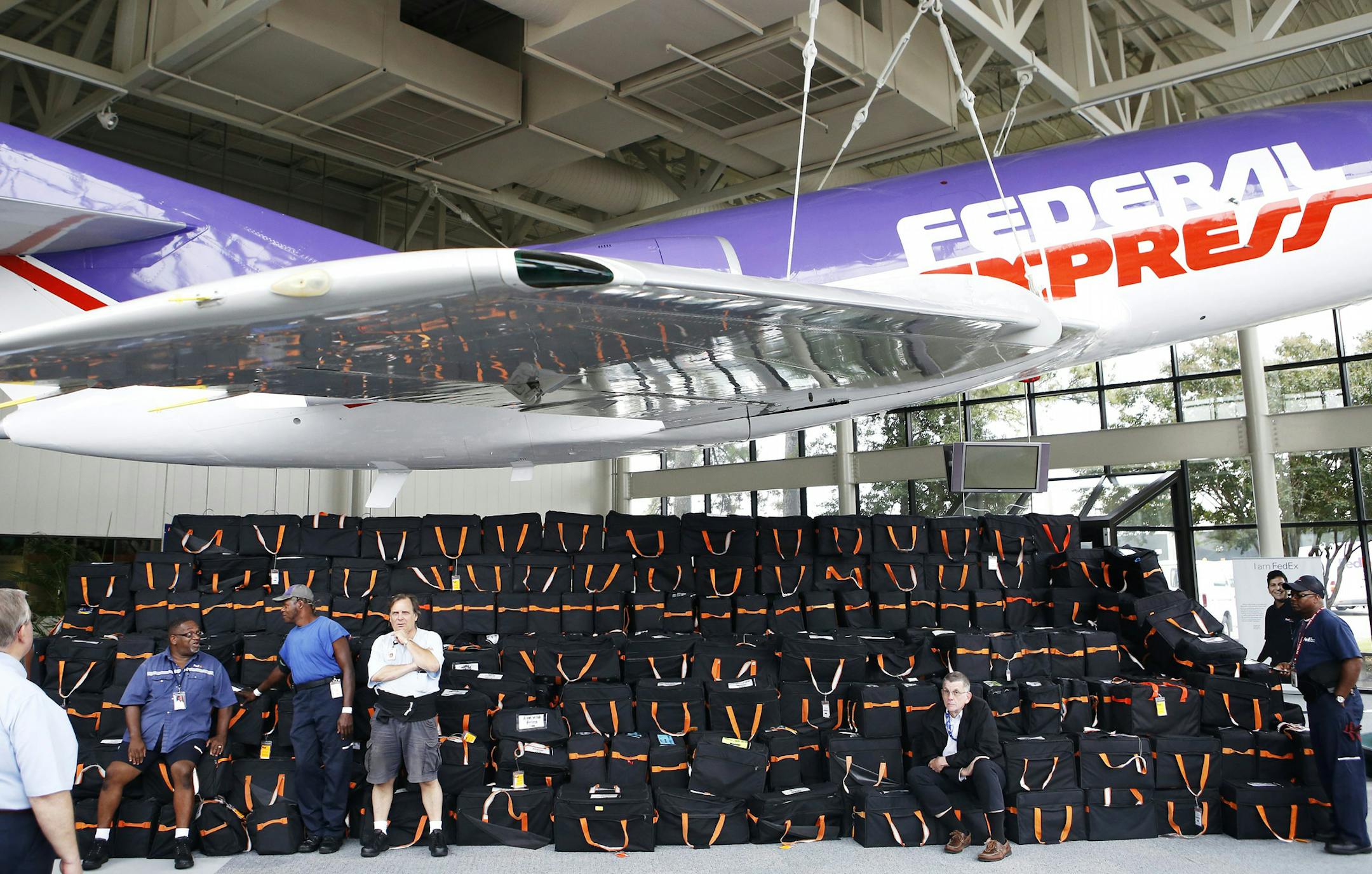
After most citizens of Memphis have gone to bed and before they switch on their coffeemakers, about 150 jets land at Memphis International Airport and take off again. They have no passengers — just stuff.
A Boeing 777 jet may feel cramped to those sardined in coach class, but with all the seats and compartments stripped out it is immense — able to carry 225,000 pounds of cargo nonstop from Tennessee to Shanghai.
Such passengerless flights make Memphis the world's second-busiest airport by cargo volume (after Hong Kong). Around 10,000 people work the FedEx overnight shift, sorting around 1.5 million packages.
Memphis calls itself America's "aerotropolis," referring to the title of a 2011 book by John Kasarda and Greg Lindsay. The book argues that cities of the future, and their economies, will increasingly be built around airports.
Memphis has a downtown, of course, but just its air-cargo operations produced a total economic output in its past financial year of roughly $22.1 billion and supported over 132,000 jobs. Louisville, Ky., — home to the hub of FedEx's chief rival, UPS — has a similar story. In 2011, its two airports were responsible, directly or indirectly, for roughly 9 percent of all jobs in the Louisville area. Cotton built Memphis, and rail and river cargo made Louisville, but those trades dwindled and both cities languished until FedEx and UPS found them.
The carriers have in turn attracted companies that profit from being near a direct-mail hub. Some are retailers: Zappos, an online shoes and clothes store, has a huge distribution center just outside Louisville. CaféPress, another online seller which lets customers design their own T-shirts, mugs and other products, moved its headquarters from San Mateo, Calif., to Louisville, netting it millions from cost savings and later cut off times for orders.
Louisville's airport authority claims that since 1993 more than 150 firms have moved to Louisville to be near the UPS hub.
Others are health care outfits, such as the National Eye Bank Centre, based near Memphis, which stores corneas for ocular surgery. Last year Oxford Immunotec, a medical-diagnostics firm that tests patients for tuberculosis, moved its laboratory to Memphis from Boston. Now it can guarantee that blood samples from almost anywhere in America can get from patient to lab within 32 hours.


