

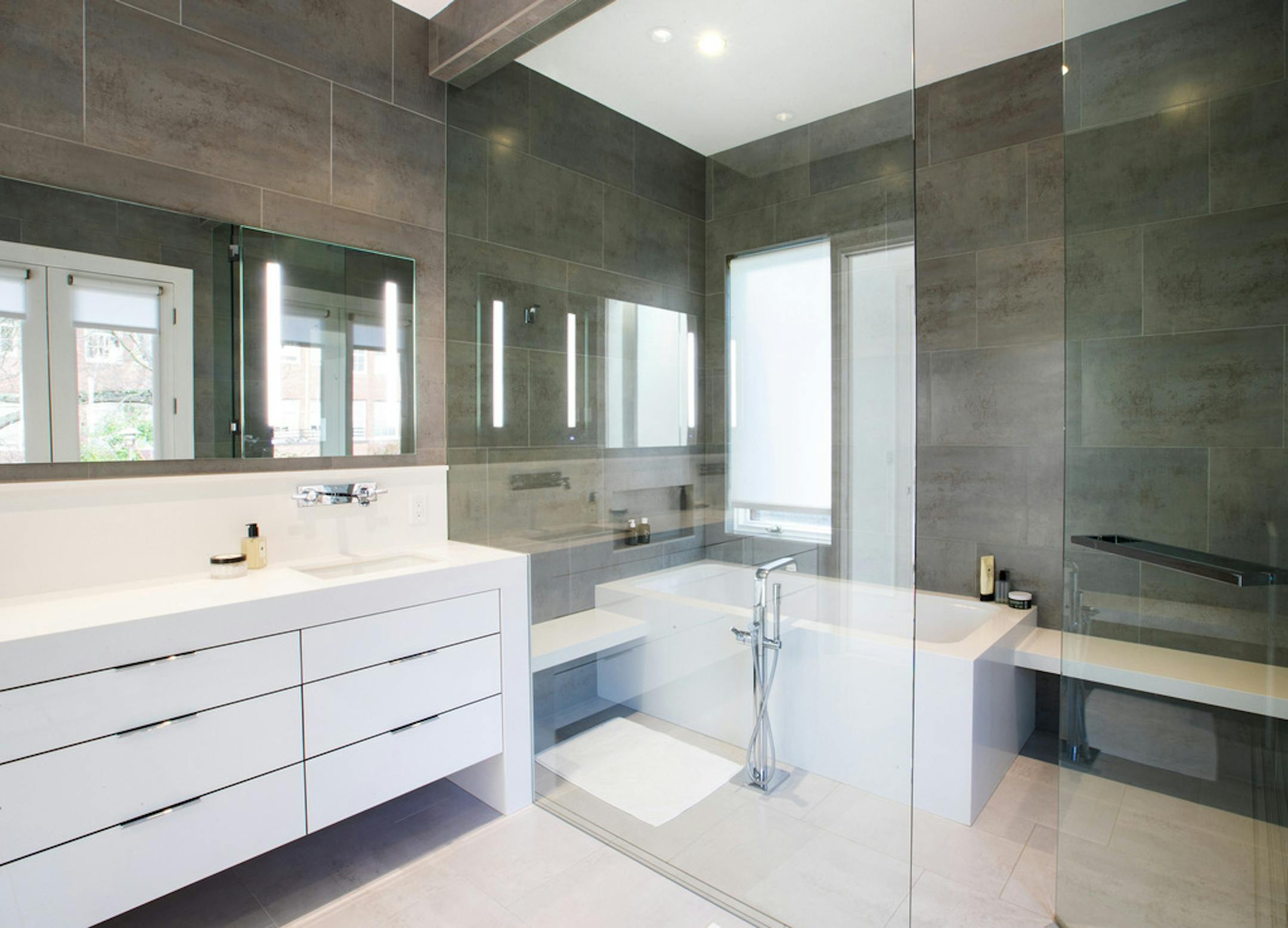
When architects Keren and Thomas Richter were renovating their Brooklyn loft, they wanted both a shower and a soaking tub in their primary bathroom. But square footage was at a premium in the apartment, on the top floor of a 19th-century school building.
So the couple did what many homeowners and hoteliers have begun doing: They installed a “wet room.” The snug space, separated from the sink and toilet by sleek glass doors, incorporates both a cast-iron bathtub and an open shower. “We did it partially due to space constraints,” Keren says. “But it’s now also the place where I have a relaxing soak or throw a kid into the shower.”
The term wet room generally refers to a room-within-a-room in a primary (or large) bathroom. Think a water-resistant walk-in closet of sorts with stone or tile floors and walls, a drain in the floor, an open shower and a freestanding tub. Wet rooms are encased by glass doors and walls to hold in warmth and steam.
“It’s a concept that overlaps a bit with a mudroom in that it’s a space you get clean, which you can just hose down,” says Catherine Fowlkes, a residential architect in D.C. “It’s the same practical principle.”
These wet room combos started to bubble up in hotels about a decade ago. While smaller, cheaper properties were rushing toward showers-only loos, luxury hotels splashed out on trophy bathrooms with deluxe showers and shapely, free-standing tubs in one space. Those tubs were crafted of materials such as hammered copper or volcanic stone, and they sometimes came with great views. “People had these immersive hotel experiences, and then they wanted to bring them home,” Keren Richter says.
The trend is also powered by tubs far more chic than the bulky Jacuzzis and tile-surrounded ovals popular at the turn of the 21st century. Brands such as Victoria + Albert, Water Monopoly and Kohler are turning out sleek, artful soaking varieties ranging from retro ceramic vessels with ball feet to simple wooden vats that immerse users in water up to their necks, a la ancient Japan. Newish “hammock” tubs — cast in carbon fiber or resin — mimic the suspended look of between-the-palm-trees fabric or rope models and use less water than standard tubs.
“There’s an elegance to many contemporary tubs. They almost become architectural sculptures,” says Michael Sauri, the president of Arlington, Virginia, design/build firm TriVistaUSA. Homeowners want the vessels in their wet rooms as much for their good looks as their functionality. Tubs aren’t replacing showers, but they’re seen as their natural companions.
Residential wet rooms can be just one feature in an expensive, spa-like primary bathroom decked out with a sauna, toilet, vanity and a mini cold-plunge pool. But designers say that they just as often install them to save square footage in smaller homes. “If you have a 6-by-6 or 6-by-8 area, you can do one,” says Gray Davis, a principal with New York architecture firm Meyer Davis. “Wet rooms can be cost- and space-effective.”


