

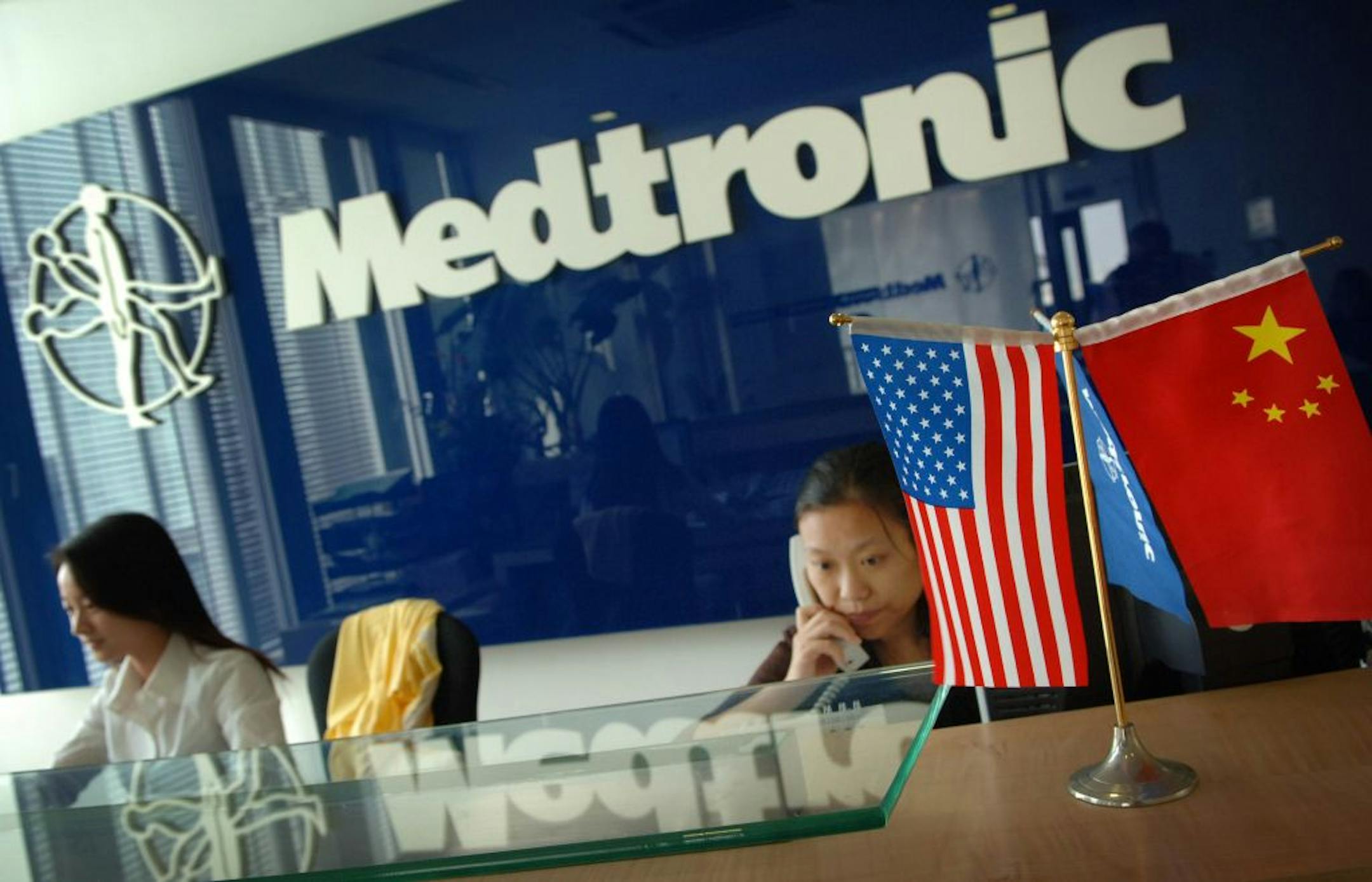
Despite rising revenue and a burgeoning pipeline of medical devices, Medtronic PLC revealed Tuesday that it expects to see little, if any, real growth in worldwide earnings next year.
Company executives and independent analysts placed the blame on unfavorable currency fluctuations, noting that underlying sales of such devices as pacemakers, implantable heart monitors and minimally invasive replacement aortic valves are strong and improving for the Minnesota-run company.
In late January, Medtronic moved its legal headquarters from Fridley to Ireland and acquired the Dublin-based hospital supplier Covidien PLC for $49.9 billion. The deal greatly expanded the company, but brought some challenges as well, like the $1.2 billion in one-time costs that helped to wipe out net profits for the company's fourth quarter, which ended April 15.
The impact of a strong dollar on overseas sales is a longer-term challenge. Multinational manufacturers like Medtronic say that sales of goods in Europe and Japan, whose currencies have fallen sharply against the dollar, look smaller on paper when they're recorded in dollars. Medtronic took an even larger than expected currency hit in its most recent quarter because Covidien's earnings were not protected by hedging contracts before the deal, as Medtronic's were.
The result is that real earnings were flattened at a time when the company's overall revenue is projected to grow 4 to 6 percent.
On Tuesday, Medtronic executives said in the fiscal year that will end next April, the company expects negative currency impacts to wipe out as much as $1.5 billion in sales, amounting to between 40 and 50 cents per share. They forecast earnings for the year to be between $4.30 and $4.40 a share. That compares with actual earnings of $4.28 for the year that just ended.
"If you account for [the currency impact], they are actually growing earnings," said Mike Matson, an analyst with Needham & Co. Without the impact, he estimated Medtronic would be projecting earnings growth of more than 10 percent.
For the fourth quarter, sales were up in most divisions.

![Medtronic's Fridley headquarters. ] GLEN STUBBE * gstubbe@startribune.com ORG XMIT: MIN2012092716513397](https://arc.stimg.co/startribunemedia/3STZMYRVGO72BXFXFNZE5NAF2A.jpg?&w=1080)


