

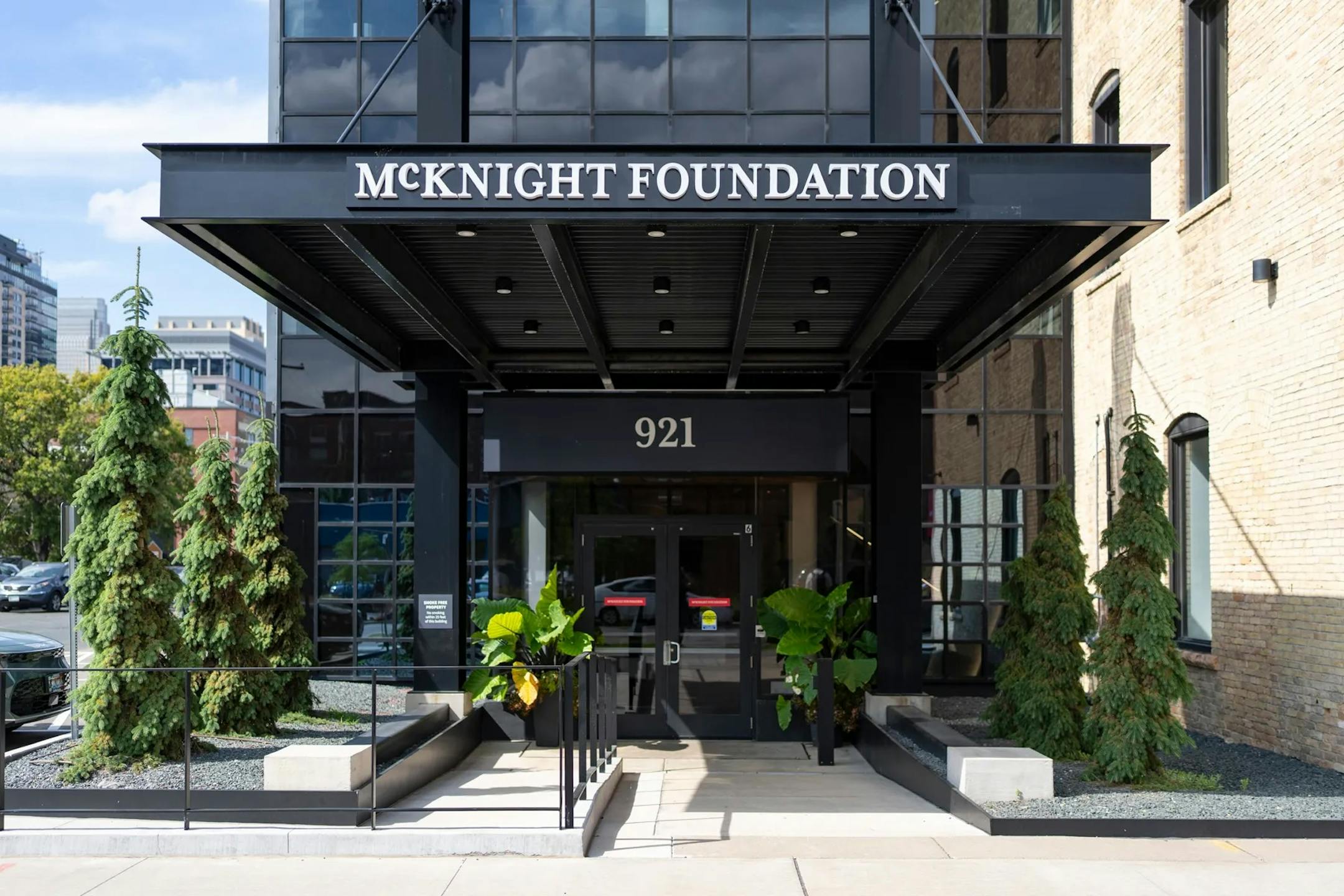
The humble facade of two 140-year-old storefronts in downtown Minneapolis conceals a building on the cutting edge of clean energy technology.
The McKnight Foundation’s new headquarters on Washington Avenue is a fully decarbonized, 45,000-square-foot building. The Minnesota-based nonprofit is one of the largest philanthropic organizations in the country and provides millions of dollars in grants for environmental initiatives each year. When the foundation moved into a new headquarters this summer, it committed to a major retrofit.
“It allows us to embody our mission,” McKnight Foundation President Tonya Allen told Sahan Journal.
It may be the first existing building in Minnesota to operate without natural gas, according to Greiner Construction, a Minneapolis-based firm that worked on the project. That’s a major milestone in Minnesota, where pollution generated by buildings makes up 18% of all greenhouse gas emissions, according to a 2025 state report.
It’s relatively easy for a new construction project to achieve high energy efficiency standards, but McKnight wanted to show that older buildings could become green, too, Allen said.
“The most sustainable building is often the one that already exists,” said Ben Passer, director of McKnight’s Midwest Climate and Energy program.
Most buildings in Minnesota are powered by natural gas, which generates pollution. There are two primary alternatives to natural gas: electric-powered boilers and heat pumps and geothermal technology, which uses energy from below ground to regulate temperature. McKnight employed a third technique, thermal energy tanks.
The tanks are basically massive thermoses located behind the building. At night, during off-peak demand hours, the tanks generate ice, which is stored and slowly released for cooling during the day. In the winter, the tanks store excess heat and disperse it back into the building.


