

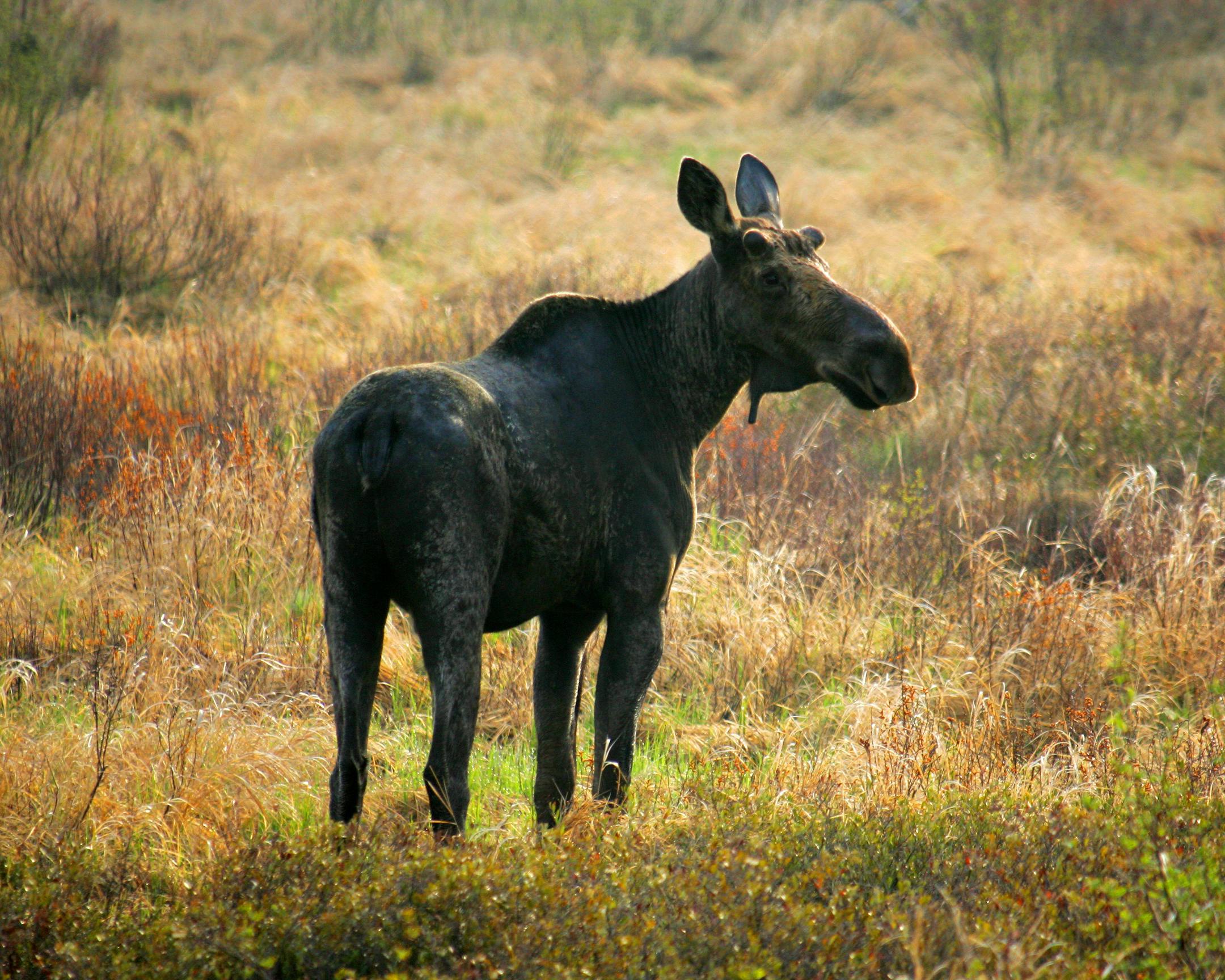
Seeing a wild moose in Minnesota is an elusive endeavor, but thrilling when it happens. Conditions in late fall can increase your chances of a sighting, with less foliage to block your view and bull moose primed for mating season.
Bull moose can tower up to 7 feet high and weigh at more than 1,000 pounds. Their antlers should be fully grown and ready for battle as they compete for cow moose. Bulls may make deep, guttural sounds while sparring. Cows have a more nasal call to attract a mate.
A good time to look for moose is in the early morning or at dusk. Most live in the northwestern or northeastern corners of the state. Occasionally one will be seen farther south, like the moose nicknamed “Rut” that was traveling through central Minnesota in 2023. A bull moose was also spotted in Hubbard County south of Nevis on Aug. 25.
Try your luck along quieter county and forest roads, such as those through Superior National Forest. Moose favor young forests in areas previously cleared by logging, fire or windstorms, and the edges of woods, wetlands and lakes where they can find young willows, red-osier dogwood, balsam fir and aquatic plants to eat.
According to the Minnesota Department of Natural Resources, moose can hold more than 100 pounds of food in their stomachs, run up to 35 mph, and swim continuously up to 10 miles.
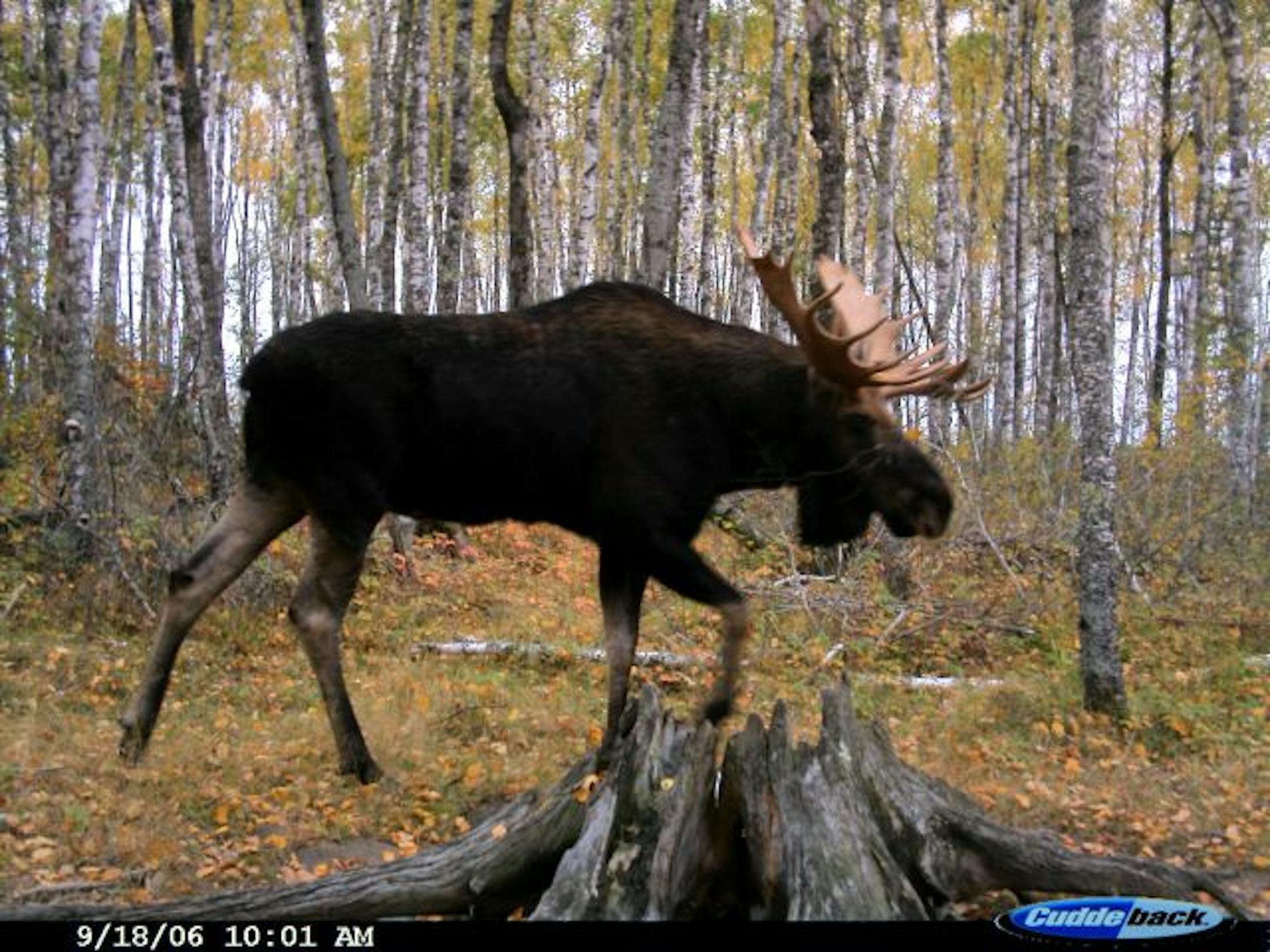
The DNR’s annual aerial moose survey earlier this year estimated a population of 4,040 in the state, a number that’s declined over the past decade due to climate change, parasites and predators.
During the winter, moose may be seen along roads such as the Gunflint Trail as well, where they can get a reprieve from deep snow and lick road salt for extra nutrients. Drive slowly and carefully — especially after dark — to avoid collisions with Minnesota’s largest mammal.
Grand Marais celebrates Alces alces with the Moose Madness Family Festival Oct. 15-17 and has three suggested loop drives for a chance to spot moose.


