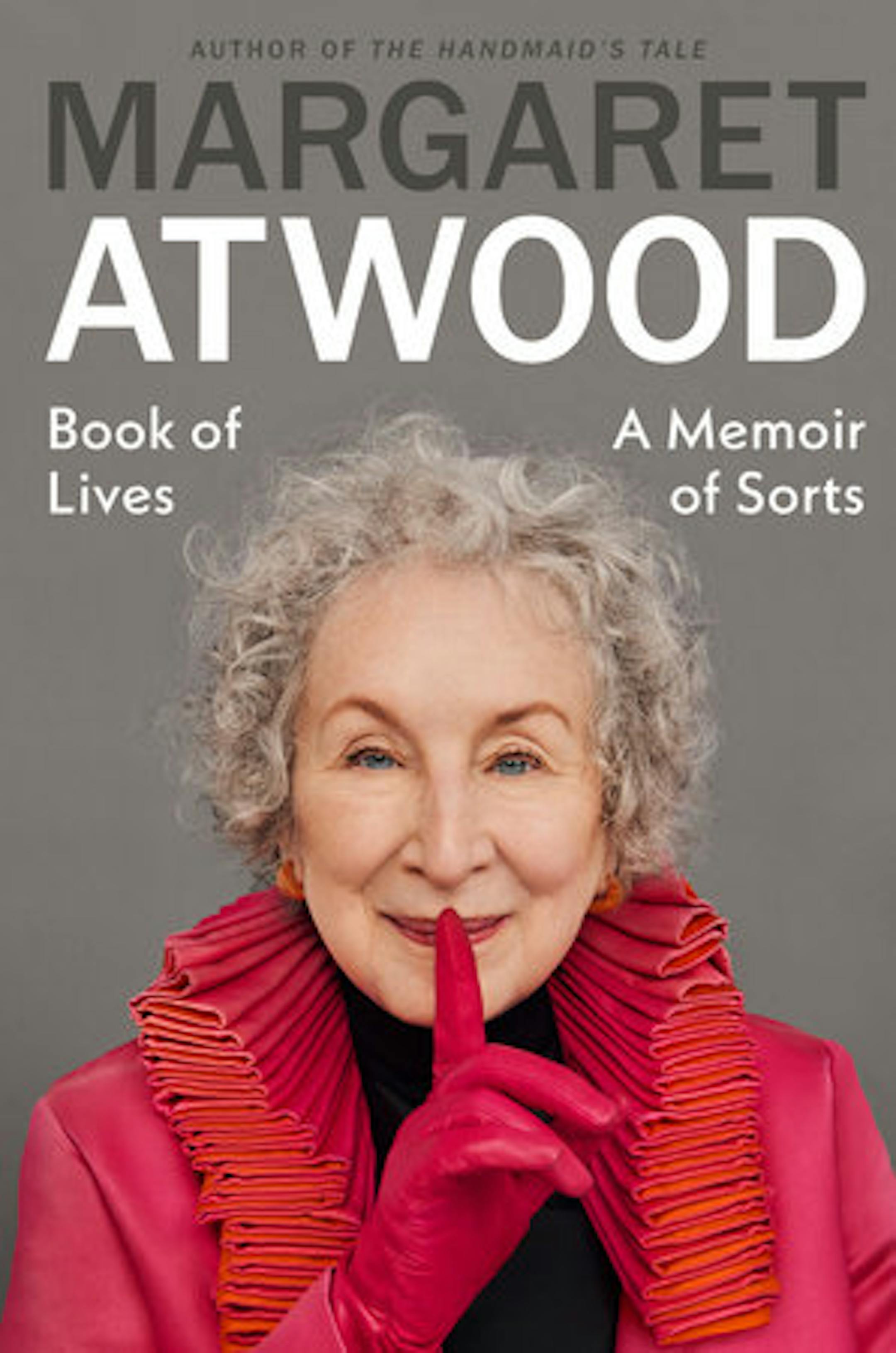
Margaret Atwood’s new “Book of Lives” is subtitled “a memoir of sorts” — and in fact, it’s a venerable sort, a cradle-to-rocking-chair telling of a celebrated life.
Today, most books of this type are produced by movie stars or musicians, while literary memoirs tend to focus on one particularly dramatic or entertaining passage: Mary Karr’s childhood (“The Liars’ Club”), Geraldine Brooks’ widowhood (“Memorial Days”), Molly Jong-Fast’s management of her aging mother (“How to Lose Your Mother”).
There are several parts of Atwood’s life that would have been promising for this treatment — her outdoorsy youth; her rich romantic partnership with writer Graeme Gibson; her bohemian or farming period — but she’s decided to give it to us all at once, perhaps feeling, at 85, that there are time constraints.
Thus, my single complaint about this charming, interesting and witty 599-page book is that it feels a bit completist at times. There sure are a lot of houses, book deals, backstories and long quotations. Even she jokes at one point about her absorption in her own “logorrhea.” (Which, it must be said, has paid off for the reading public.)
Things get off to a strong start, with a very Canadian childhood in the woods of Ontario and Quebec. Her father was an entomologist and do-it-yourselfer who built more than one of the houses they lived in; her mother was a dietitian and force of nature.
“Her city friends thought she was mad to pass half of each year in the bush with no electricity, no running water, and no telephone. She said she preferred the woods because there was less housework,” Atwood writes. The love of the natural world instilled in her led to a stint as a counselor at a Jewish summer camp called White Pine, where she was known as Peggy Nature, alongside Beryl Horses and Phil Sailing.
Scintillating portraits of major and minor characters are one of Atwood’s specialties. For example, a friend named Larry Gaynor, a “six-foot-eight, ex-biker, con artist and fire eater who writes nurse novels” is recommended by Atwood to her sister as a babysitter for her three children. Alice Munro was a literary friend, but “always a little cagey with me — we didn’t discuss personal subjects. Now I know why.”
Towering over all is Gibson, who gets a couple of chapters devoted to his life before he met Atwood, many quoted passages from his work and innumerable star turns and finest hours. Periods of trouble in the marriage are addressed with letters to and responses from the author’s “Inner Advice Columnist” (“I followed your earlier counsel, and now have a charming infant.”). It was Gibson who instigated the couple’s farming years, detailed in a stream of blood-soaked anecdotes, about which Atwood writes, “Farms are not for the squeamish.”