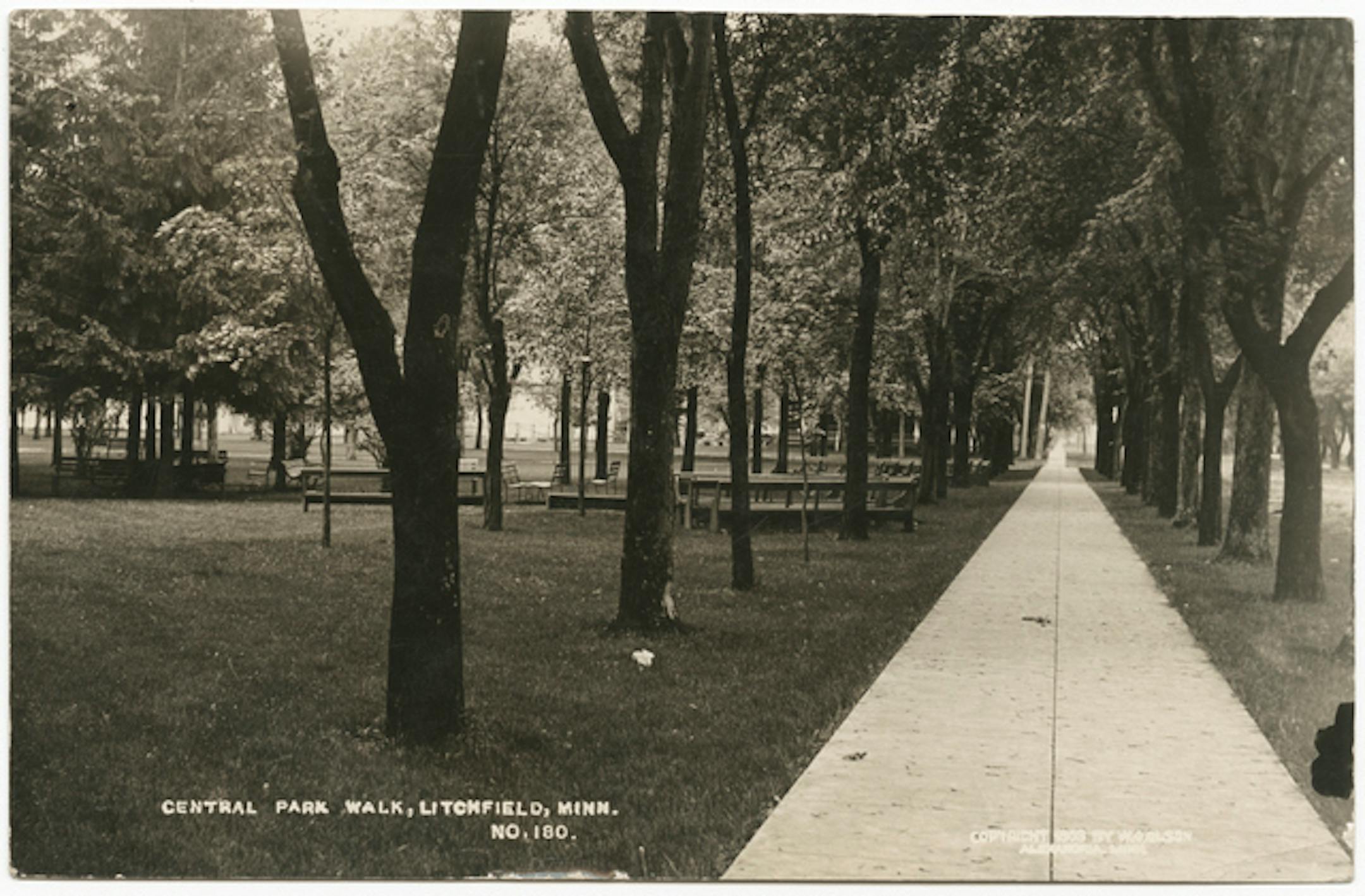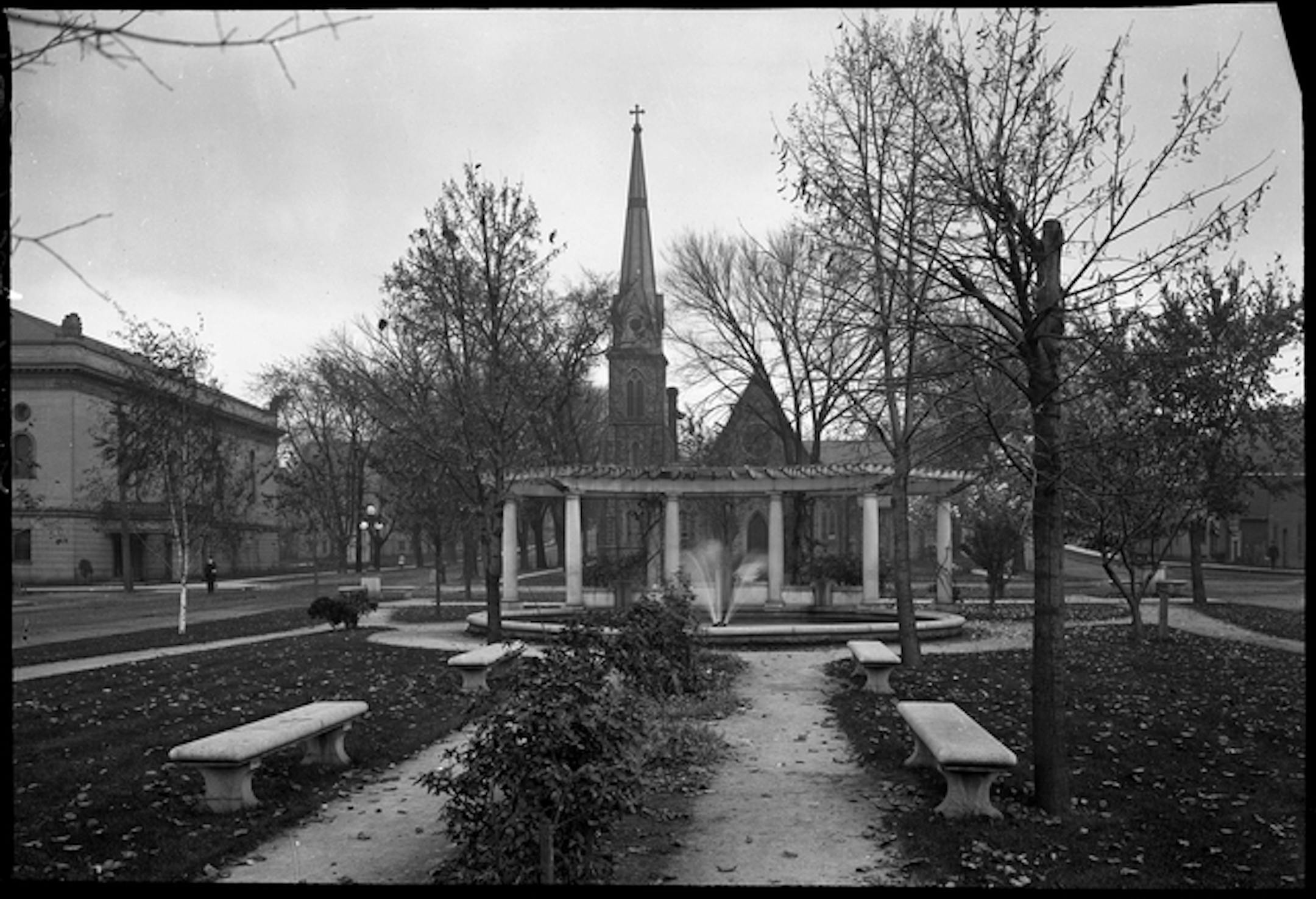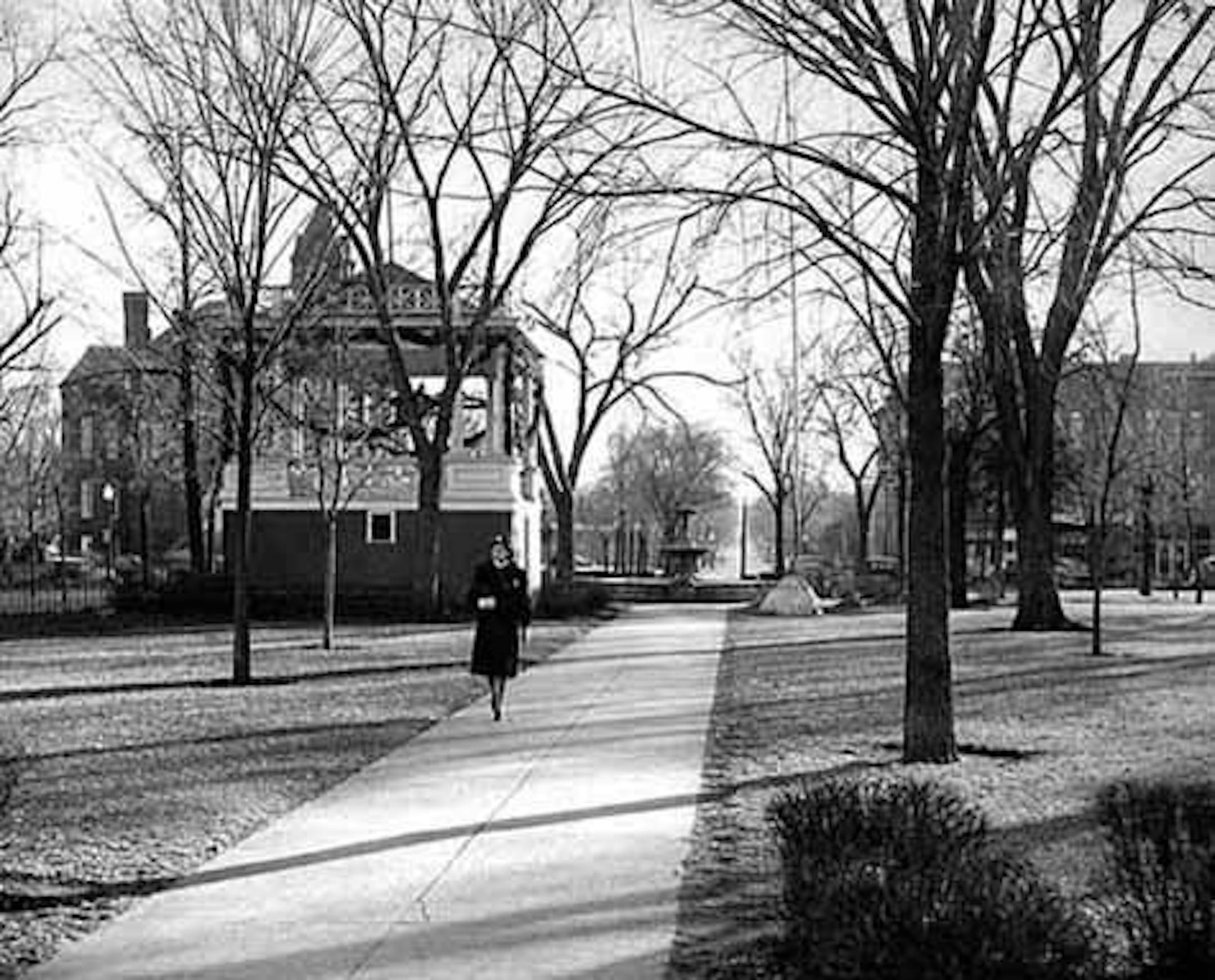
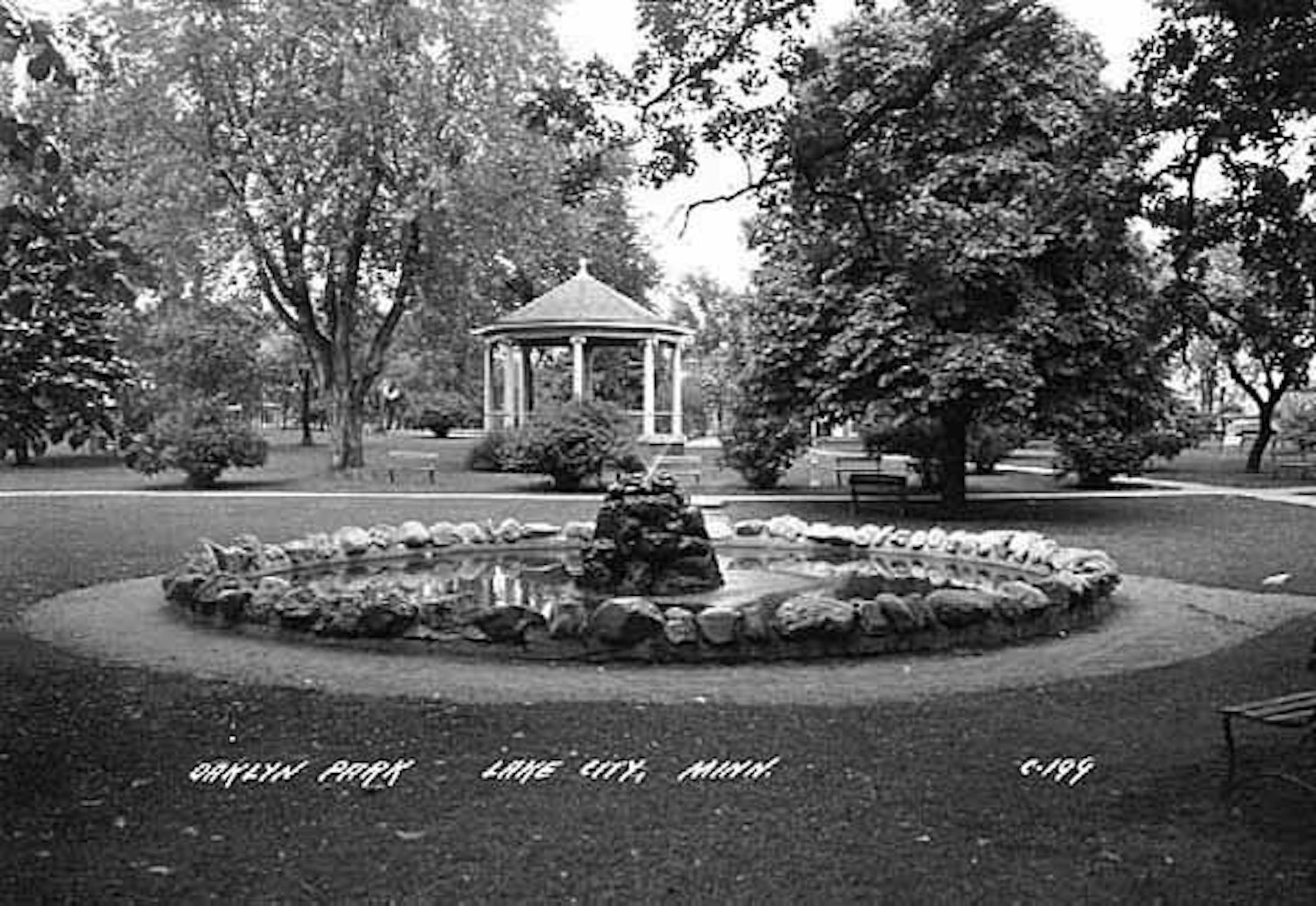
After the Civil War, many Minnesota towns created picturesque parks. Called “beauty spots,” these parks highlighted a town’s assets — a central square, a riverbank recreation area or a picturesque streamside retreat complete with rustic wooden bridges.
Beauty spots were likely born out of a desire to mimic East Coast village greens and wooded glens here on the prairie. Postcards of the parks, though often retouched with color and perhaps even edited to remove flaws, document an early and earnest civic pride.
Towns like Litchfield, Le Sueur, Owatonna and Mankato were eager to let the world know about the civilized public parks they had to offer.
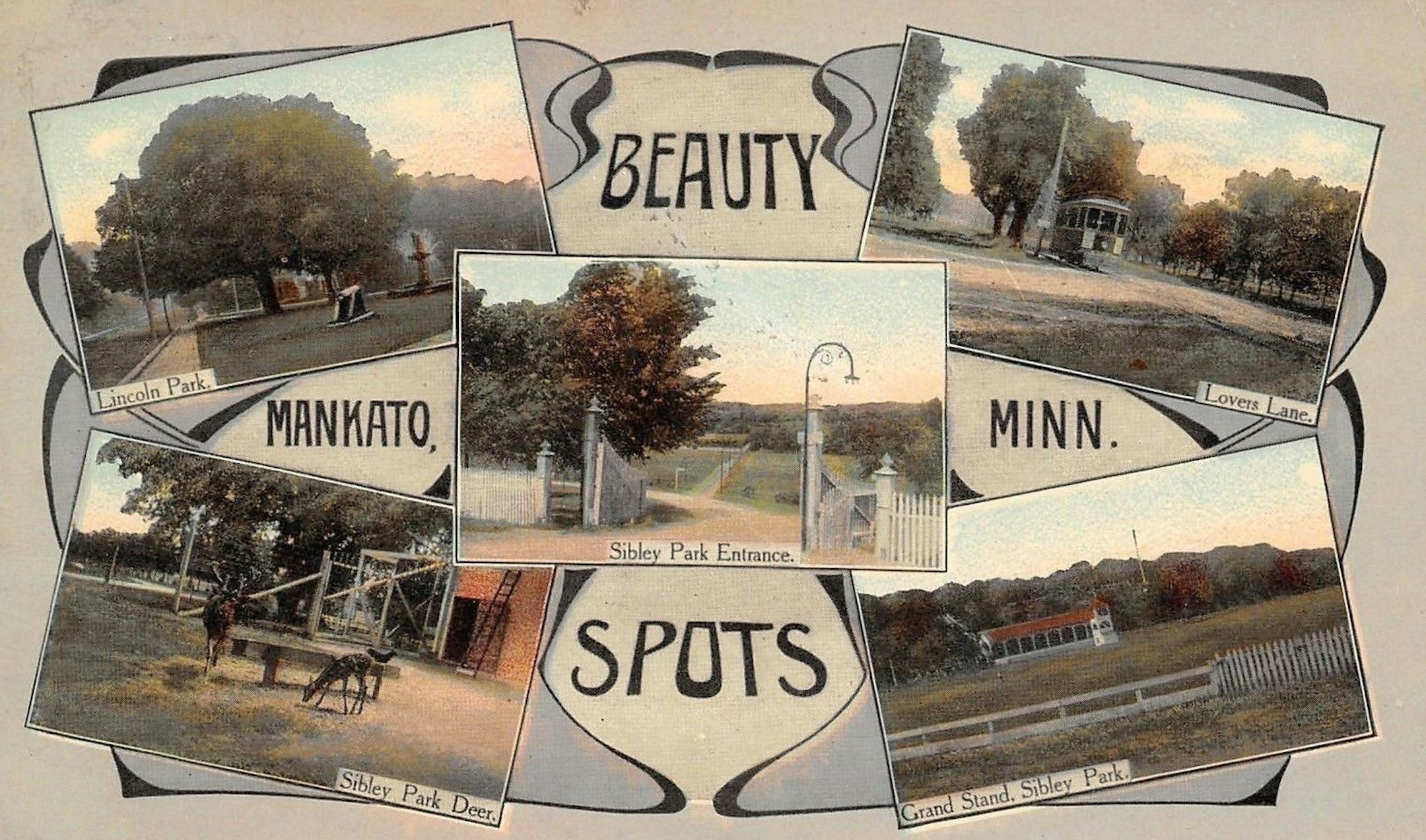
Many town parks grew up along rivers and lakes, including Mankato’s Sibley Park, which boasted a racetrack and deer park. Located on the banks of the Minnesota River, it became a popular destination. But it wasn’t the only one in the area.
Blessed with blufflands, Mankato had beauty spots with sweeping river views, but also more urbane locales, such as Lincoln Park in downtown, and a Lovers Lane.
In Bemidji, the beauty spot was a lakeshore parkway that linked its downtown Carnegie Library to the state teachers college, which would later become Bemidji State University.
Shelter on the plains
In much of western and central Minnesota, geographic features tend to be subtle. Without dramatic river bluffs, dense woods or lakes, townspeople constructed local landmarks, many of which were reminiscent of their pasts.
In railroad towns on the prairie, such as Litchfield, residents carved out a sense of local character by creating formal town parks. They installed formal, linear walks and planted a canopy of trees, then used the surrounding buildings to create an urbane sense of enclosure.