

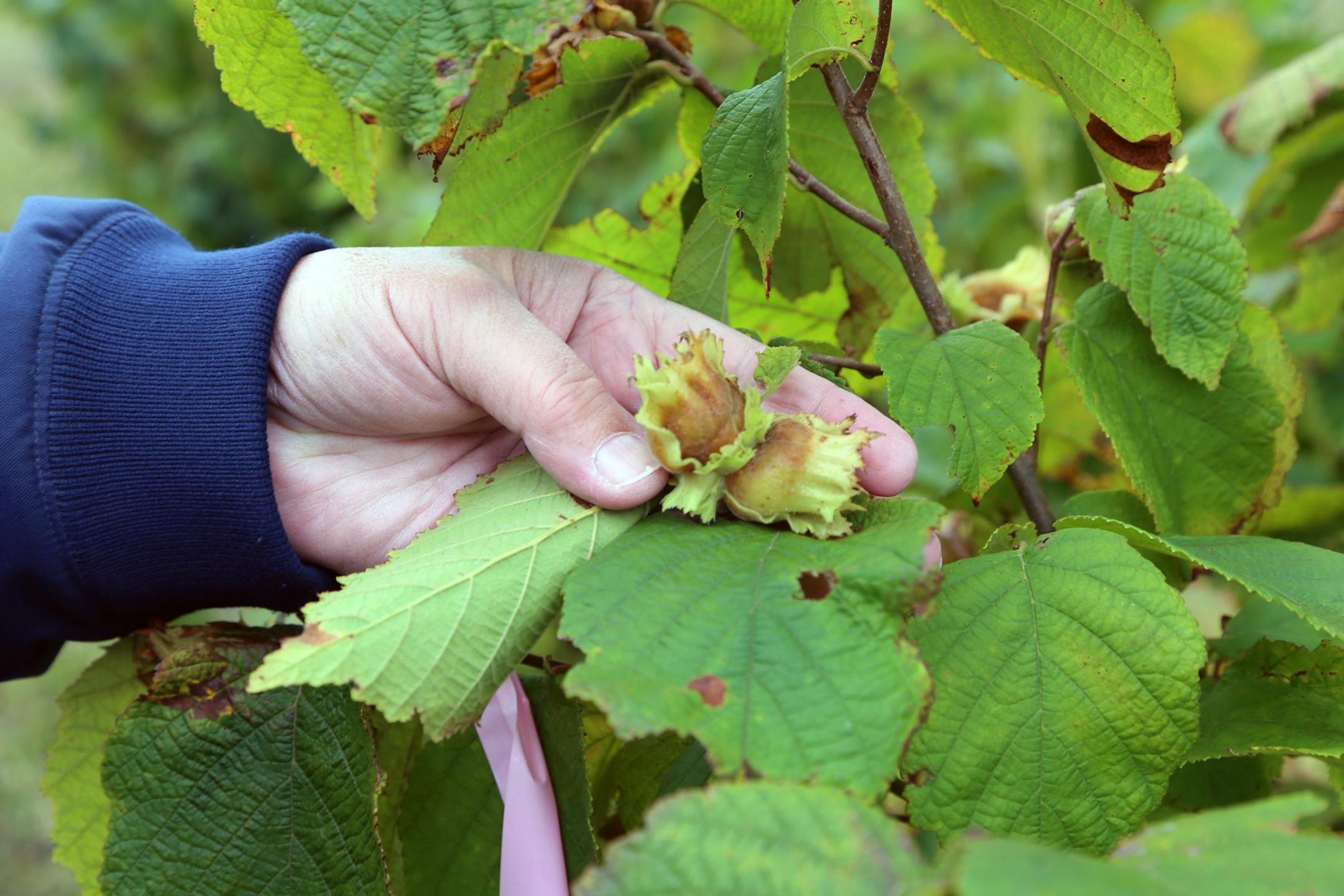
It’s easy to see why most people don’t notice Minnesota’s wild hazelnuts. Hidden by green husks for most of the summer, they ripen in clusters on shrubs, many of which are tucked into the woods.
Hazelnuts, which most people know from larger domestic varieties in cans of mixed nuts, begin ripening in late August and early September across the state.
Minnesota has two wild species — the American hazelnut and beaked hazelnut — which grow on shrubs that can reach well beyond 10 feet tall. They appear in thickets on prairies, the edge of woods or even within woods.
Jagged-edged bracts sheath clusters of two nuts like sloppily wrapped ravioli. As nuts ripen, those bracts begin to loosen and eventually the nuts change from green to brown.
Animals that rely on this significant source of fat and protein, including red squirrels, chipmunks and bears, typically nab the nuts before humans do. Birds also eat them.
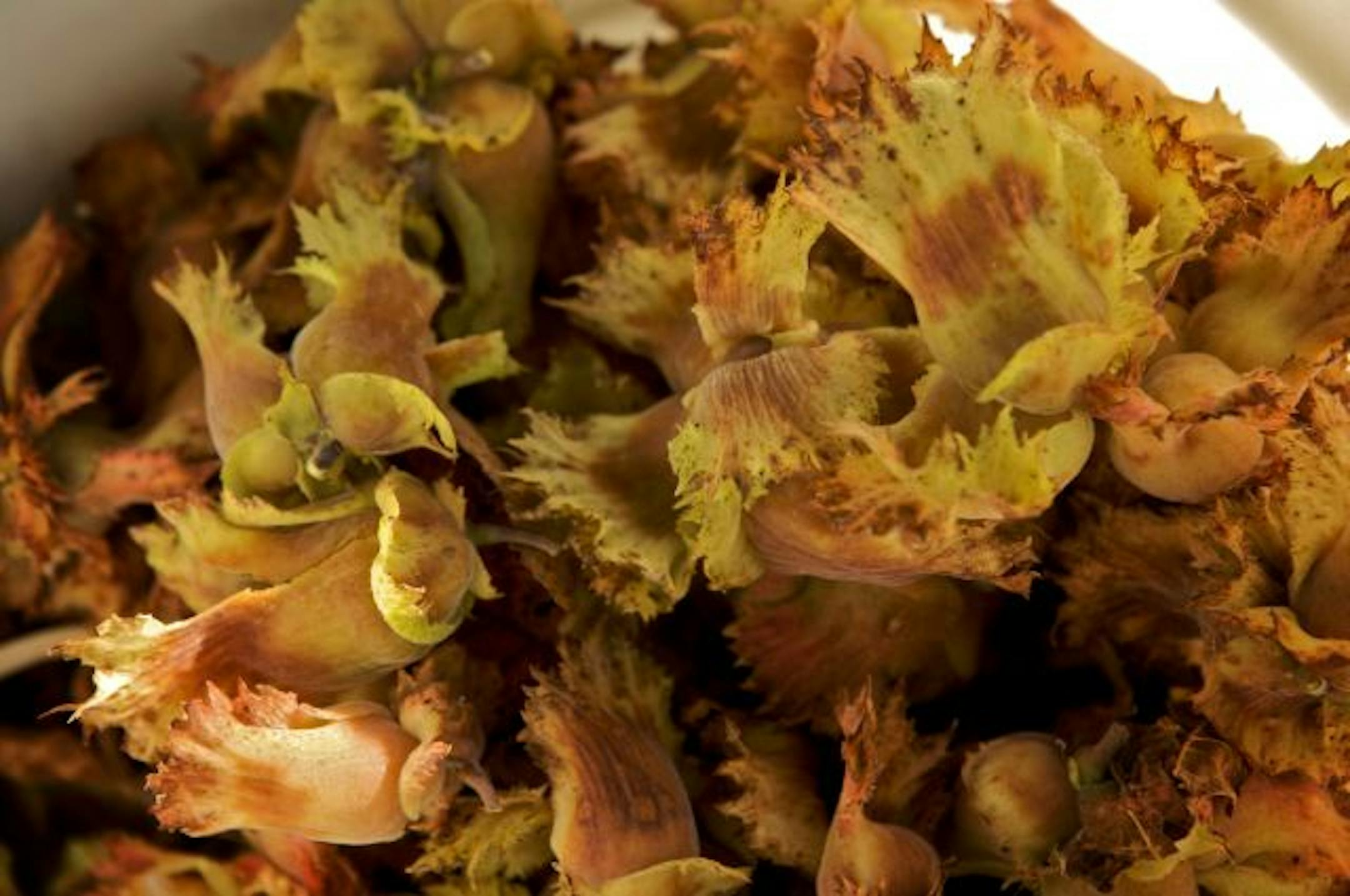
American hazelnuts grow through most of the state except for the far northeastern and southwestern corners. They play a key role in ecosystems as an understory shrub and food source that can tolerate dry conditions. The beaked hazelnut, named for the pointed sheath around the nuts, does better in moister, shadier locations.
Freshly harvested nuts don’t have much of a taste until they’re husked, dried and roasted. In addition to eating the kernels, the nuts can produce a heart-healthy oil and can be turned into nut butter (hazelnuts provide the key ingredient for Nutella spread) and flour.

Oregon produces 99% of the nation’s hazelnut supply by growing European varieties, but there’s a movement to grow more hazelnuts in Minnesota and the Upper Midwest using hybrids of popular European varieties with the hardiness of American hazelnuts. HazelHeartFarms.com (formerly the American Hazelnut Co.) sells locally grown nuts, plus oil and nut flour, at the Minneapolis Mill City Farmers Market.


