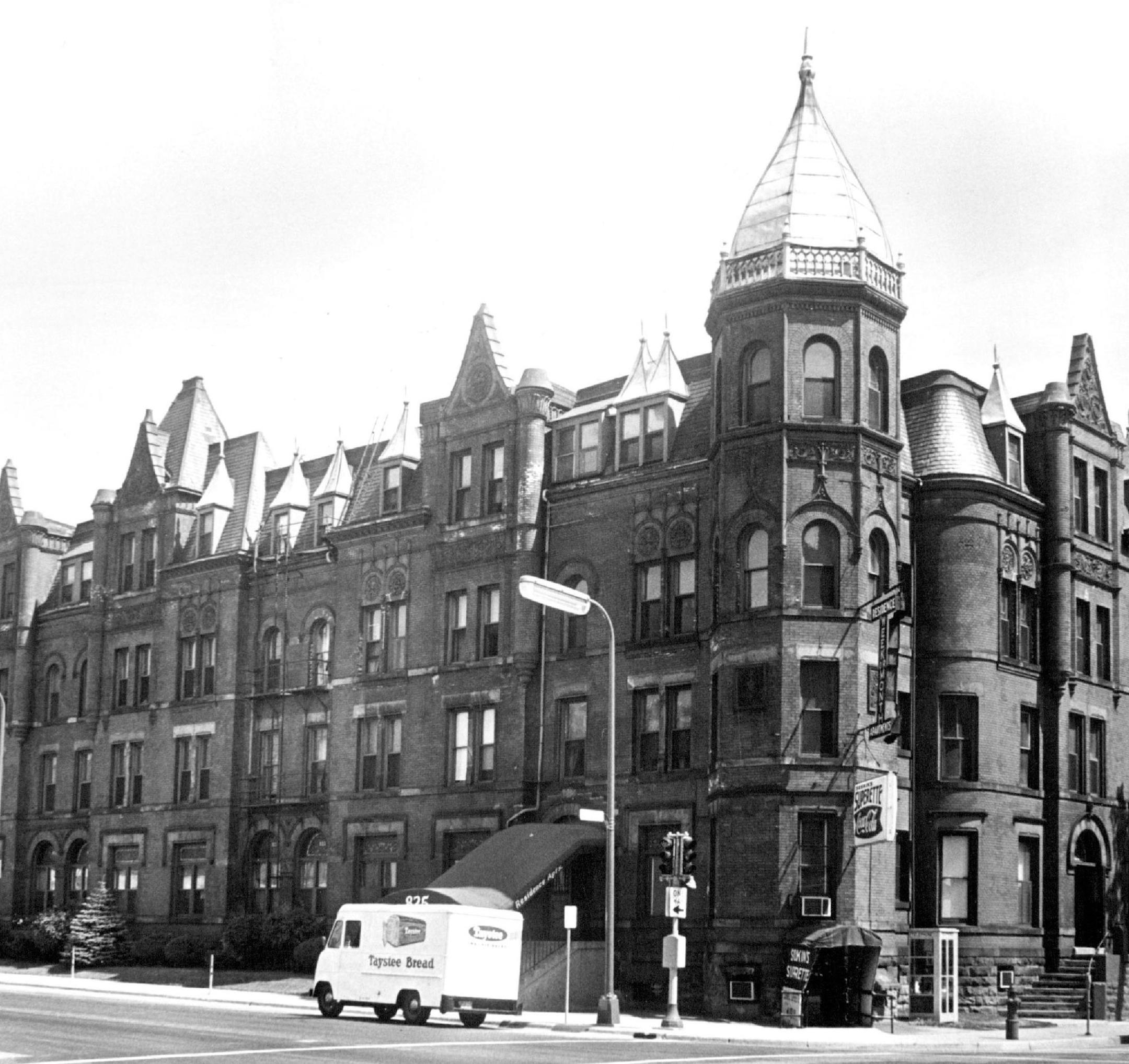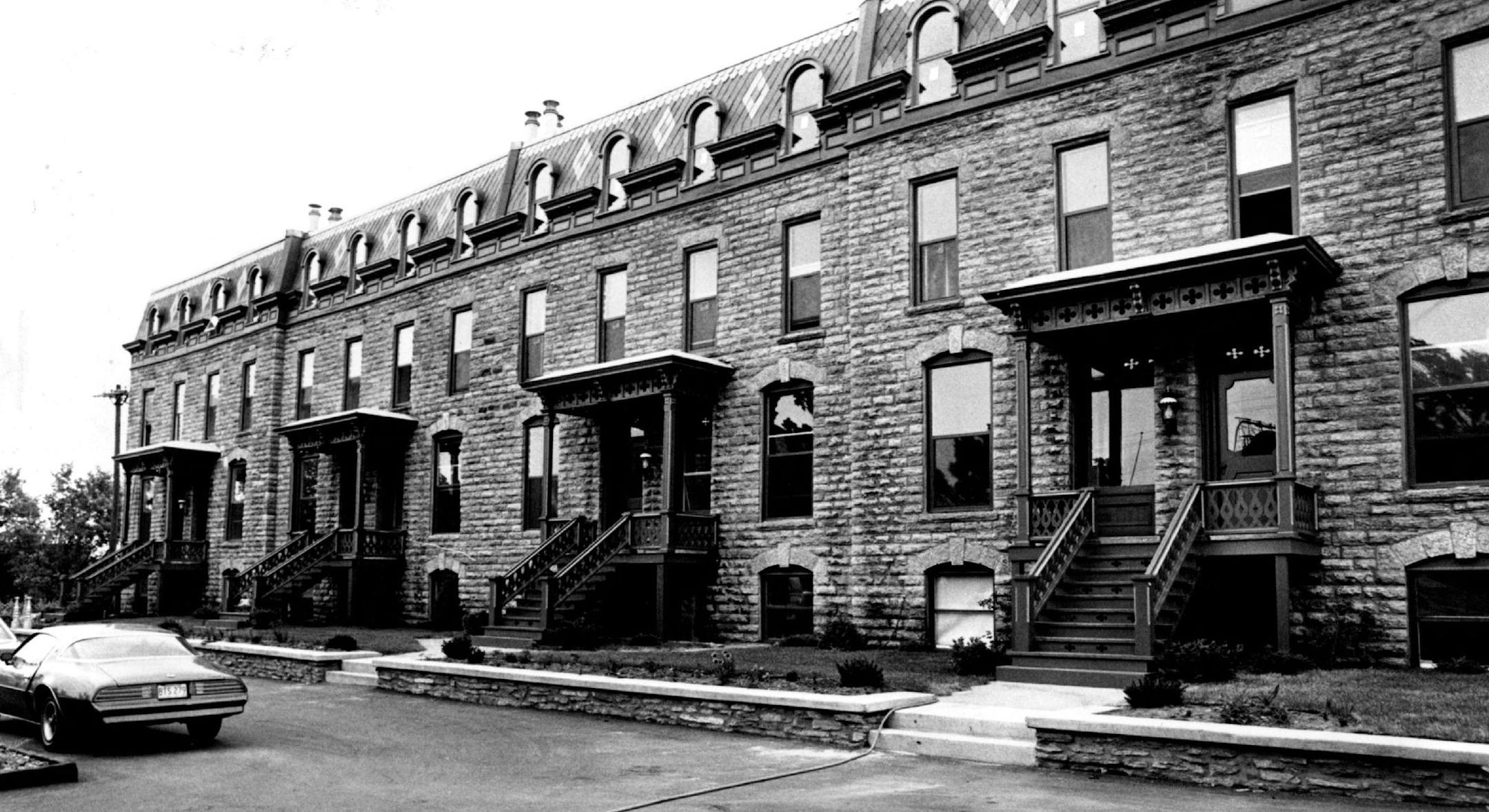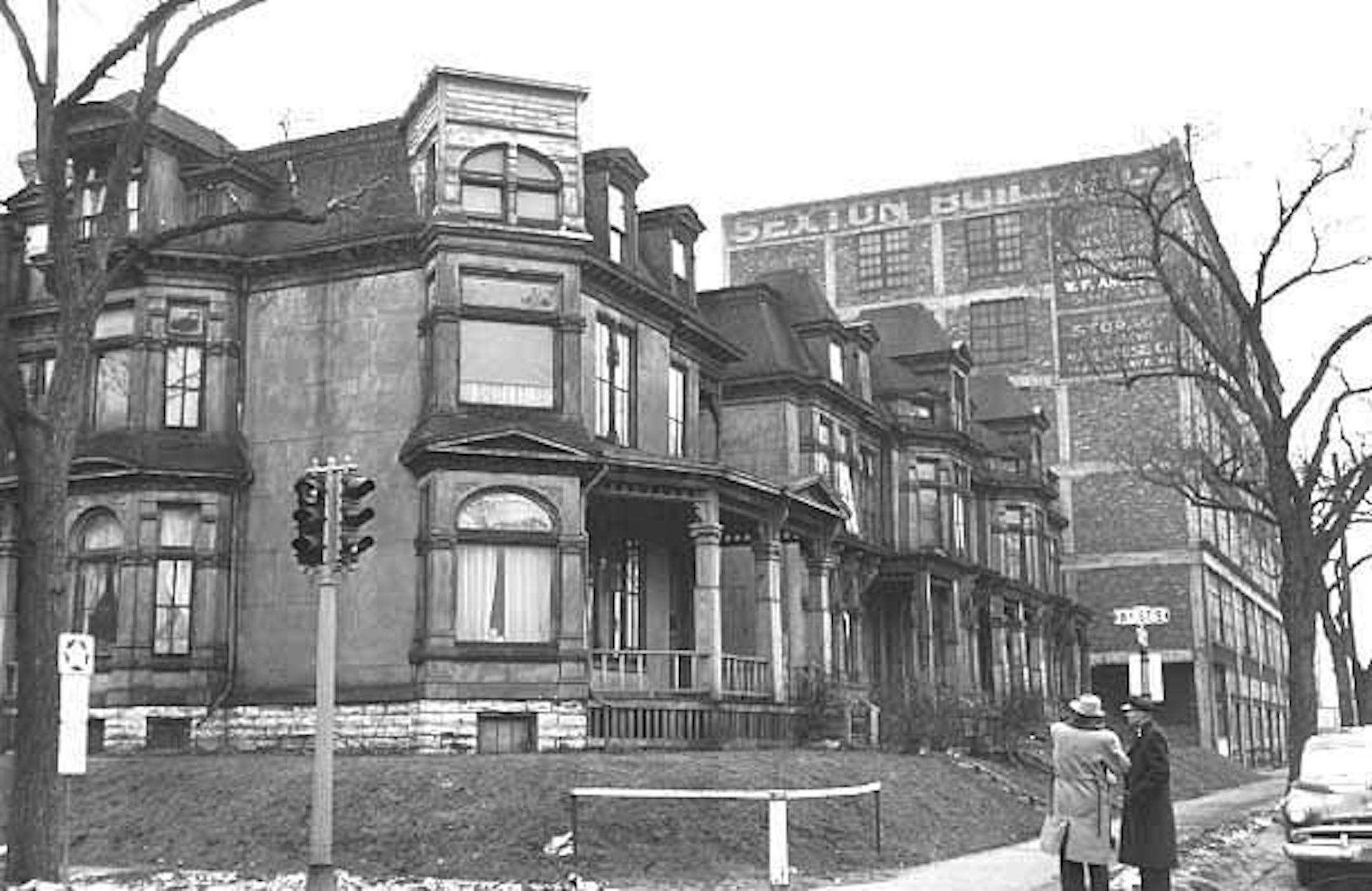
Historic row houses are the residential backbone of large Eastern cities such as Baltimore and Philadelphia, where they still fill block after block. In the Twin Cities, however, they are a relatively rare sight.
There was a time, though, when row houses were quite common here, particularly in the downtown areas. By 1900, in fact, more than 80 row houses stood in and around downtown Minneapolis, with another 40 or so in downtown St. Paul.
Today, not a single row house survives in downtown St. Paul, while a dozen or so can still be found in downtown Minneapolis, including a significant group in the South Ninth Street Historic District within the Elliot Park neighborhood.
These early row houses — the bulk of them built in the 1880s and 1890s — were often scattered, but in Minneapolis they were most abundant around the southern and western edges of downtown. St. Paul’s row houses were concentrated north of the downtown core near the area where the State Capitol stands today.
Row houses were the standard apartment buildings of their day, and they housed a wide range of tenants, from poor immigrants and working-class families to some of the cities’ wealthiest citizens. After 1900, few row houses were built because of a shift to multistory apartment buildings with a single main entrance and units arranged along interior corridors.
There were several kinds of row houses. For the poorer classes, buildings usually called tenements featured small one-story apartments arranged in a row, with each outside entrance typically serving two to six apartments. Other row houses featured lines of two-story apartments, usually with four rooms per unit. At the upper end of the scale were luxury buildings of three or more stories containing spacious multi-floor apartments with numerous rooms.
Among tenement-style row houses, the largest in the Twin Cities was Beard’s Block at 1200-1228 Washington Av. S. Built in 1881 by Henry Beard (who later donated much of the land around Lake Harriet for park use), the block featured about 80 apartments served by 16 outside entrances. The U-shaped three-story building, which also contained ground-floor shops on Washington, was demolished in 1932.
The first deluxe row house in the Twin Cities later became known as Eastman Flats, on Nicollet Island, where DeLaSalle High School is today. Built by William Eastman, one of the island’s developers, the complex consisted of a pair of three-story stone row houses, some offering up to 14 rooms per unit.