

Shortly after the Sept. 11 attack on the Pentagon, among the first civilians called to the site to help the military was geologist Scott Wolter of Chanhassen.
As a forensic concrete expert, Wolter was asked to examine the heat damage to columns and beams caused by the crash of American Airlines Flight 77 and the subsequent fire at the Pentagon.
“It was amazing,” said Wolter, who said he’s done more than 5,000 investigations on concrete. “They knew what had happened. They knew a plane hit it. But was there a bomb on it? Was it just the jet fuel? Was it something else?”
Wolter, who once helped Las Vegas police identify a murder victim simply by the impression her body left on the cement she was encased in, points out his connection to the Pentagon and the 9/11 investigation in order to establish his credentials as a scientist and investigator.
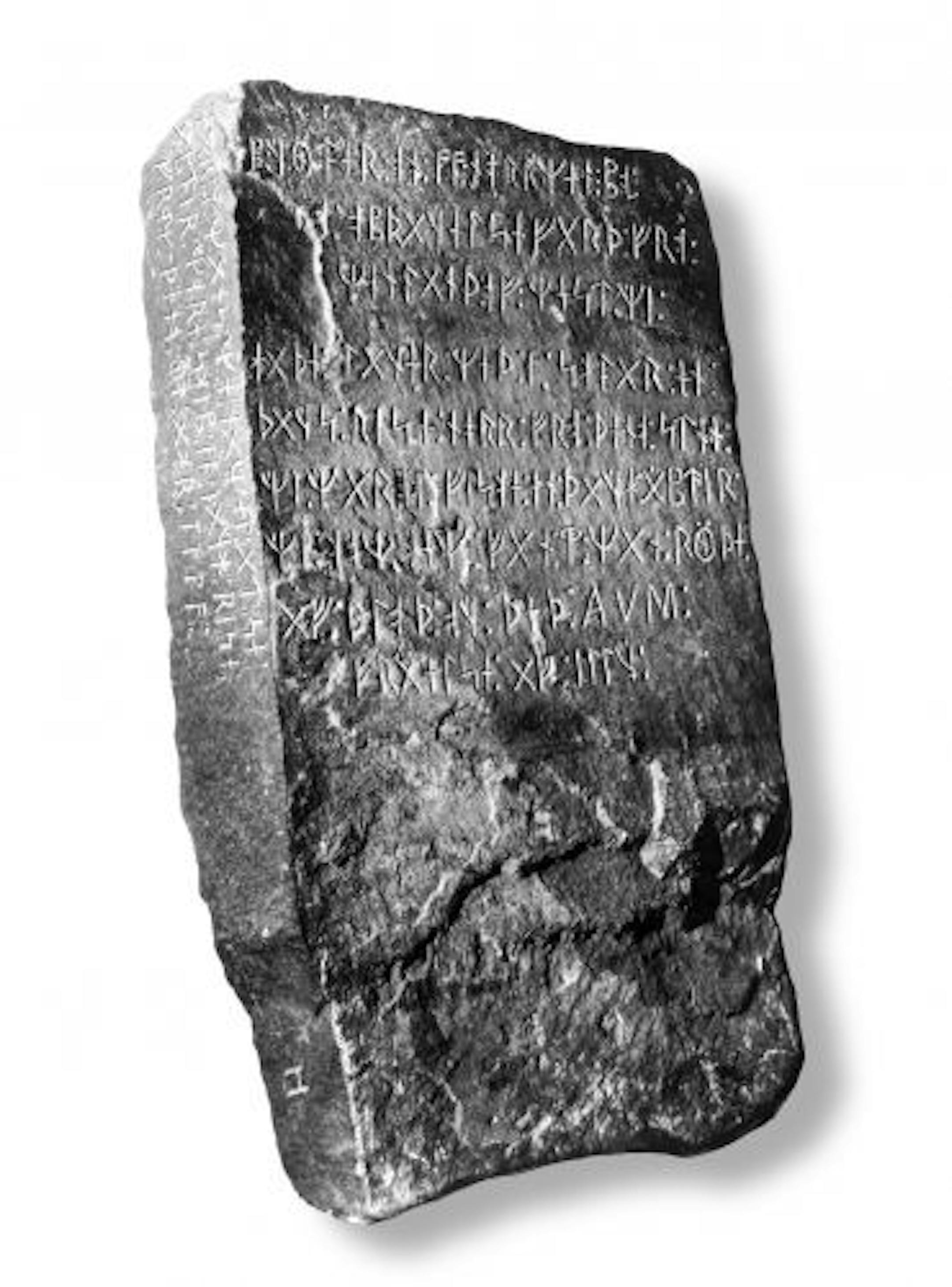
Especially when he starts talking about his theories and belief in the authenticity of the Kensington Runestone, one of the most controversial pre-Colombian artifacts in the world.
Not only does Wolter believe the stone is real and that it predates Christopher Columbus by more than 130 years, he also has come to the startling conclusion that the stone was carved by the Order of the Knights Templar, a medieval European military group, as a land claim for much of eastern North America.
Wolter also says that the Kensington Runestone is proof that the Templars might have, metaphorically speaking, brought to Minnesota and North America the Holy Grail, the term for the chalice used by Jesus Christ at the Last Supper and one of the holiest relics in Christianity. But Wolter said he does not think of the Grail as a physical object, but as the knowledge and wisdom that the Templars and their descendents, the Freemasons, brought to North America and used it to establish the Republic of the United States.
“I know it’s hard to believe,” said Wolter, whose theories are the basis for a just-released documentary on the History Channel. “But I am a scientist. The data is the data, and that’s how we approached the [Kensington] Runestone.”


