

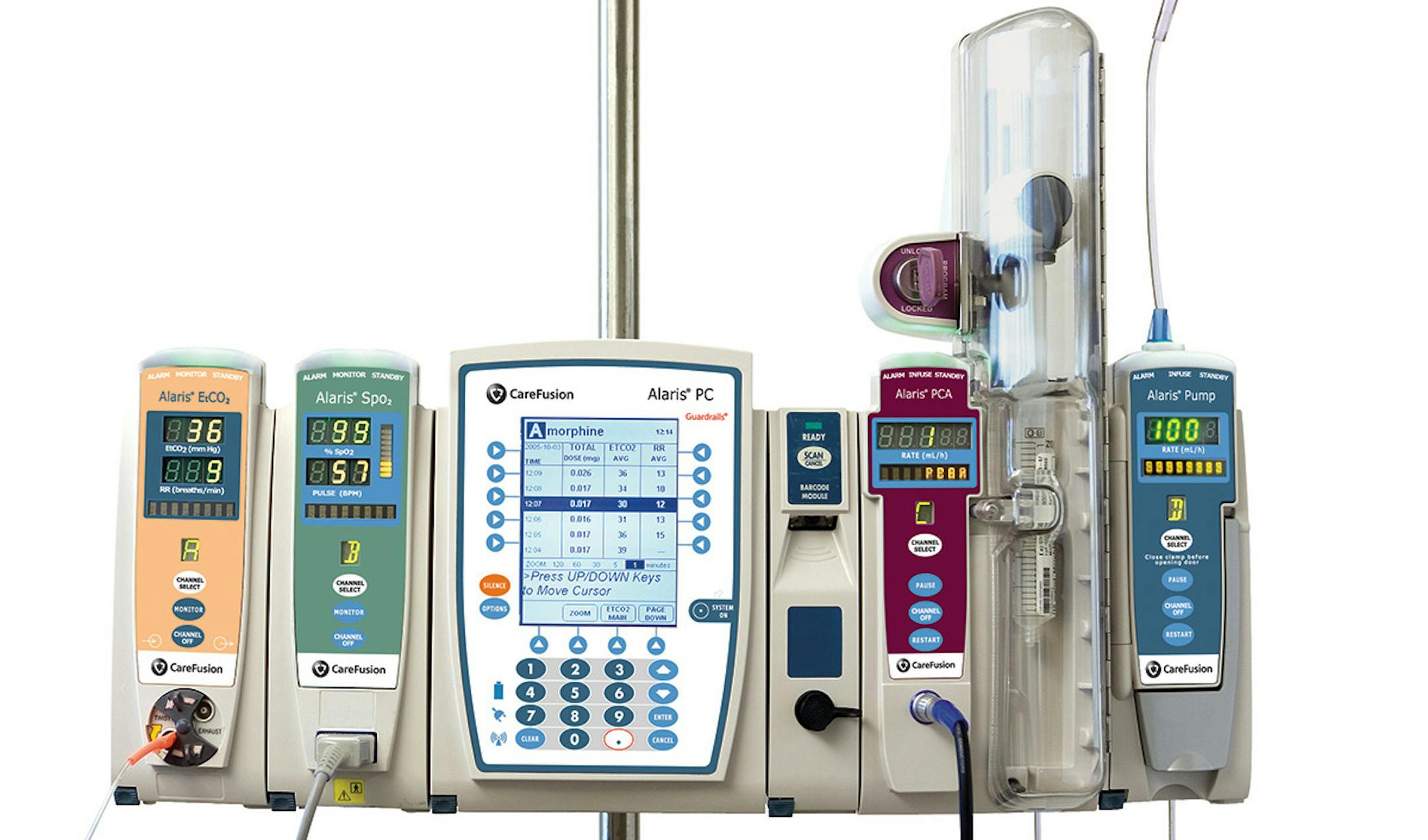
The humble infusion pump: It stands sentinel in the hospital room, injecting patients with measured doses of drugs and writing information to their electronic medical records.
But what if hackers and identity thieves could hijack a pump on a hospital's information network and use it to eavesdrop on sensitive data like patient identity and billing data for the entire hospital?
It is not a far-fetched scenario. Though it hasn't happened yet, the hacking of wireless infusion pumps is considered a critical cybersecurity vulnerability in hospitals — so much so that federal authorities are focusing on the pumps as part of a wide-ranging effort to develop guidelines to prevent cyberattacks against medical devices.
Pumps with Wi-Fi were selected to kick off the new effort because their individual vulnerabilities are magnified by their sheer numbers inside hospitals and clinics.
"Infusion pumps are ubiquitous. At Allina, we have over 3,000 infusion pumps across the system," said Linda Zdon, director of information security and compliance at the 12-hospital Twin Cities health system. "Almost every hospital patient at some point has an infusion pump. So it certainly strikes at an area that has a broad application for most patients, and therefore has a significant impact on health systems."
Pace criticized
Allina is one of several local health care players that has been working with the National Institute of Standards and Technology (NIST) since the spring to develop a type of technical analysis known as a "use case" for wireless pumps. The companies' goal is to speed along the development of new standards to harden medical devices against cyberattacks and computer viruses.
Devicemakers say they're already hard at work improving security, but hospitals complain that the companies have been moving too slowly on a vulnerability that puts hospitals' information systems at risk.
In a Nov. 21 letter to the Food and Drug Administration, the American Hospital Association urged the federal government to "hold device manufacturers accountable for cybersecurity." The Homeland Security Department, meanwhile, is reportedly investigating suspected cybersecurity flaws in one model of infusion pump.


