

Opinion editor's note: Editorials represent the opinions of the Star Tribune Editorial Board, which operates independently from the newsroom.
•••
It is commonly thought that the Emancipation Proclamation, signed by President Abraham Lincoln in 1863, ended slavery in the United States.
Not exactly. The presidential edict ended slavery in rebellious Confederate states. But Lincoln knew it would take a constitutional amendment to ban it throughout the country. It took until December 1865 for the required number of states to ratify the 13th Amendment.
Then in a final, cruel twist, hundreds of thousands of enslaved Black people in Texas continued to labor away for months, unaware of their new freedom. When Union troops advanced into Galveston, a Union general ensured that the news was spread.
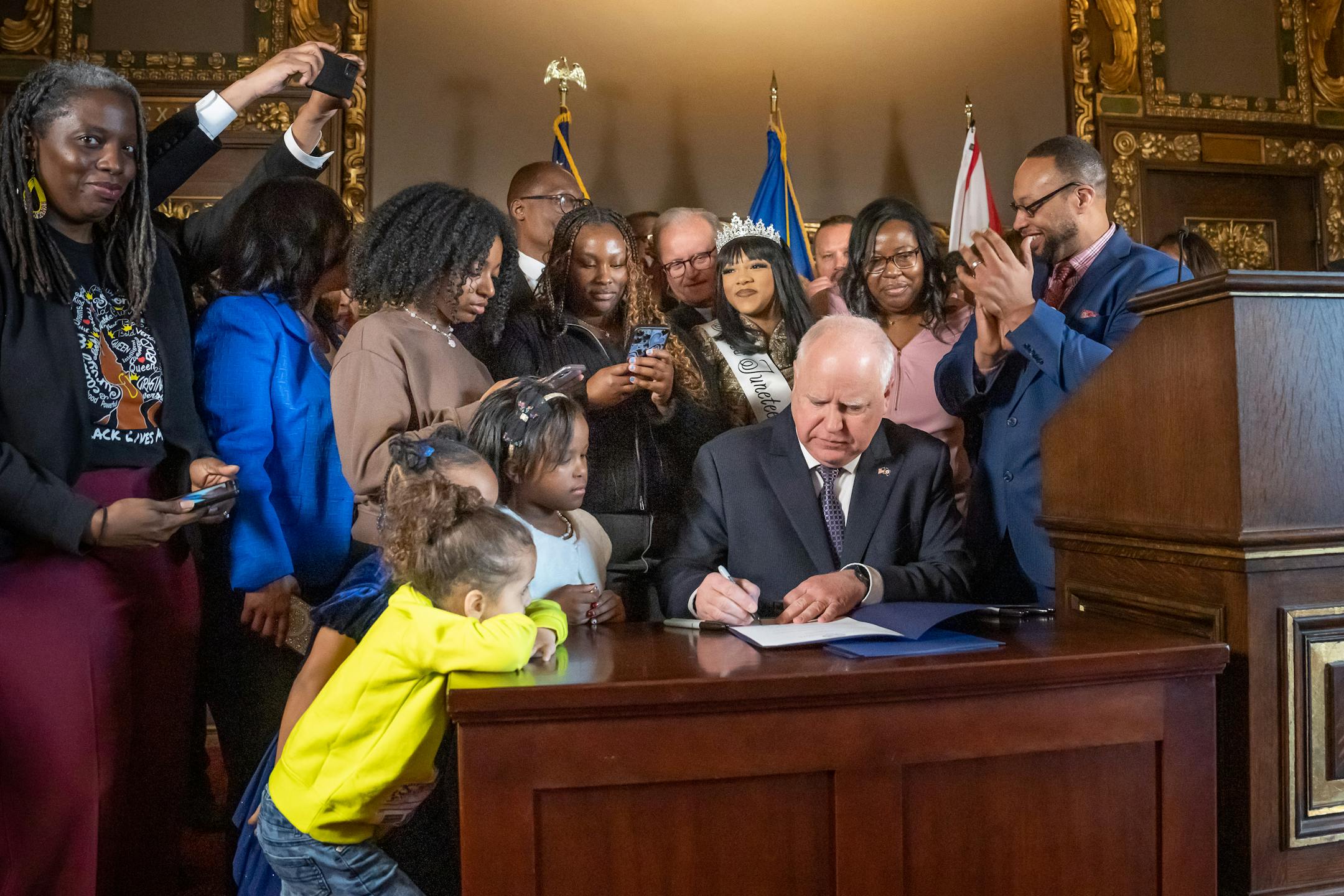
An unofficial holiday in Black culture for many years, Juneteenth recently gained recognition as a federal holiday, and Minnesota became the 26th state to declare it a state holiday this year.
The designation is an important one — and long sought in this state. Minnesota can be proud that its soldiers fought and died on Civil War battlefields to help produce a united nation free of enslavement. But the state also has lagged in many ways, and still has some of the worst racial disparities and inequities in the country. Many of those long-simmering tensions were laid bare by the death of George Floyd at the hands of a police officer, which led to the U.S. Justice Department's finding that Minneapolis police routinely engaged in racist and abusive behavior.
The resulting racial reckoning we find ourselves still grappling with is both overdue and necessary. This holiday is unusual in several respects. It celebrates the past but retains a serious intent regarding the future. Black citizens celebrated Juneteenth even when segregation and Jim Crow laws reminded them that their freedom was far from complete.


