

It's unusual when a $1.5 billion surplus has been projected for a state and the governor opts not to spend most of it.
But we are in an unusual moment. The coronavirus has exploded into a global pandemic. Stock markets have tumbled. The international trade that feeds so many Minnesota companies is taking a pounding.
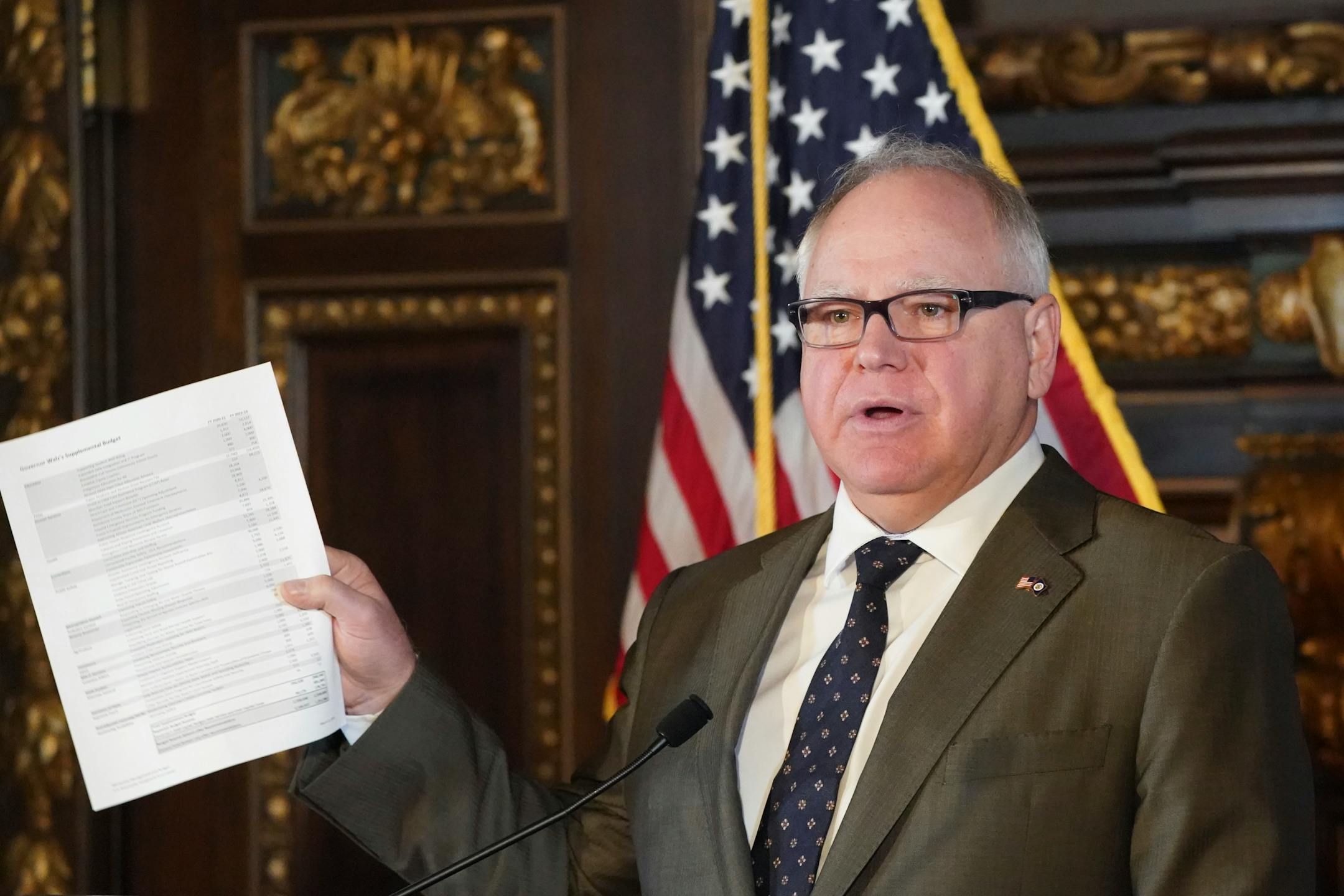
On Thursday, a somber Gov. Tim Walz said he has shelved many of the ambitious plans he had for this legislative session and instead proposed leaving $1.2 billion of the proposed surplus untouched to serve as a fiscal firewall in what have become very uncertain times.
That is a decision as wise as it is difficult. Walz had hoped to use the projected boon to advance improvements in early childhood education, to renew his proposal on climate change and make progress on other goals.
"It's not often you get a one-page budget," Walz said in the news conference to announce his supplemental plan — a document that typically runs dozens, if not hundreds, of pages to detail proposed spending. But a new reality, he said, has made this a time of "tempered expectations."
The needs could be great as Minnesota moves forward in the face of an epidemic whose scope and severity continue to escalate. Should Minnesota's K-12 schools close? If they do, how will the many students who depend on school lunches get fed? What about the homeless population? Low-wage workers forced to stay home without pay? Veterans homes and nursing homes?
Events are canceling left and right, all leaving bits of economic wreckage in their wake. President Donald Trump's travel ban on parts of Europe has added its own complexities. Updates from the Minnesota Health Department are a daily demonstration of the pressures regarding more testing, vaccine development, treatment, containment and more.
Walz rightly calls for restoring the $491 million to the budget reserve that was tapped in last year's budget compromise. Brimming reserves are exactly what's needed to maintain the state's credit rating and provide stability. A robust bonding bill, as Walz is proposing, would also be a strong move, both to make needed improvements and maintenance, but also as a form of state stimulus as recession becomes more possible.


