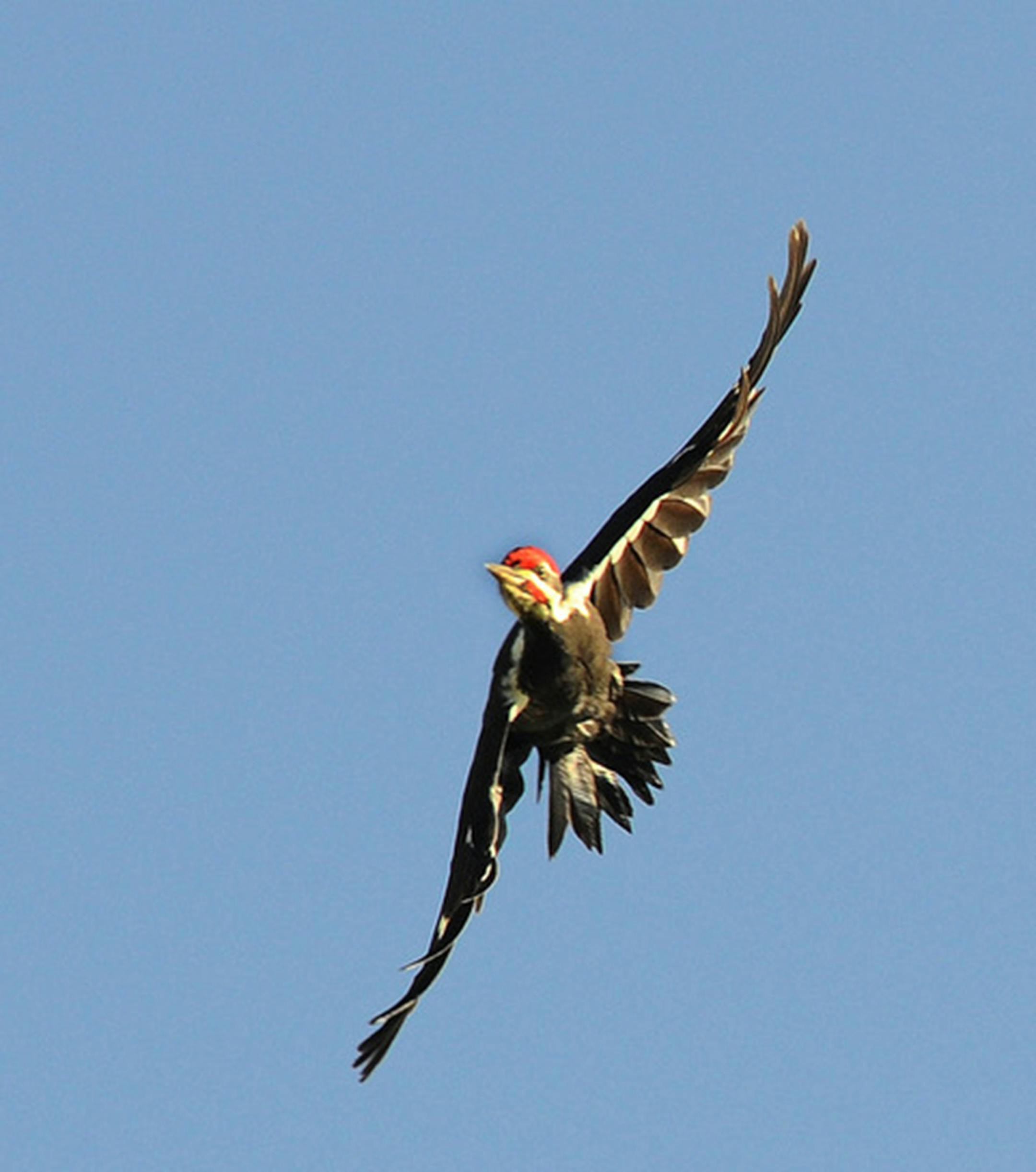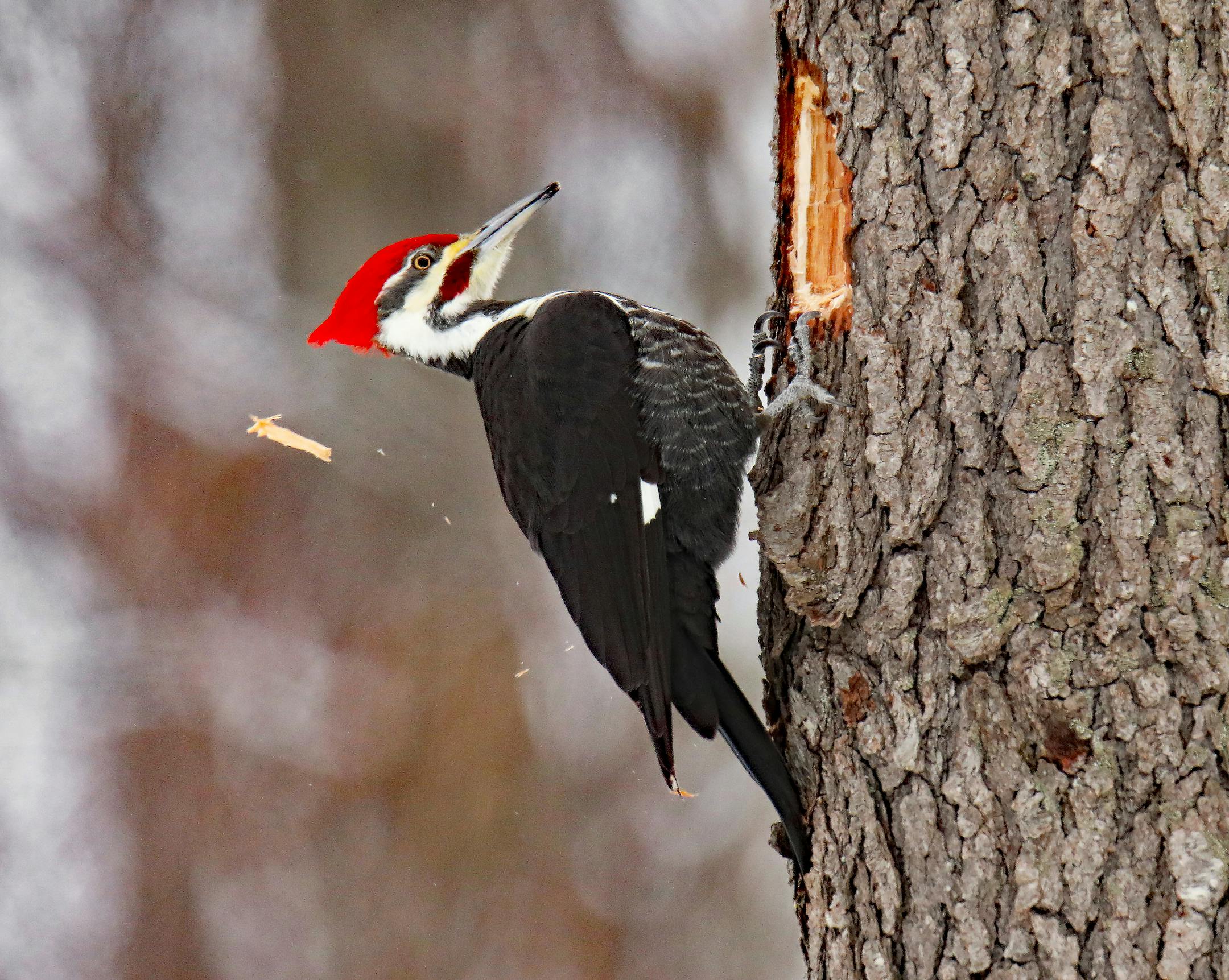
Every time I look at the back seat of my car, I see it — a plastic bag holding a white T-shirt and a small, dark feather.
They’re leftovers from a fine June morning several years ago, when I’d been on my way to meet friends for a morning of bird-watching. Waiting at a St. Paul intersection for the light to change, I watched an arresting scene: A shirtless man was walking across the street holding the leash of a large white dog in one hand and a fairly large object wrapped in white in the other. The light changed, and as the cars ahead of me began moving I could see what the shirtless man was carrying — a pileated woodpecker, its red crest and large beak peeking out from the white wrapping.
My mind was racing: Why would someone be carrying a wrapped-up woodpecker and where was he going with it? Should I stop and talk to him?
Knowing I was going to be late, I turned back but man and dog and bird had disappeared. I was ready to give up on this odd errand, but then I heard a deep, throaty bark, and knew it had to be the big dog. Suddenly I spied them on a side street, where a woman was loading the dog into a car while speaking to the shirtless guy. Hmm ... I thought, was she someone who’d also watched this scene and stopped to help?
I greeted them and said I was curious about what was up with the woodpecker. And then the story unfolded.
The guy without a shirt had been out walking his Great Pyrenees before leaving for his job as a painter when he noticed the pileated lying in the street. He took off his white T-shirt to wrap around the bird, and continued walking. He called home and his wife drove over to pick up the dog, but (this part I didn’t quite understand) he said he was going to get to the University of Minnesota, where he was employed, and see if he could find help for the bird.
He was more than 3 miles from the U at that point, it was a hot morning and both bird and man would be in rough shape by the time he got there. I volunteered to take the woodpecker to the Wildlife Rehabilitation Center in Roseville, a plan he endorsed, since he was becoming desperate about what to do.
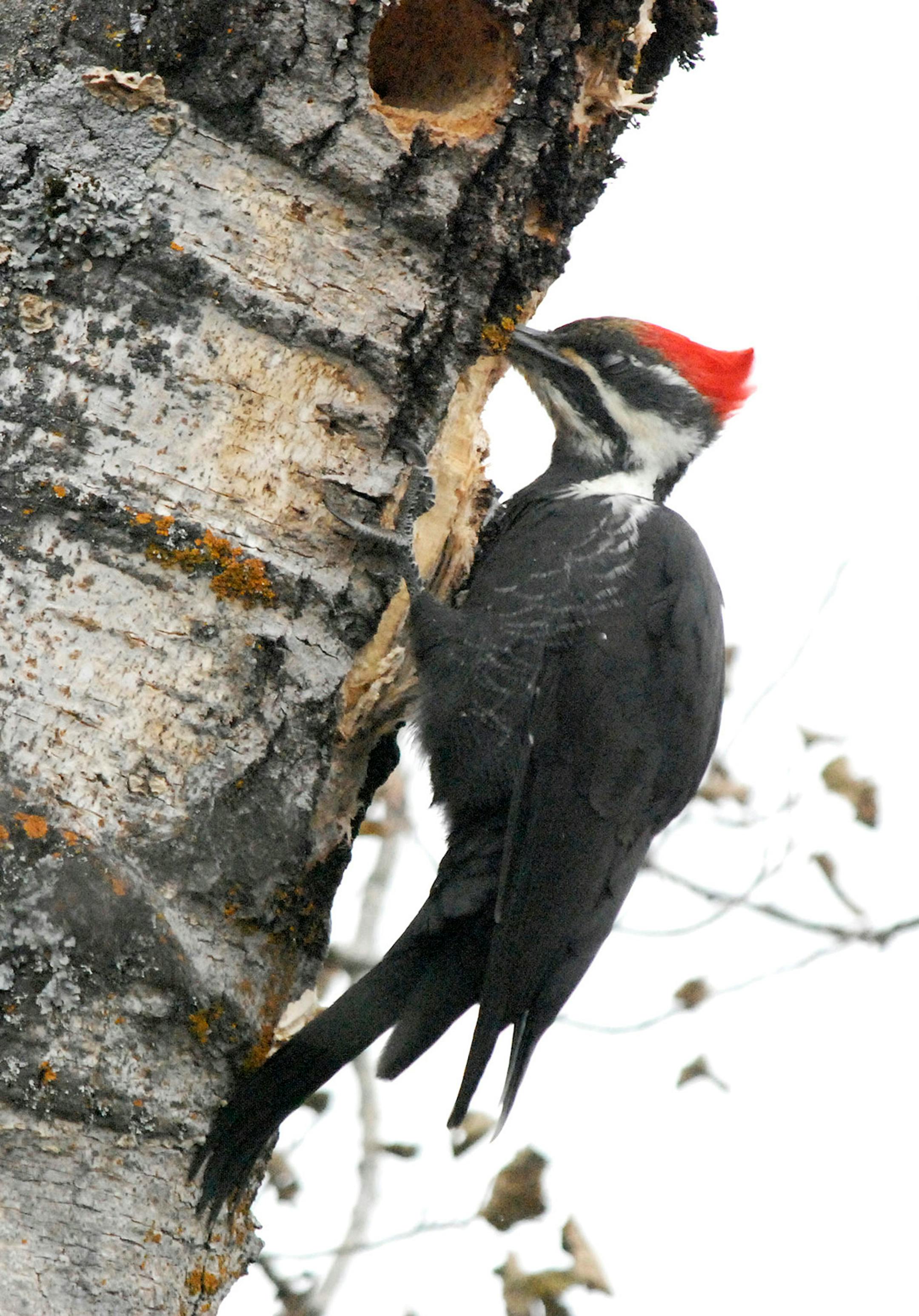
We loaded the T-shirt-wrapped woodpecker into the cat carrier in my car, and went our separate ways. At the Wildlife Rehab Center, the intake staffer said the bird seemed alert, so I began to hope that whatever was wrong with it was not life-threatening. Sadly, I received an e-mail some days later, noting that because X-rays showed the woodpecker had a fractured spine and would never fly again, he was humanely euthanized. (I surmised that while in flight the bird had been struck by a car.)