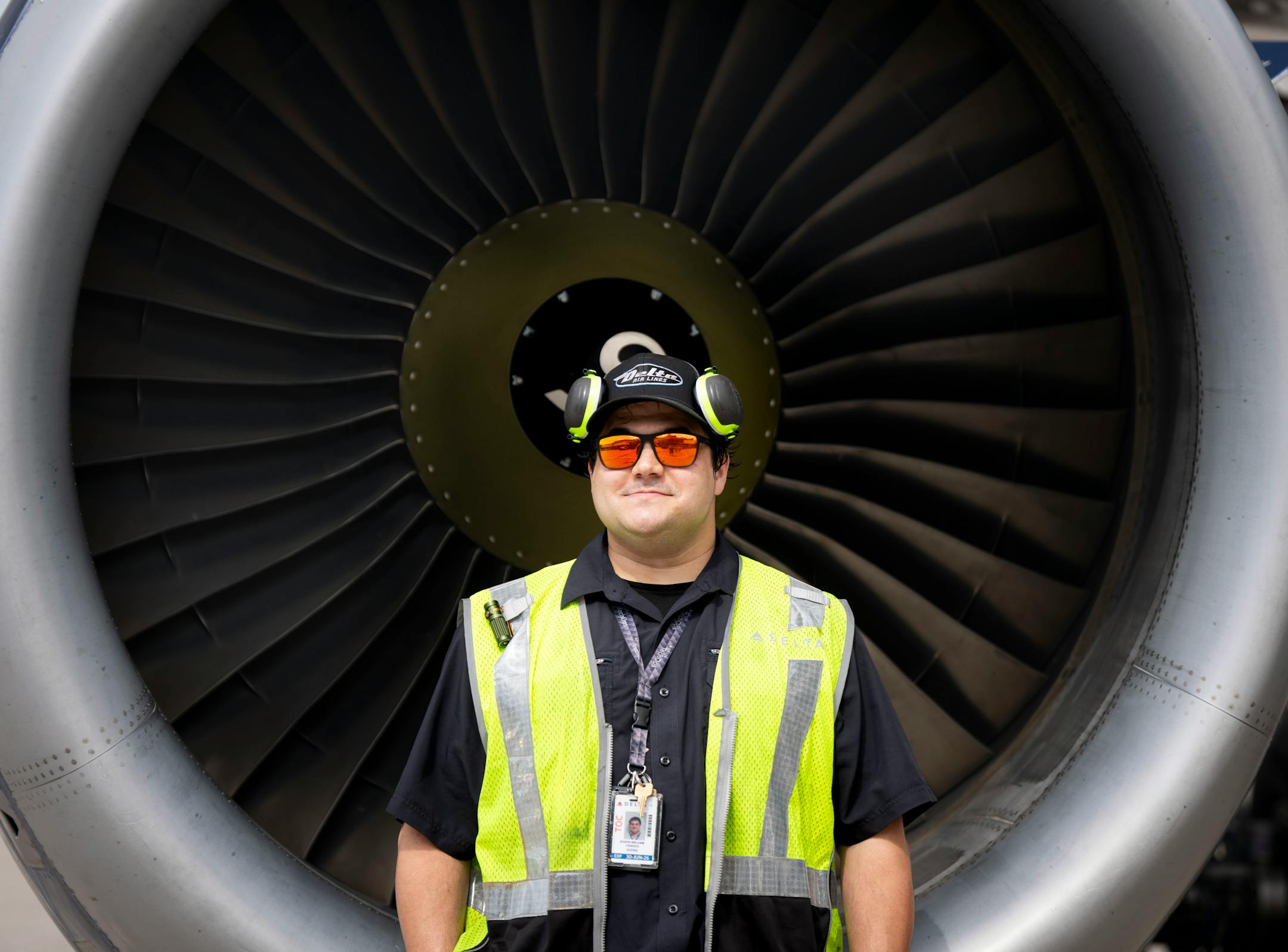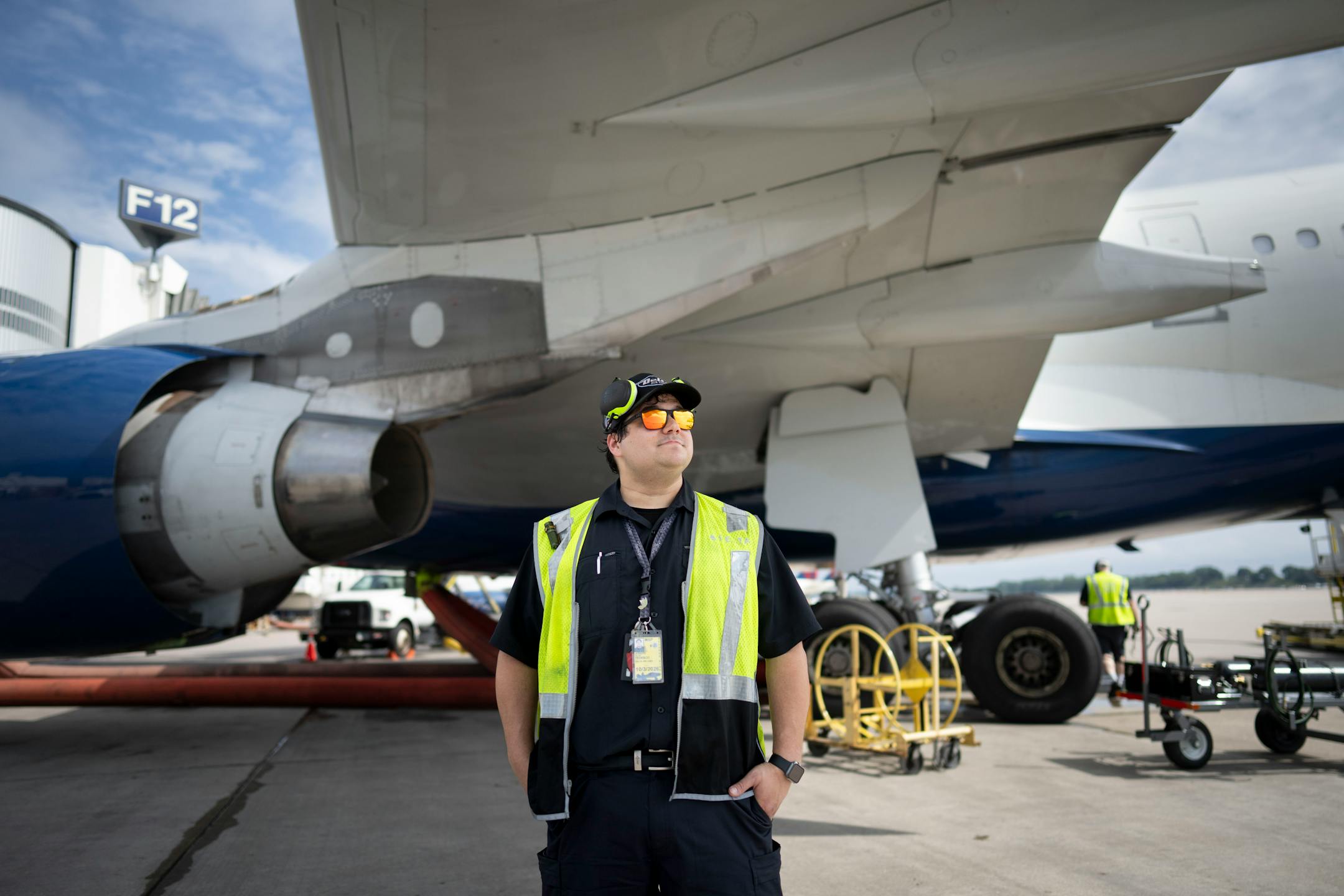
A coin flip would tell Joe Tedesco how he should change his life: heads, be a pilot and fly airplanes for a living. Tails, be the mechanic who fixes them.
The latter won, and that quarter helped the now 35-year-old chart a new course after a trail of ultimately unsatisfactory career paths. As an example, he had most recently worked in Hollywood as a camera operator.
“Sometimes you have to leave it to fate, right?” Tedesco said of his decision about a decade ago to study aviation maintenance.
The Bloomington native’s fascination with flight traces back to childhood. Tedesco’s uncle was an Air Force mechanic at Edwards Air Force Base, a test hub for advanced and cutting-edge military aircraft. Tedesco still recalls his uncle’s cool stories, like being among the first to see up close the ultra-secret B-2 military plane, known as the Stealth Bomber.
His career started as an aviation mechanic in Arizona, fixing helicopters used for tours. Delta Air Lines hired him as an aviation maintenance technician three years ago, stationing him at the airline’s sprawling technical operations base at Minneapolis-St. Paul International Airport (MSP), the carrier’s second-largest U.S. hub after its Atlanta headquarters.
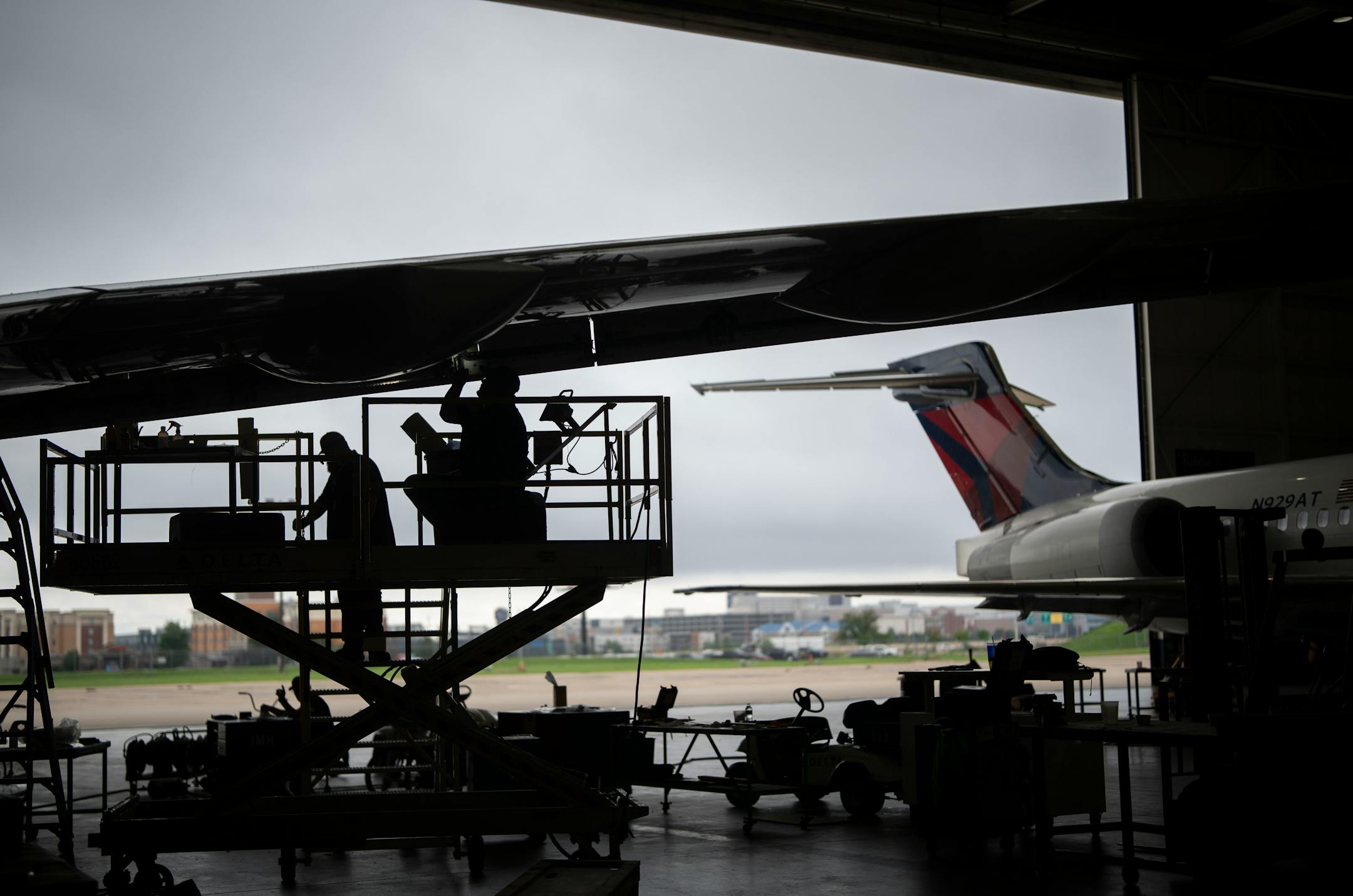
Aviation maintenance technicians, or AMTs, split across two major sectors, working out of hangars with airplanes needing long- or short-term repairs. The operations base is home to advanced technical equipment, including a state-of-the-art jet engine test cell, plus the highly skilled employees who ensure Delta’s airplanes are safe to fly.
Tedesco usually works on “the line,” the nickname for the hangar area where crewmembers perform quicker-turn repairs. The line runs 24/7, and every day brings a unique problem to solve.
Some days mean climbing on top of an airplane to fix a Wi-Fi receiver. Others mean working without cumbersome gloves in subzero temperatures. And some jobs are less glamorous than others, like catching a “38 Special,” code for the undesirable gig of repairing a broken lavatory.