

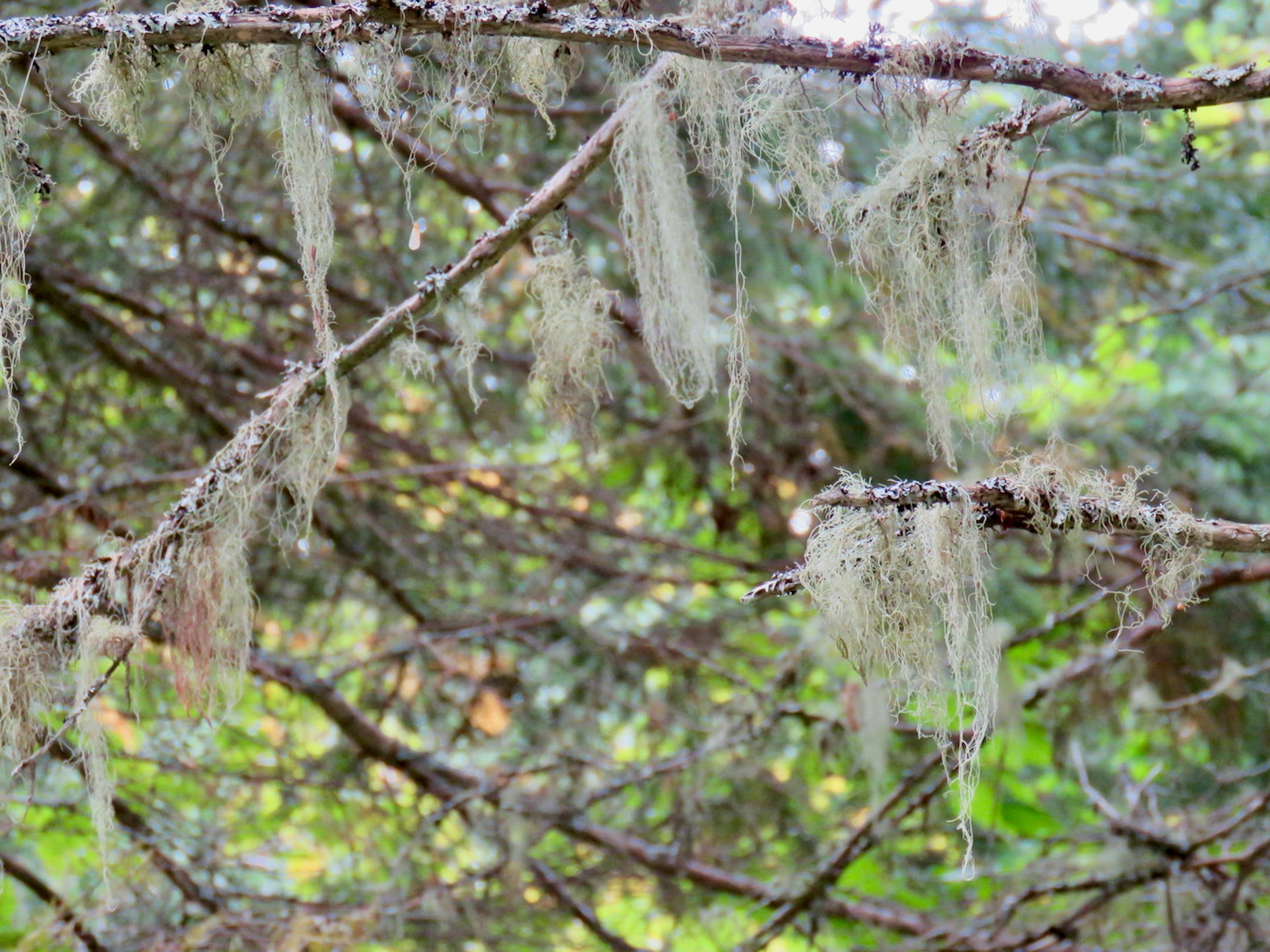
With wispy tufts that drape trees like haunted-house cobwebs, old man’s beard lichen can be an unexpected sight in northern Minnesota forests. It resembles a petite version of Spanish moss seen on Southern oaks, but those iconic sights are epiphytes, a non-parasitic plant such as ferns and orchids that grow on trees.
Lichen falls into its own category. It’s a symbiotic combination of two species, usually fungi and algae. The fungi provide the organism’s structure while the algae have the chlorophyll that can process the sun’s energy into food. Old man’s beard is a type of lichen among more than 750 species in the state.
It’s easiest to find as autumn strips leaves from forests and before snow buries trails. Look for it on North Shore trees, especially along rivers within state parks or waysides along Hwy. 61 such as Ray Berglund State Wayside (along the Onion River), Cascade River State Park and Grand Portage State Park (which has a wheelchair accessible trail).
Beard lichens fall into the fruticose category, which means they protrude from the material on which they live, such as rocks, earth or trees. Fruticose lichen can resemble little trumpets or tiny trees or bushes.
In the case of beard lichen, the hairy-looking light green or grayish clusters dangling from trees resemble an older man’s unkempt facial hair. Their genus Usnea comprises 130 species of beard lichen in the country.

Joe Walewski, naturalist and author of “Lichens of the Northwoods," lists beard lichens such as bristly, powdered, boreal, pitted and Methuselah’s living in the boreal forest. Because lichen naturally absorbs and filters air pollutants, it thrives best in areas known for clean air.
Birds use beard lichen for nest materials and humans have used it for wound dressing over the years. It contains usnic acid, which gives it the greenish color and helps deter bacteria and fungi. Traditional medicine practitioners use beard lichen to support respiratory, digestive and urinary health, as well as immunity.
If you see it eerily blowing in the winds on dead trees, be assured it doesn’t harm them and instead plays a part in a larger ecosystem.


