
In face of slowing economy, Minnesota business leaders rally to kickstart growth

The state Chamber of Commerce is zeroing in on slowing productivity, labor force growth and migration.

The Minnesota Star Tribune
November 19, 2025 at 7:23PM
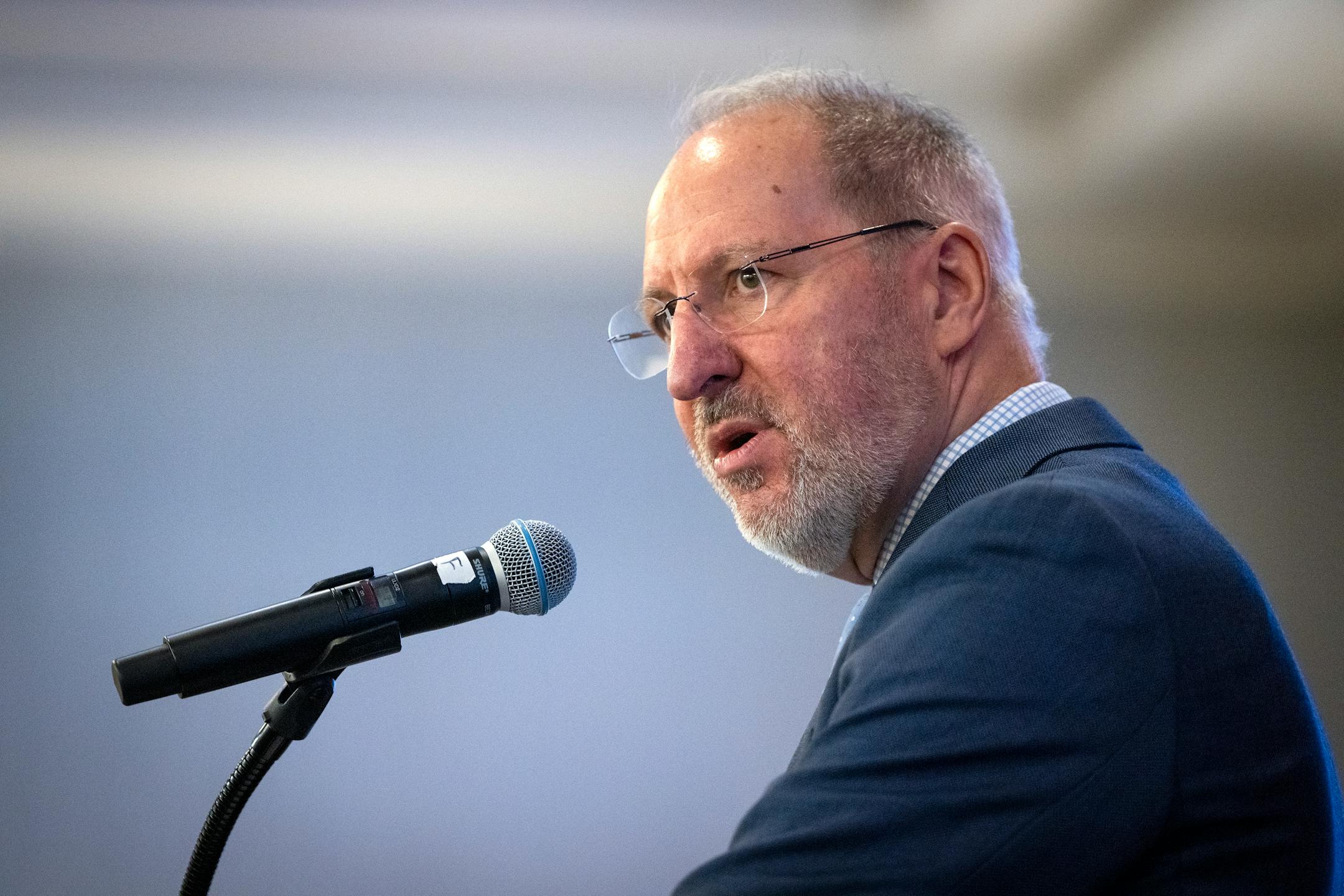
Doug Loon, CEO of the Minnesota Chamber of Commerce, said the Minnesota economy is not broken. But it needs a boost because it's in the bottom half of the nation in several economic indicators. (Leila Navidi/The Minnesota Star Tribune)

A tight labor market. Lagging productivity. Sluggish income growth.

The news isn’t new, but business leaders are sounding the alarm about Minnesota’s slowing economy. They warn that the state has fallen behind much of the U.S. and risks slipping even further as population growth stagnates and the cost of living continues to rise.

The Minnesota Chamber of Commerce, citing federal data, reported Wednesday the state now ranks in the bottom half of the country on growth in gross domestic product (GDP), jobs, labor force, per capita income and median household income.

“We are not broken as an economy,” Chamber CEO Doug Loon said at the organization’s 2025 Economic Summit in Eagan. “We just see some really fundamental data points that say we need to get on this before we end up in a truly disadvantaged position nationally and globally.”

With that in mind, the chamber is launching the Economic Imperative for Growth, an effort to bring together the business community and policymakers to come up with solutions.

The initiative is zeroing in on three areas for improvement: per capita GDP, labor force growth and net domestic migration.

Minnesota’s headquarters economy has historically been strong, with a diverse range of industries, a highly skilled workforce and above-average productivity and innovation, said Sean O’Neil, the Minnesota Chamber Foundation’s senior director of economic development and research.

It took decades to build that strength, he said, and it’s not a future guarantee.

“These are things that need to continually be stewarded, cultivated and guided along,” O’Neil said. “It’s important to not just look at, what do we have here in Minnesota, but what does the trend line tell us?”

Minnesota has lost ground in recent years, not just in labor market growth, but also with a decline in the number of large corporate headquarters and new patents.

Chamber leaders often point to state-level policies they say worsen Minnesota’s business climate, including a relatively high corporate tax rate and regulations such as environmental permitting and the mandatory paid leave policy.

The paid leave law, set to take effect Jan. 1, is a constant topic of conversation among Minnesota business owners, Loon said. The chamber has lobbied against it and will likely continue to push for changes.

There are also larger forces at play. From factory floors to farm fields, trade and immigration policies under President Donald Trump have diminished profits and shrunk the workforce. Cuts to federal funding for academic research also have economic implications.

“Minnesota has an incredible legacy. ... We have an incredible amount to be proud of,” said Tom Hockenberry, vice president for nutrition, technology and science at General Mills. “But I sometimes worry we get a little complacent with that and we aren’t hungry enough.”

Still, there are bright spots, particularly on the innovation front: New business formations are up in Minnesota, O’Neil said, including in tech-related fields that are also driving the national economy.

Ted Christopher, founder of New Brighton-based renewable-energy company Verterra Energy, said he’s hopeful Minnesota’s slowing economic growth is “a blip in the radar.”

“There are just so many things that we’ve got going for us,” he said.

about the writer

about the writer

Emma Nelson

Editor

Emma Nelson is a reporter and editor at the Minnesota Star Tribune.

See Moreicon

More from Business

See More
card image
card image
