The All-Star Game was back in Milwaukee on July 9, 2002. It had been played at County Stadium in 1955 and 1975 and now was being played at Miller Park for the first time.
Bud Selig had been the baseball commissioner for 10 years, and his family still owned the Brewers. The long battle for a new stadium had come to completion in April 2001, when Miller Park, with its retractable roof, opened next to where County Stadium stood since 1953. This was going to be a golden night for Selig, his family and the Brewers.
And then after 11 innings, with the game tied at 7-7, the managers – Joe Torre of the American League and Bob Brenly of the National – came to Selig sitting near the field and informed him they were out of pitchers. In truth, Torre was being kind to Brenly, since the AL did have a pitcher available for long relief, but in an anguished decision, Selig was forced to go along with the managers and declare a 7-7 tie.
The boos cascaded through Miller Park, and the embarrassment was so great for baseball that it had to come up with a plan to mollify Fox television: The All-Star Game determined home-field advantage in the World Series for the next 14 seasons.
It is truly unfortunate that Selig and all of baseball's brain wizards that surrounded him that night did not have the creativity for a tie-breaker that was displayed this past June 22, at Fritz Field in Cologne in Carver County.
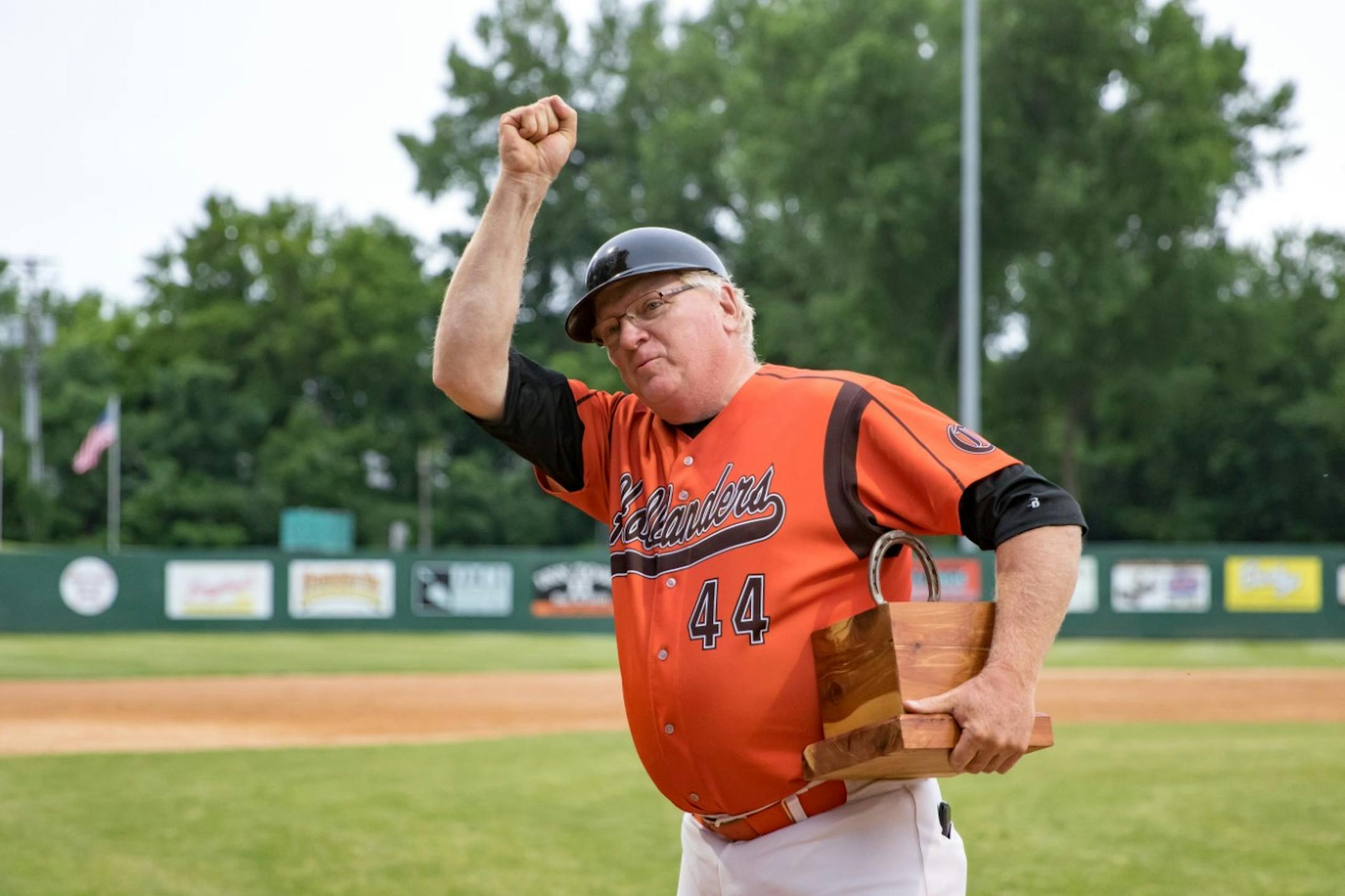
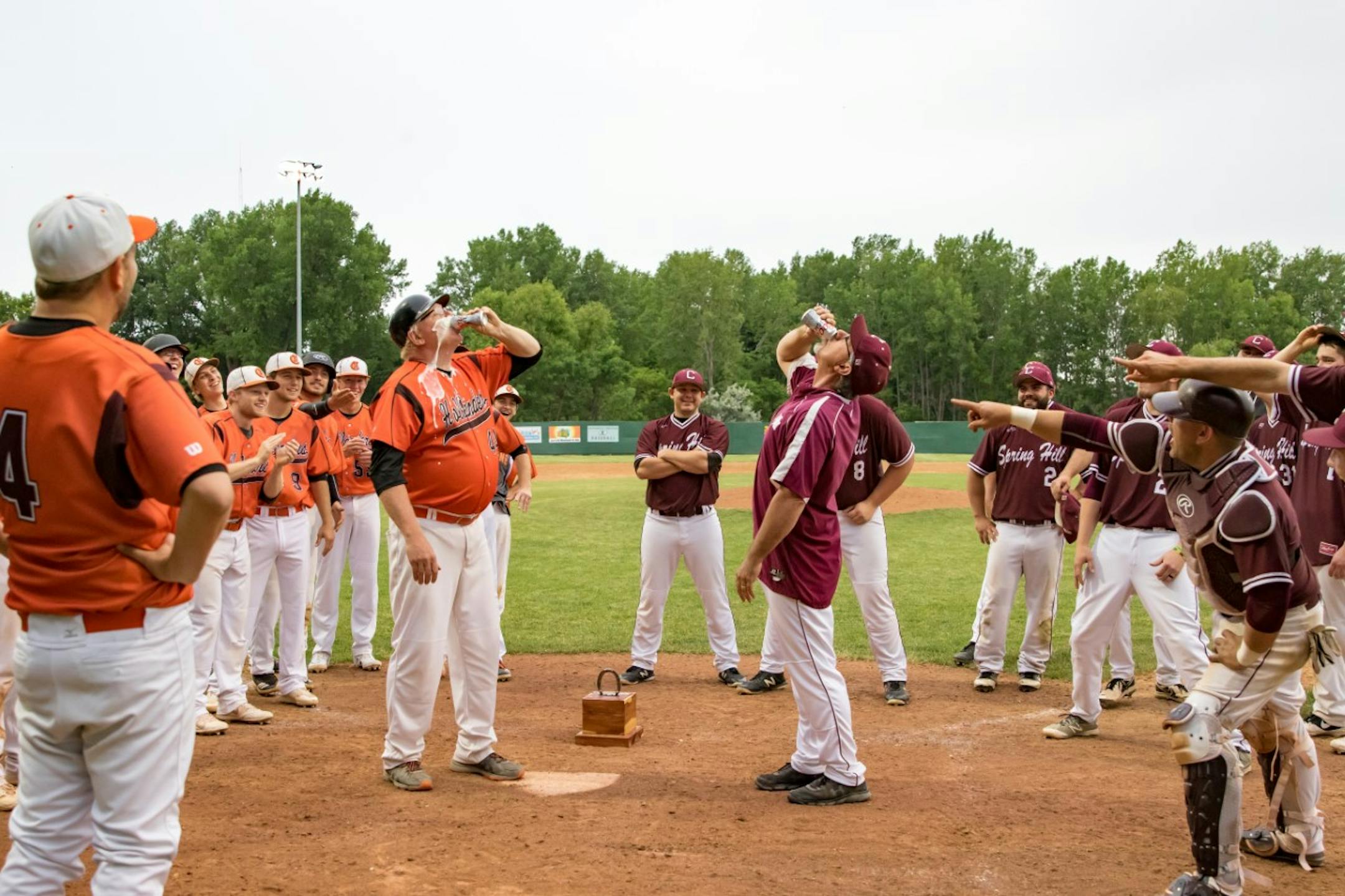
The Spring Hill Chargers from the Stearns County League and the Cologne Hollanders from the Crow River Valley League have developed an inter-league rivalry that features a mid-season game, with the winner receiving a traveling trophy: the Horseshoe.
By coincidence, 17 years after the events in Miller Park, Spring Hill and Cologne were tied 7-7, and after eight innings, the visitors from Spring Hill were out of pitching.
Being an amiable host, Cologne manager Craig Pexa agreed to halt the game, but what was to become of the Horseshoe until the teams would meet again in 2020?