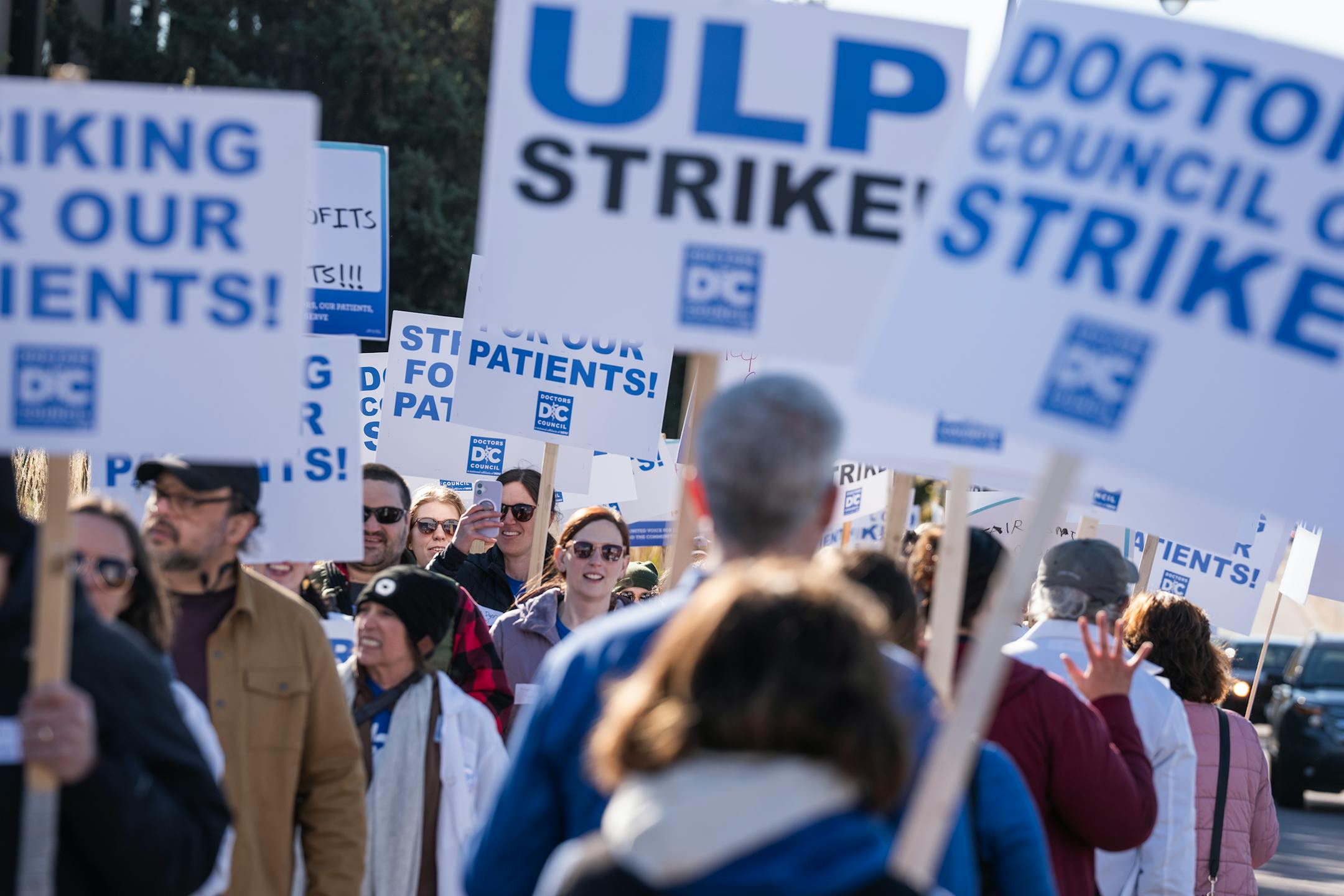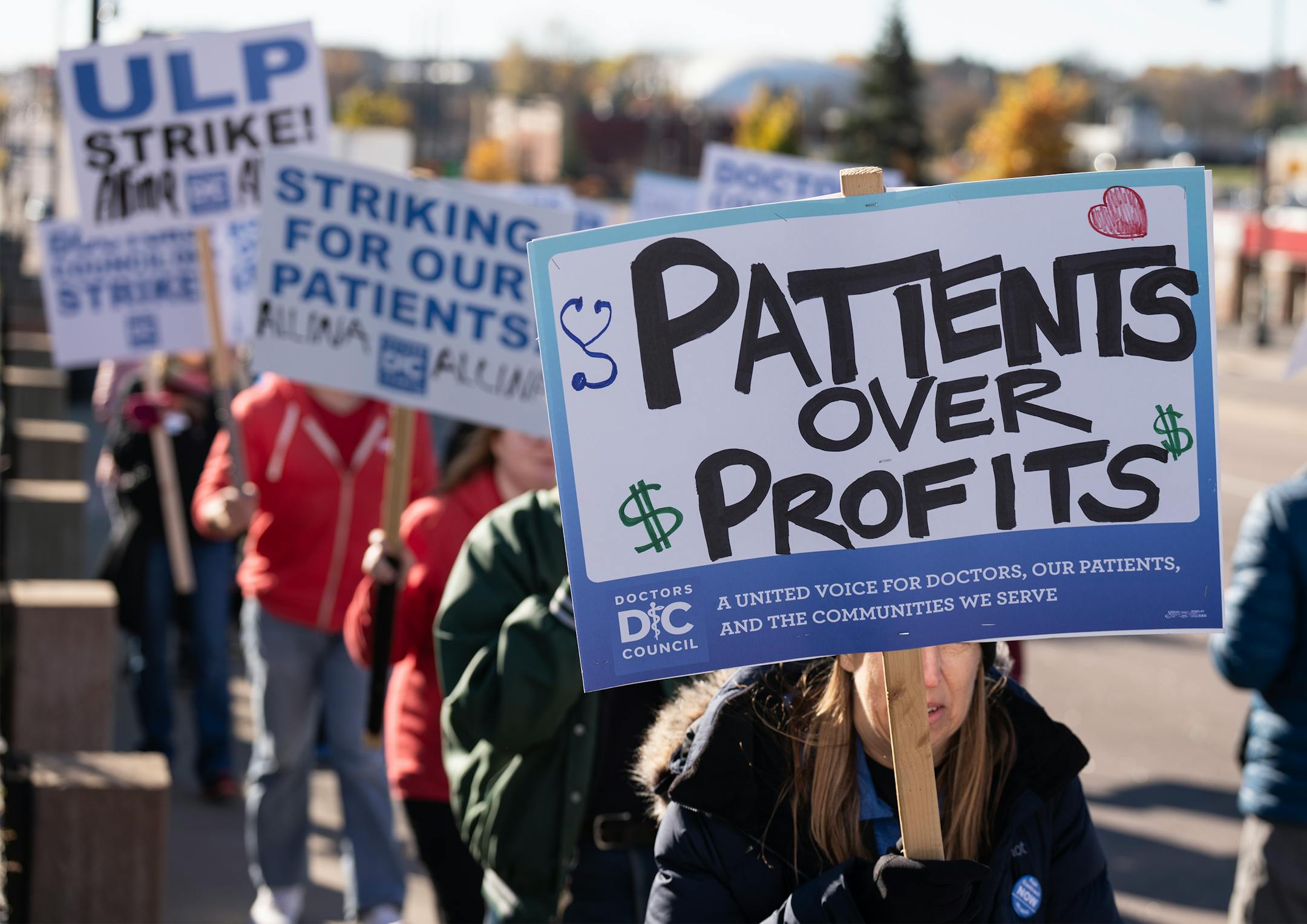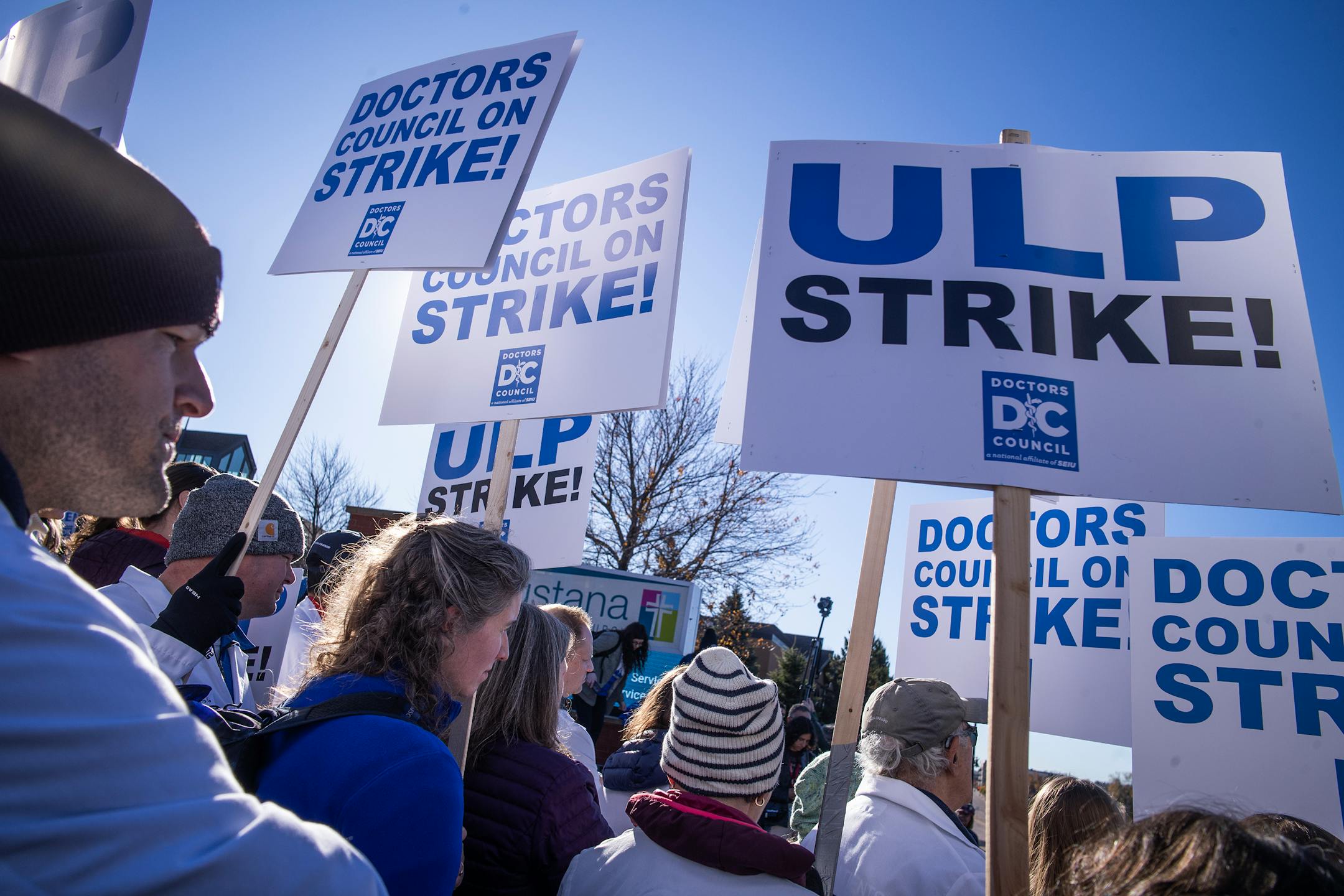
Doctors striking outside Allina Health clinics on Wednesday said they are being stretched too thin by an employer that expects them to see more and more patients while giving them less and less support.
The one-day strike by hundreds of doctors is believed to be a first in Minnesota and one of the largest involving physicians in U.S. history. The walkout followed 20 months of negotiations that failed to produce a first contract for the newly unionized Allina doctors.
Among their demands: four paid hours each week to complete paperwork and respond to the rising volume of patient emails and electronic messages.
Doing this work without pay, often late at night, is leading to burnout among primary care doctors that is threatening the stability of the profession and patients’ access to timely care, said Julie Donahue, a nurse practitioner at Allina’s Faribault clinic.
“What we’re doing now is not sustainable,” said Donahue, who joined with colleagues to picket outside Allina’s West St. Paul clinic. “We can’t see patients all day, go home and, when our kids go to bed, log back on and do more work.”
Allina in a statement said some of the doctors’ demands are unaffordable amid “ongoing financial challenges,” including budget cuts proposed by President Donald Trump’s administration and approved by Congress that could reduce how much the federal Medicaid program reimburses providers for the treatment of low-income and disabled patients.
“It would be irresponsible for either party to agree to a contract that adds significant new expenses that will undermine access and increase costs to those who pay for care,” the statement said.
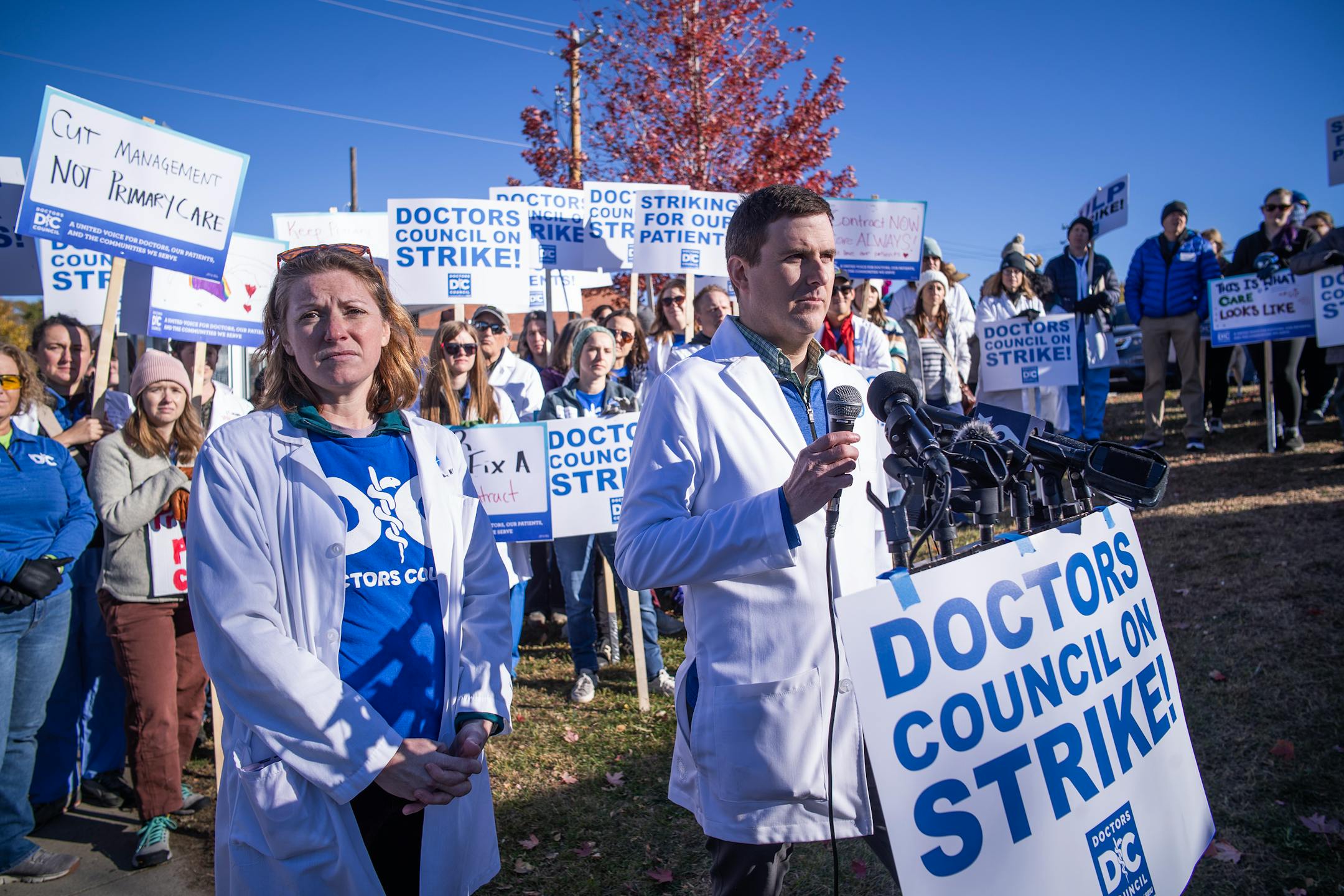
The health system closed its Annandale facility for the day but otherwise maintained patient care at the roughly 60 clinics under strike. Allina estimated that about a quarter of the 600 unionized primary care practitioners opted to work on Wednesday.