

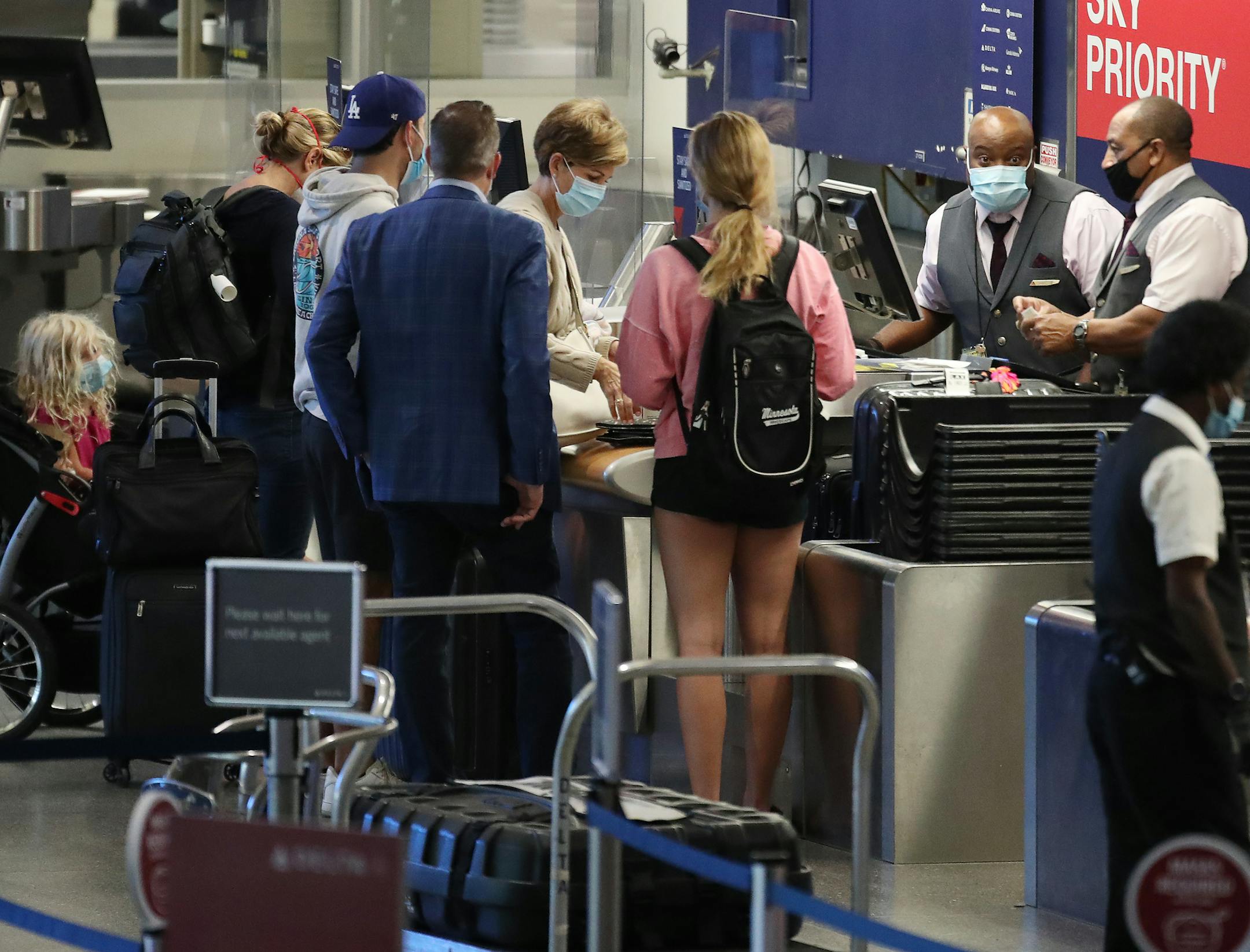
Darrell and Lynda Riley still have to take an occasional flight despite the pandemic, but they will only fly Delta or Southwest Airlines.
The couple was in the midst of a monthslong relocation from Maryland to California when the coronavirus pandemic engulfed the United States this spring. Since then, the husband and wife have established a list of criteria for choosing what flights to book: blocked middle seats and absolutely no layovers.
"If you are on a flight without a booked middle seat, you are just asking for it. Shoulder-to-shoulder for five hours without masks? No, thank you," said Darrell Riley, who recently flew Delta Air Lines from Los Angeles to Minneapolis-St. Paul.
"It was tough enough on that flight, which was pretty full other than the middle seats," said Darrell Riley. "That was all I could tolerate."
The major airlines have been brought to their knees by the global pandemic, sharply cutting the frequency of flights, parking planes and laying off workers.
As fall approaches, normally a peak time for business travel, they are vying for a much smaller pool of committed, nonbusiness passengers. And they're trying to reach them with a different message. Perks and amenities are no longer the focus, health and safety are.
"The airlines need us, they need us more than ever before," said Jason Cochran, editor-in-chief of Frommers.com. "For the last 20 years or so the average consumer, the economy flier, has been more or less ignored by the airlines. It was an arms race of amenities, like lounges and upgrades, largely aimed at the business class. That's all meaningless now."
More than half of U.S. air travelers are uncomfortable flying because of concerns about the coronavirus, according to a Gallup poll released last week. Those who do fly are booking based on a hodgepodge of safety measures put in place by different airlines.


