
Opinion | Covering Operation Metro Surge taught me that Black history isn’t linear

There’s always been a quiet tension between Black people of different backgrounds. But these communities are merging under pressure.

February 11, 2026 at 10:59AM
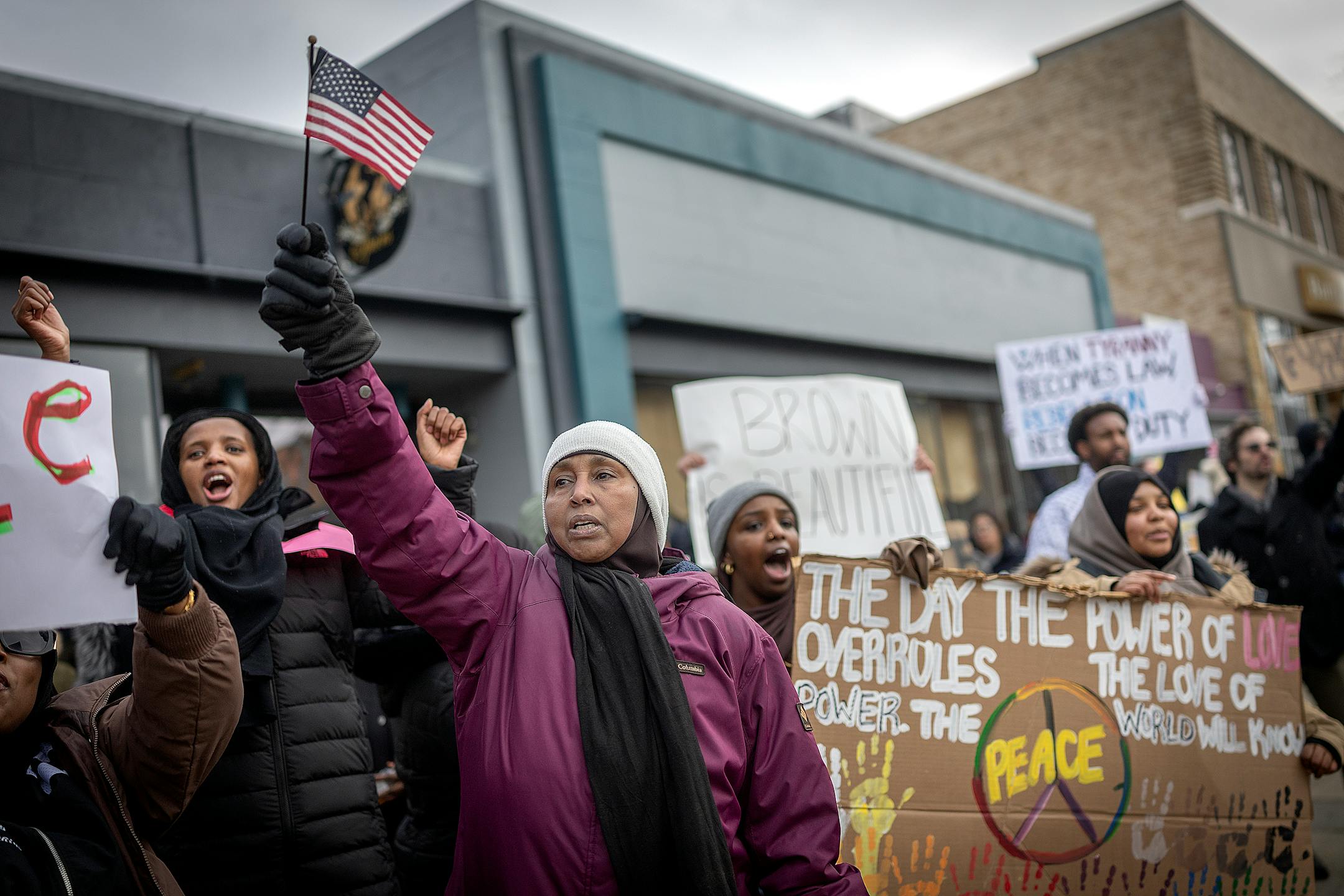
Protesters take to the streets in downtown Willmar on Jan. 19 after a 19-year-old Somali woman was taken by ICE agents in Willmar, Minn. (Elizabeth Flores/The Minnesota Star Tribune)

Opinion editor’s note: Strib Voices publishes a mix of guest commentaries online and in print each day. To contribute, click here.

•••

I was in the basement of a North Side church in Minneapolis three weeks ago when I realized I’d been covering this story wrong.

Upstairs, a choir was rehearsing “Lift Every Voice and Sing” for a Black History Month program. Downstairs, a dozen East African men sat waiting for the rehearsal to end so they could leave in a group. They weren’t there for the music. They were there because moving alone through north Minneapolis had become too dangerous.

I’m a journalist. I was there to report. But I’m also Ethiopian American, which means half the men in that basement reminded me of my uncles. One of them asked if I was staying for the program. I said yes, even though I had another interview across town. I stayed because leaving alone felt wrong, for him, and for me.

That’s when I understood: I can’t report on this story from the outside, because I’m not on the outside.

For years, there’s been a quiet tension in north Minneapolis between the Old Guard, descendants of the Great Migration, rooted in African American resistance traditions, and the New Guard, recent immigrants from Somalia, Liberia, Ethiopia and Eritrea. Different languages. Different reference points. Different relationships to American Blackness.

I grew up watching that gap. My parents would talk about it at the dinner table. Why don’t they understand what we’ve been through here? Why do they keep to themselves? It wasn’t animosity, exactly. More like two communities occupying the same space without really seeing each other.

Operation Metro Surge collapsed that gap in a month.

Now when I go to a Black History Month event, I see something I’ve never seen before: older Black American women walking young Somali men to their cars. University of Minnesota students, Black Student Union members who used to organize mixers, now coordinate mass movements so no one travels alone. The Capri Theater jazz tribute I covered last week had front rows filled with East African men who stayed until the very end, waiting for cover.

The community isn’t just coming together. It’s merging under pressure.

And I’m realizing that the story I thought I was covering, federal immigration enforcement in Minneapolis, is actually a story about what happens when two definitions of Blackness are forced to become one.

Here’s what makes it complicated: I’m supposed to maintain journalistic distance. I’m supposed to observe, not participate. But when a source asks me to stay because leaving in a group is safer, what do I do? When someone at a church program asks if I’m “one of us,” which “us” do they mean?

My editor at the Youth Today would probably tell me to stay objective. But objectivity feels like a luxury right now. The federal agents on Lake Street don’t distinguish between African American and East African. They see Black. They see immigrant-adjacent people. They see the target.

So the communities are learning what I’m learning: the categories we used to maintain, Old Guard, New Guard, African American, East African, don’t matter anymore. We’re all in the same basement now.

I think about this every time I sit down to write. How do I cover a story where my presence changes the dynamic? At that church, I wasn’t just a journalist. I was another body in the group, another person making it safer to leave. I was part of the tactic I was supposed to be documenting.

But maybe that’s the point. Maybe the story isn’t just about what’s happening, it’s about who gets to tell it. And maybe being inside the story doesn’t disqualify me. Maybe it means I see things others miss.

Like the way the older Black woman at the church greeted the East African men with “welcome home” instead of “welcome.” Like the Oromo word I heard a student use during a BSU meeting, a word that means both resistance and return. Like the fact that Black History Month programming isn’t just cultural celebration anymore. It’s infrastructure.

In three weeks, February ends. The Black History Month banners come down. The programming stops. And the tactical cover these events provide disappears.

I don’t know what happens then. Nobody does. But I know this: I’ll still be here, still reporting, still trying to figure out where the line is between journalist and community member.

Maybe there isn’t a line anymore. Maybe that’s what Operation Metro Surge taught me.

Black history isn’t something that happened in the past. It’s happening right now, in church basements and film festivals and student union meetings. And it’s not linear. It’s not a story that moves from Old Guard to New Guard, from past to present. It’s a story that circles back, pulls forward, merges and splits.

I’m covering it. I’m also living it. And I’m starting to think that’s the only way to get it right.

Amanuel Asfaw is a youth freelance journalist covering immigration policy and community organizing in the Twin Cities. He is a junior at Columbia Heights High School.

about the writer

about the writer

Amanuel Asfaw

More from Commentaries

See More
card image
Elizabeth Flores/The Minnesota Star Tribune

There’s always been a quiet tension between Black people of different backgrounds. But these communities are merging under pressure.

card image
card image