
How to winter in Minnesota? Rochester teaches its transplants.

As more people come to live in Minnesota’s third-largest city, officials want residents prepared to weather the weather.

The Minnesota Star Tribune
November 10, 2025 at 12:03PM
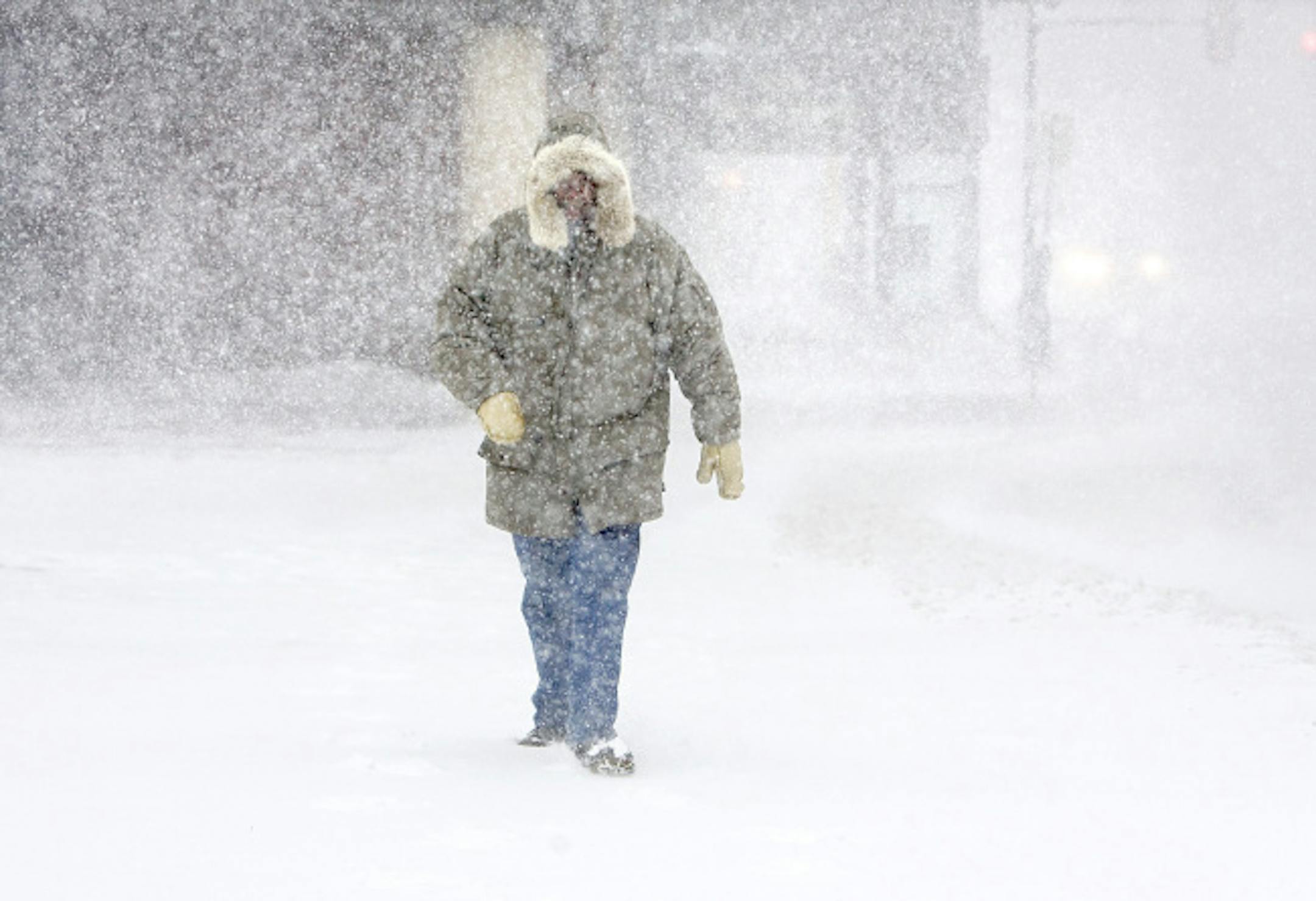
Dick Skogg of Duluth, Minn. walks down Superior Street toward the Lakewalk in Duluth on Sunday morning, Dec. 14, 2008. He walks five miles every day and didn't let the blizzard stop him from getting out the door. The Minnesota Transportation Department's Web site said blowing snow produced difficult driving conditions for most areas west and north of the Twin Cities. Many roads in western Minnesota closed.
Newcomers to Minnesota might find that decent boots, maybe even cleats, are in order this winter. (The Associated Press)

ROCHESTER – Coming from eastern China, Jiong Yu has no idea what to expect from a Minnesota winter.

He knows it’s supposed to get cold. Really cold. He knows there’s going to be snow. Sometimes, lots of snow. But he, his wife, and their three children have no idea what kind of frozen land, full of defrosters, tricky parking rules, frosty faces and sliding cars awaits them.

That’s why Yu and his family were out at Rochester’s second Snow Summit, picking up flyers and product bags like they were shopping at a mall. Though they’ve been in the U.S. only since September for his job as a research fellow at Mayo Clinic, he wanted to prepare.

“We have never experienced this kind of snow,” Yu said.

Rochester is growing by leaps and new people move here constantly — the city has grown by 40,000 people since 2000 alone, according to U.S. Census Bureau data. And even more people are expected to move into town from all over in the next few years, thanks to Mayo’s ongoing downtown expansion.

So the city was hoping to prepare winter newcomers for a chilly reception. But there were also tips for winter veterans who still need pointers for the upcoming season — who might not have known, for example, that you can reuse deicer.

Rochester hosted the summit late last month to give people information on what to do when the weather turns cold. Also to let kids see the city’s giant snowplows.

City staff say they got the idea from St. Paul, which has hosted its own summit for three years. They’ve found it’s an effective way to share gentle reminders about winter practices, from how the city deploys plows after a storm to sidewalk-shoveling guidelines.

“We’re the third-largest city now and it seems like the city never stops moving,” said Jake Busho, a Rochester street maintenance supervisor. “We want to teach people about what we do, then how to start limiting their salt use and impacts to the environment.

“Then we just kind of started snowballing from there,” he said.

Officials shared important lessons such as how to shovel snow around fire hydrants and the slow speed at which motorists should creep over icy roads to avoid becoming winter stunt drivers.

Such lessons help keep road workers safe, too, officials noted: Nick Soma of the Minnesota Department of Transportation said state snowplows are getting hit “way too often in the last few years” from drivers who don’t keep at least 75 to 100 feet behind them.

If you see a snow cloud on the road in front of you, maybe don’t barrel toward it, officials said; there’s probably a snowplow stirring up that cloud, trying to keep the roads safe. And make sure to give yourself extra time in the winter to get where you need to go, Soma said.

While streets typically get cleared quickly, it’s not always possible to have completely dry routes in city parks. Rochester mostly keeps its salt for the roads and advises good footwear — maybe even cleats — when taking Fido on any long winter walks.

It wasn’t just newcomers who learned something. Some people who may have considered themselves old hat at winter were surprised to find they could reuse some of the mixtures they put down on sidewalks and driveways, said Rachel Strauss, an environmental education specialist with the city of Rochester.

The tips: If people shovel first to reduce the amount of snow getting compacted, they don’t have to use as much deicer. Some deicers work better, melting the snow even in near-zero-degree conditions. And people typically need only about a coffee mug’s worth of salt for a typical 20-foot driveway or about 10 sidewalk squares.

“Afterwards, you can sweep up the salt so that it doesn’t wash down the storm drain,” Strauss said. “You can reuse it or you can dispose of it, but just prevent those deicers from getting into our waterways.”

Tips like that were useful for Matt and Elisabeth Van Cuyk, who have lived across the United States. They’ve spent the past seven years in Minnesota, where they’ve found the winters seem longer.

But somehow they found a silver lining, after their first winter of record-breaking snow.

“We had expectations that that was going to be like that every single year,” Matt Van Cuyk said. “Luckily, it hasn’t been like that.”

Yu and his family are more concerned about the cold. They bought winter wear even before they left China after hearing it can get below zero in Rochester in winter.

“That is quite freezing for us,” Yu said. “Normally we have temperatures around [freezing], which is maybe not that cold, but maybe it will be very cold for us here.”

about the writer

about the writer

Trey Mewes

Rochester reporter

Trey Mewes is a reporter based in Rochester for the Star Tribune. Sign up to receive the Rochester Now newsletter.

See Moreicon