

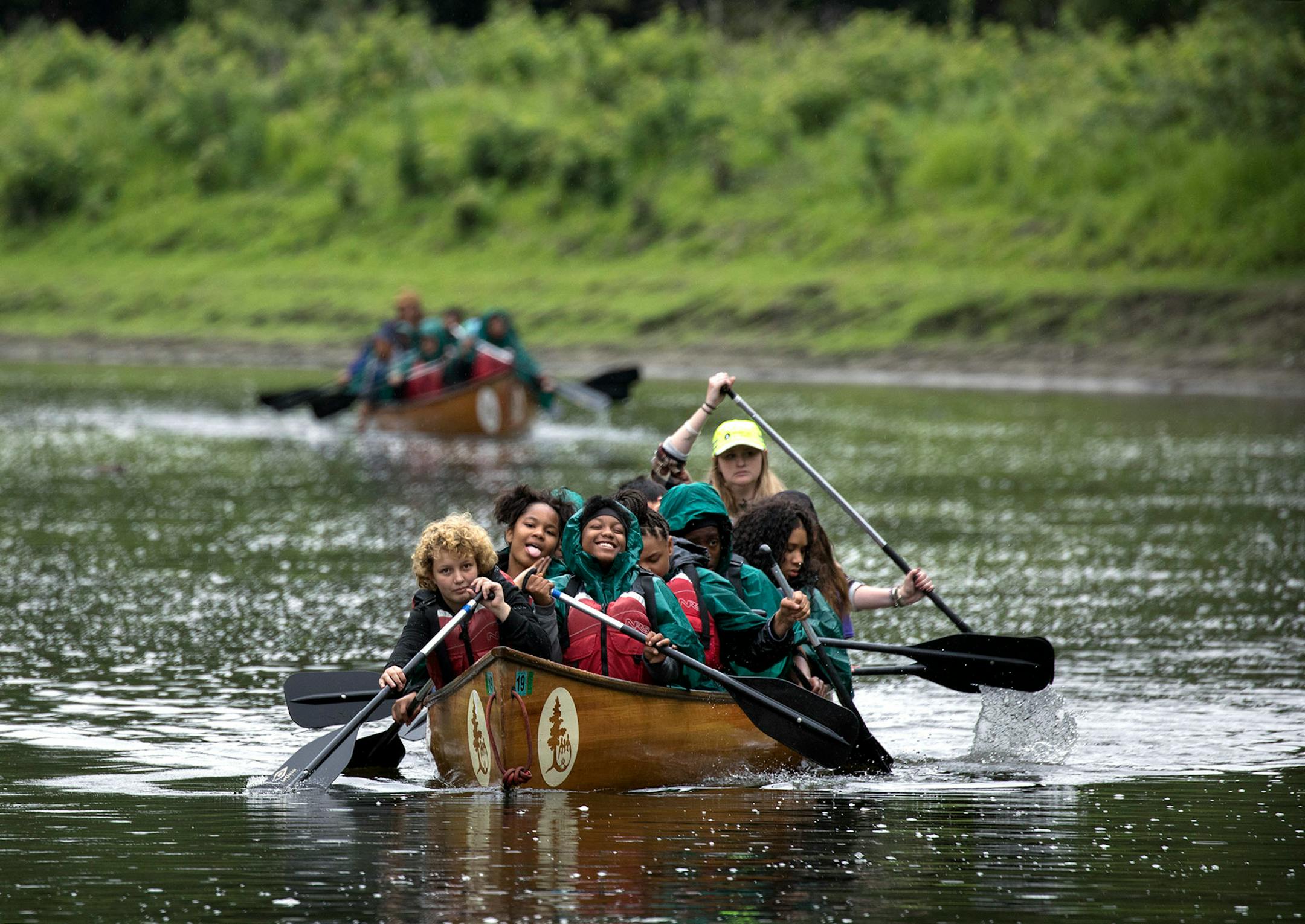
Picking a camp for your child is no easy task. If it’s an overnight camp, or a day camp they’ll visit for several weeks, the choice can feel as significant as selecting a school, says Henry DeHart, CEO of the American Camp Association, a national camp accreditation program.
“You’re picking a community to join that will be with you over time,” he said. “Often, friendships made at camp last a lifetime.”
But all the options can be overwhelming. There are hundreds of camps in Minnesota, notes Meredith Englund, whose website, Camperoni, offers a free-to-use database of camps sorted by multiple criteria, designed to help simplify the search.
Englund and DeHart offer tips on how to find a good fit and navigate the sign-up process.
How do I find the right camp for my child?
Englund recommends caregivers start with their constraints. A day camp with a 3 p.m. pickup, for example, isn’t an option for a parent who works until 5. (Camperoni’s site can filter selections by drop-off and pick-up times as well as other critical factors such as distance and price.) Most sleepaway camps are for kids age 7 and older and some camps offer an introductory, three- or four-night option for first-timers. Then you can consider the camp’s activities (if they are more general or if there’s a specific focus) and whether they evolve as campers age.
If I’m selecting more than one camp, how do I assemble the right mix?
The first year your child attends summer camp, Englund recommends signing up for a variety of camps, trying each for a week or two. Though it’s more work, logistically, she says it’s better than selecting one camp for the entire summer and then realizing it’s a bad fit. In subsequent summers, Englund suggests returning to favorite camps while also working in new ones. There are a surprising number of niche camps available, for kids who love everything from Harry Potter to “KPop Demon Hunters” to debate.
“If you can think of a passion that kids are interested in, there is a camp for that,” Englund said.
What if I can’t afford camp?
Most camps offer financial assistance. Even if their websites don’t list information, it’s worth calling to find out if help is available, Englund says. Dependent care Flexible Spending Account (FSA) and child and dependent care tax credits can help offset costs, too.


