

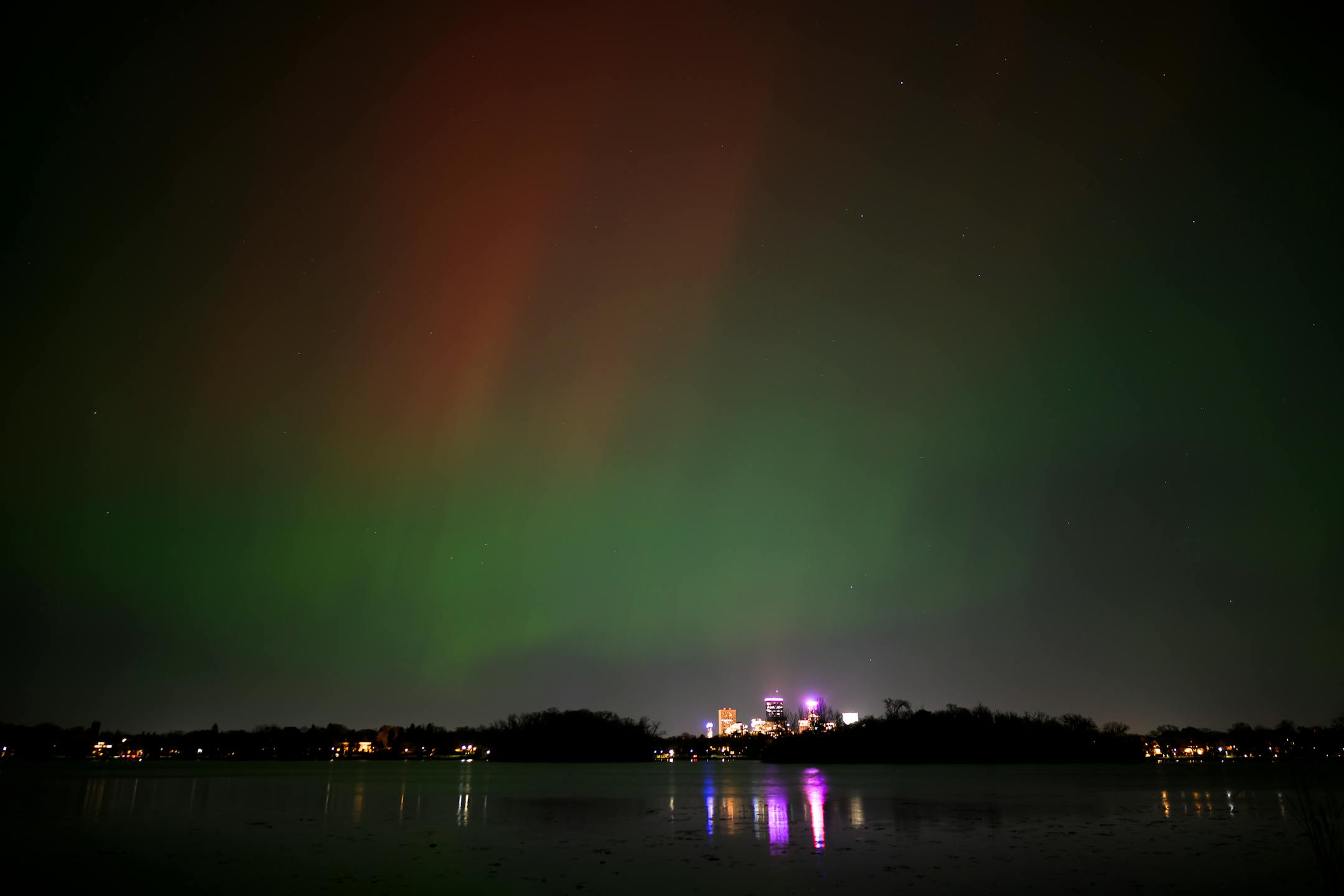
Many Minnesotans, especially those in more southern urban areas, saw their first vibrant pink northern lights after the sun’s coronal mass ejection triggered a celestial spectacle Nov. 11.
You can thank physics and chemistry for the lights that danced into waves, streaks and ethereal-looking shapes. You can also estimate the altitude of the aurora borealis based on what colors unfurled between the horizon and directly overhead.
Colors show up when charged fast-moving particles (electrons) are carried by solar winds into the Earth’s atmosphere. As they get funneled north by magnetic fields, they interact with atmospheric gases. The electrons excite the oxygen molecules, which emit photons — small bursts of energy in the form of light — as the molecules return to their calm state.
When billions of these collisions occur after sundown, their glow can light up the night sky.
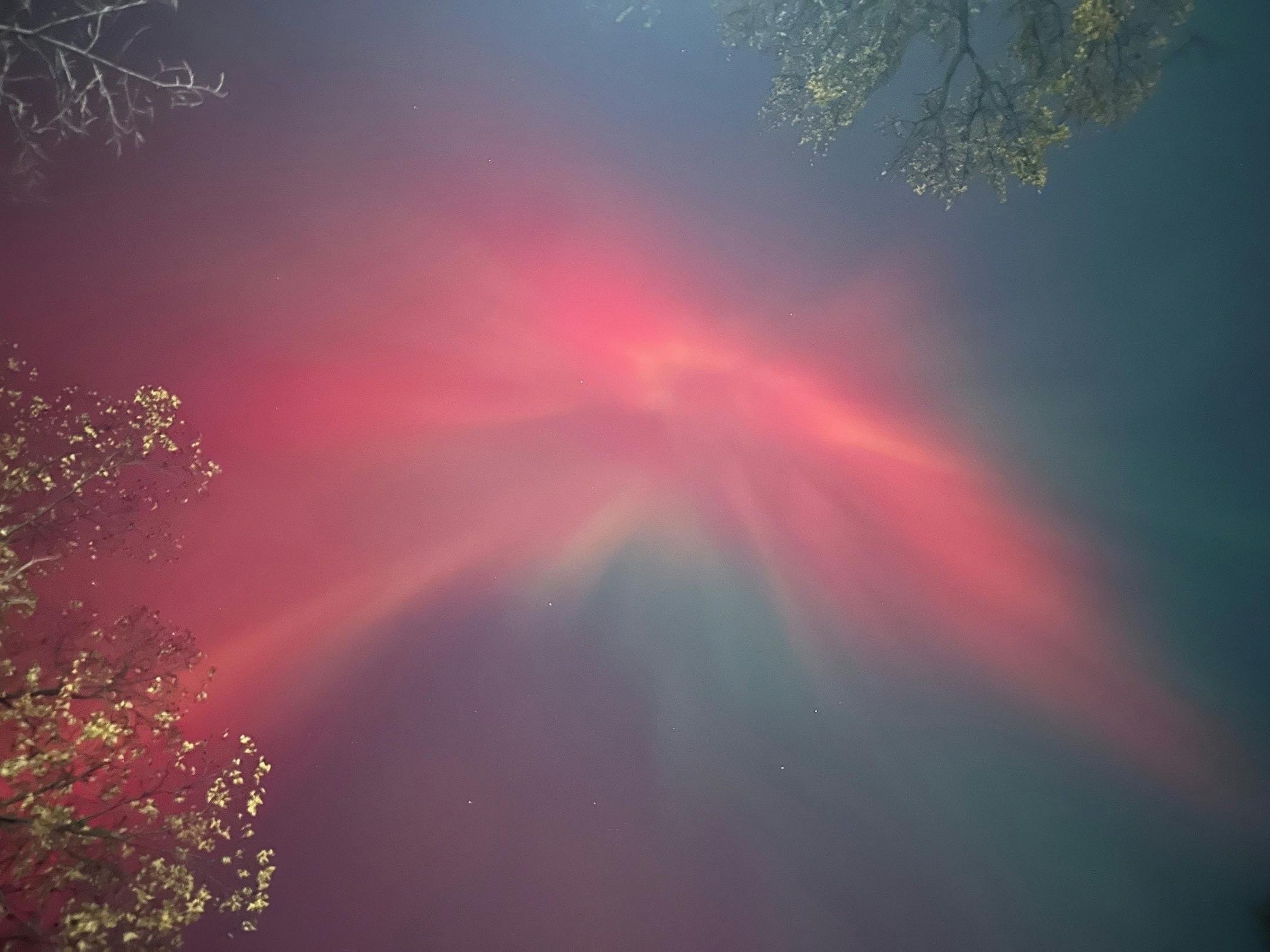
Red is the rarest color as it occurs more than 150 miles above the Earth’s surface. It requires intense solar activity to spark enough encounters at this altitude because oxygen is thinner and encounters are less frequent. Yellows and pinks may show up as those reds mix with green or blue at lower altitudes.
Northern lights observers are most likely to catch undulating streaks of green. These occur at the lower and more oxygen-rich altitude of 60 to 150 miles. Human eyes also have a greater ability to detect green colors, making it the most visible shade of northern lights.
At lower altitudes, oxygen mixed with nitrogen can emit ultraviolet light, while interactions with nitrogen alone can emit shades of blue.
You can sign up for northern lights alerts with aurora forecast apps or check local meteorology reports for a heads-up on solar events. Keep a camera or phone camera handy when seeking the aurora borealis. Improving technologies allow them to gather light better than the human eye, making northern lights brighter and easier to see through a lens.


