

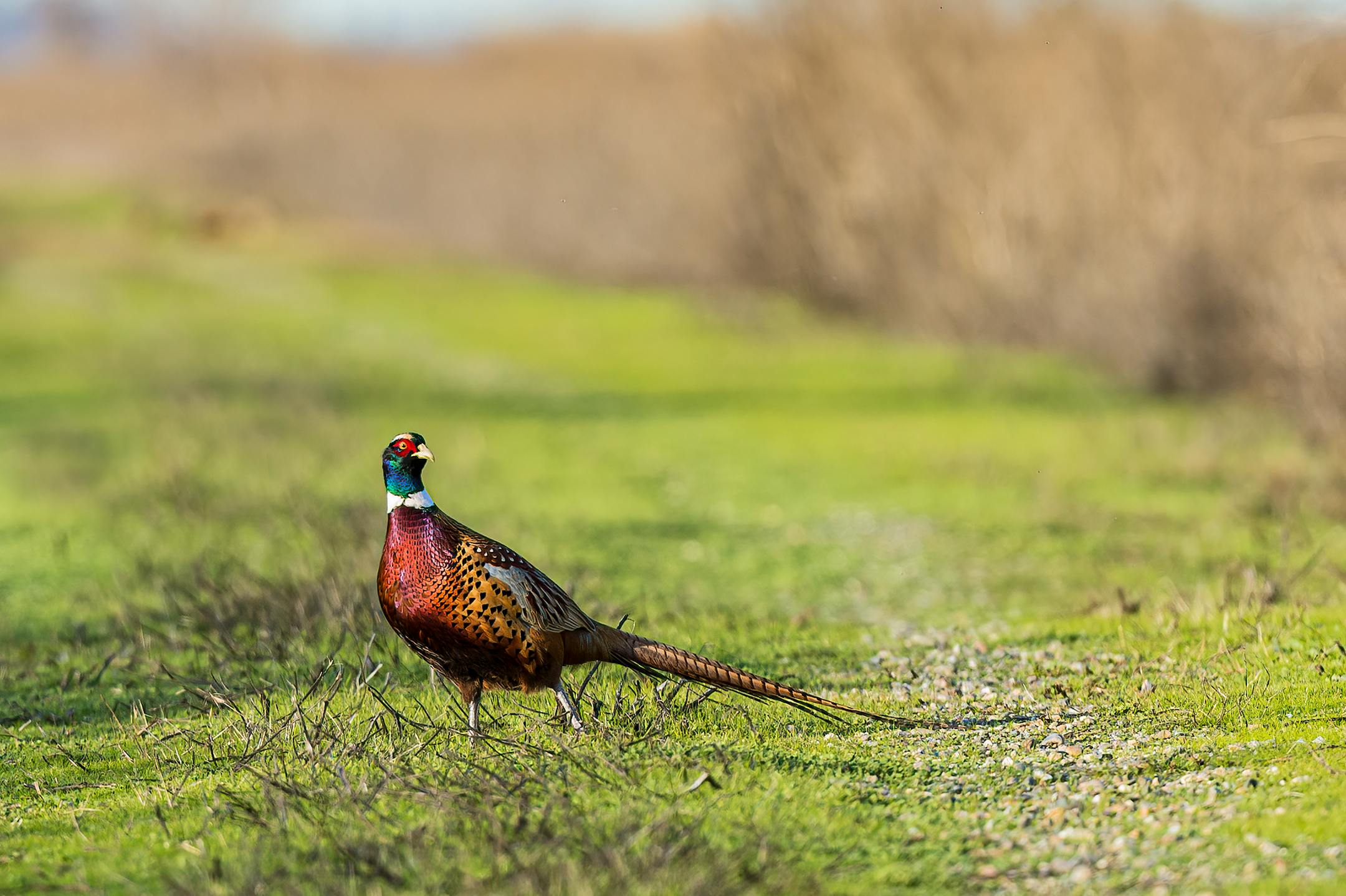
SAN JOSE, Calif. - Startled, large flocks of pheasants burst into flight, exploding with colorful fuss and flutter from thickets of wild grass and fallen leaves.
But this was decades ago, when California’s autumnal landscape was a mosaic of fallowed fields, diverse crops and weedy stubble — and the handsome birds were abundant, including in the Bay Area.
Now the inconceivable is happening: Pheasants are vanishing.
To understand why, the state’s wildlife biologists are taking tiny tissue samples from the tongues of hunted birds in California wildlands, hoping that a map of the species’ genetic diversity will help explain their loss, and suggest a solution.
Birds were sampled at seven refuges. Since November 2023, the scientific team has collected an estimated 330 to 350 samples; when the study wraps up after pheasant hunting season ends, it hopes to have a total of 400 samples.
Increasingly isolated from each other because of fragmented habitats, the birds may be suffering from dangerous inbreeding. Or perhaps wild birds are breeding with weaker farm-raised and released birds, creating less resilient offspring.
Prized game animals, “they were so common at one time, and part of a long-standing traditional hunting heritage in California,” said Ian A. Dwight, principal investigator at the California Department of Fish and Wildlife.
The research may inform future survival strategies, such as moving wild pheasants from one part of the state to another to increase genetic mixing. The state is also providing incentives to private landowners to improve the birds’ habitat.


