
Brown: Halting, slow, beautiful: Recovery from mental illness takes many forms

Music helped this jazz artist find focus for his mind.

Columnist Icon
The Minnesota Star Tribune
July 21, 2025 at 11:00AM
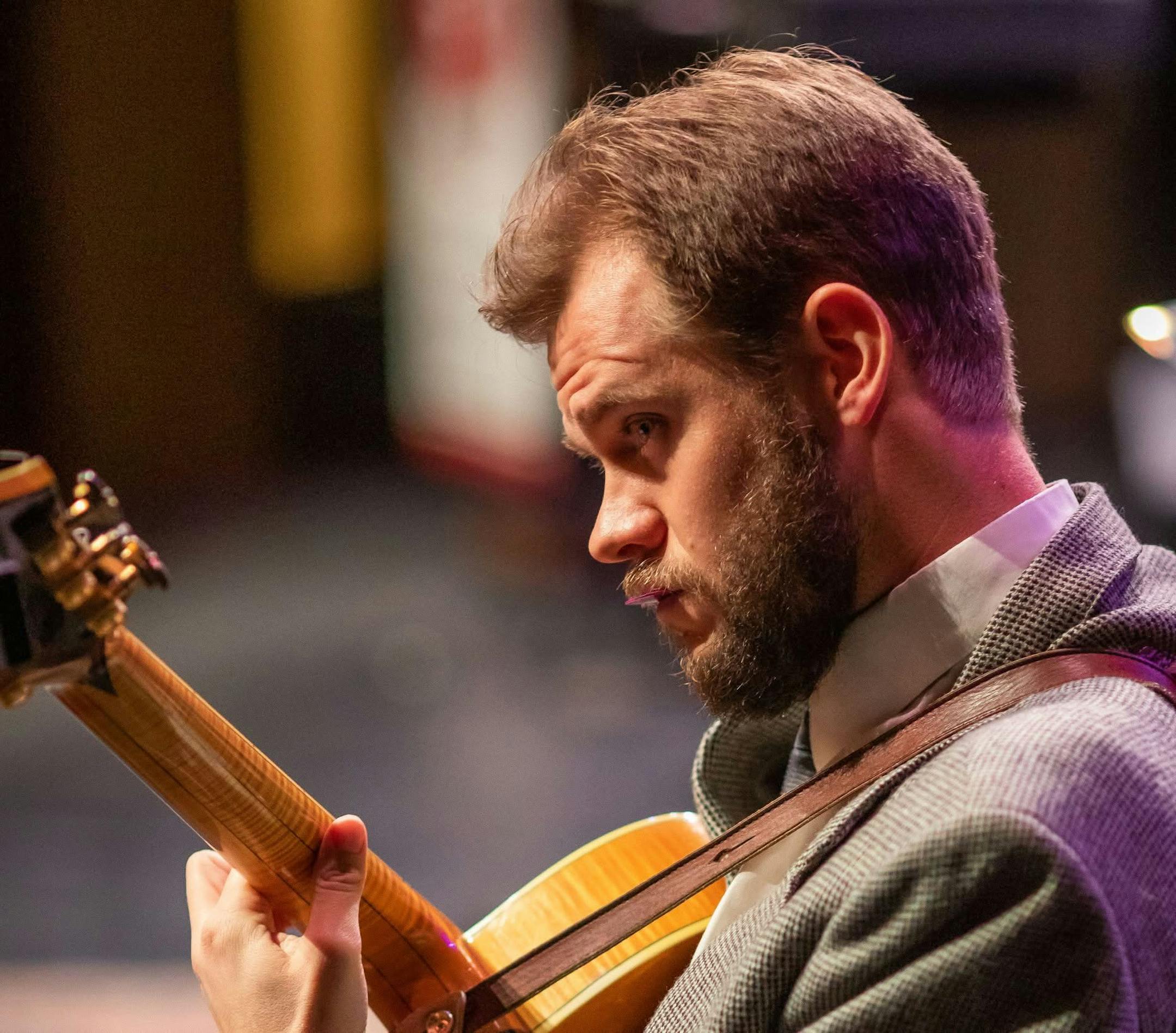
“Music is like meditation. It’s mindful and present. It’s how I focus my mind and relate to some cosmic force bigger than myself,” says jazz guitarist Sam Miltich, photographed in 2018. (Grant Frashier )

Opinion editor’s note: Strib Voices publishes a mix of commentary online and in print each day. To contribute, click here.

•••

This column is part of a series of occasional columns regarding mental health in Minnesota, chronicling ongoing struggles, emerging progress and voices of hope.

•••

Over the past few months, I’ve been exploring problems associated with mental health care in Minnesota. They are numerous, from a shortage of providers to a glut of desperate people stuck in emergency rooms and jails. But there’s something in the story that’s missing, perhaps the most important thing of all: hope.

In my many conversations, I’ve met people who faced the worst mental illness has to offer and came out OK. These are tales of recovery, but also of the need for vigilance. For people experiencing mental illness, treatment is not about a cure, but effective management of life as it is. Whether through medicine, therapy or other support, people experiencing an intolerable crisis can find a way back. They must only take a step toward those who want to help them.

One inspiring story stands out. Years ago, just a few miles through the Itasca County woods where we both live, I met a great musician and a kindred spirit in the study of Iron Range history. At first, I knew nothing about his private battle with mental illness.

As a kid in the 1990s and early 2000s, Sam Miltich became a self-taught jazz guitar phenomenon. Born into a family of northern Minnesota musicians, he was doing international tours with hot club jazz bands when most of his peers were rustling up quarters for dormitory washing machines.

Then, in 2007, at the age of 22, Miltich suffered a psychotic break. It was unlike anything he had experienced before. Symptoms included auditory hallucinations and profound anxiety.

“The best way to describe it is that it’s a very fearful experience for everyone,” said Miltich.

Fearful for him, because he couldn’t trust anyone, even the people closest to him.

“It’s very confusing, scary, distracting and disorienting,” said Miltich. “Because your brain is trying to sort this out, your ability to take care of acts of daily living falls by the wayside. I would say it’s akin to dementia. Your brain has gone haywire on you.”

It was just as frightening to others in his life.

“It’s scary and confusing to them because the behavior that comes because of it is not normal, acceptable behavior in society,” he said. “It’s different. It’s the same sense that anyone would have in dealing with someone with autism or dementia. People struggle to know how to help. That’s the heartbreak with mental illness.”

After his first psychosis, it took years to sort out what was really happening. At first, he was treated for depression with psychotic features. Then it was a schizoaffective disorder. It took two years to land on the official diagnosis of paranoid schizophrenia.

“There are treatments that work,” said Miltich. “It worked for me. It doesn’t mean my symptoms are gone. They’re there. But I can manage them.”

Symptoms can manifest differently, however. In 2018, Miltich woke up one morning having suffered sudden and profound hearing loss in his left ear. There was nothing doctors could do. For a jazz musician, this was a terrible blow, inhibiting his internal sound balance and stage improvisation. The event aggravated his post-traumatic stress disorder and triggered worsening symptoms of his schizophrenia, including visual hallucinations, something he hadn’t experienced before.

Several years later, Miltich retrained his mind to play with one ear, and has now returned to music full time. He grows a big garden, hunts, fishes and plays gigs with some of Minnesota’s best jazz artists.

“When I started to regain wellness, rhythm and structure in my day was really helpful,” said Miltich. “Music is like meditation. It’s mindful and present. It’s how I focus my mind and relate to some cosmic force bigger than myself.”

Miltich now performs a one-man show called “An Improvised Life.” He plays some of his favorite songs, interspersing them with his own story of mental illness and recovery. He talks about Thelonious Monk, an all-time jazz great who also had schizophrenia. Reading about Monk’s life, Miltich said, he most admired the man’s ability to stay married and raise kids during an era with far fewer mental health resources.

That’s why one of Miltich’s proudest achievements isn’t his music; it’s his family. Married 17 years, he and his wife have two children who now play music with Sam. They know about their father’s mental illness, but only because he speaks about it openly.

“They feel open and comfortable talking about their own mental health,” said Miltich. “One of my kids’ school projects was ‘Who do you admire?’ He said it was his dad, ‘Because he’s shown me how to live a mentally healthy life.’ That’s what we should all do.”

Miltich and I talked about the policies and political issues weighing on today’s health care system. Indeed, much work remains ahead. But he said that progress from the time of his first diagnosis to the present has been remarkable.

For one thing, the stigma is reduced. People are willing to talk about mental health. Emergency services, like the 988 helpline, are available to everyone experiencing a crisis or even just having basic questions about mental health.

“Mental illness is by no means a death sentence,” said Miltich. “Recovery is possible for every person willing to put in the time and effort. It’s out there and it’s available to all of us.”

Just as jazz is one of the most complex forms of music, mental health is one of the more complicated parts of the human experience. And yet, with practice and love, greatness can be born into this broken world.

Opinion editor’s note: If you are experiencing thoughts of suicide or self-harm, the 988 helpline connects you with local resources wherever you are. Immediate aid in a crisis is always available. Call 9-8-8.

about the writer

about the writer

Aaron Brown

Editorial Columnist

Aaron Brown is a columnist for the Minnesota Star Tribune Editorial Board. He’s based on the Iron Range but focuses on the affairs of the entire state.

See Moreicon

More from Columnists

See More
card image
Mark Vancleave/The Minnesota Star Tribune

As Faribault joins the list of cities without a birth center, it may be time for the Legislature to get involved.