
‘Not going to get any better’: Small-town Minnesota market closes as meat prices rise

Thinning cattle herds and higher processing costs are a couple of factors making it tough on meat locker businesses.

The Minnesota Star Tribune
November 21, 2025 at 12:00PM
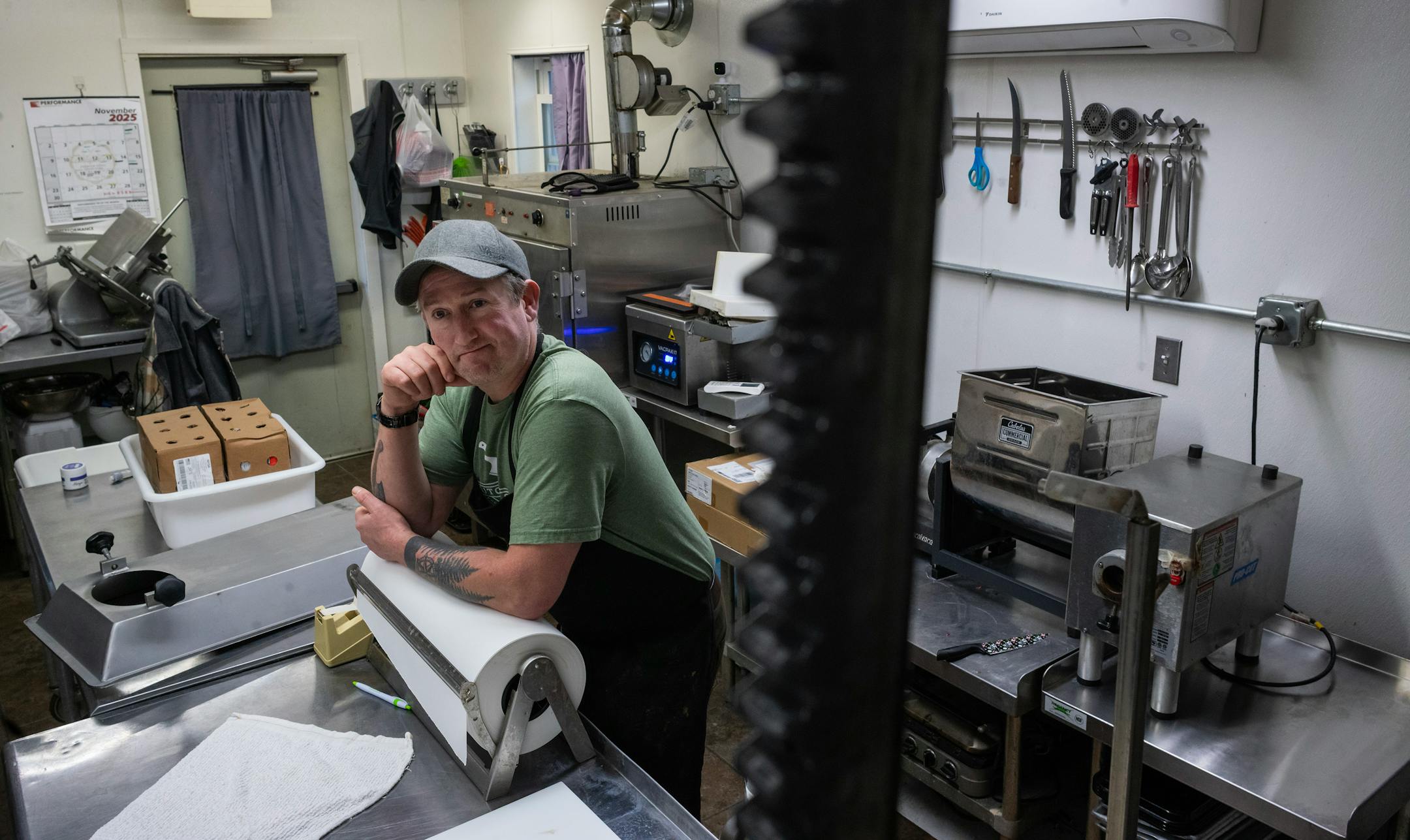
Justin Lenser had just a few customers stop by The Butcher Shoppe on Tuesday in Hokah, Minn. Justin and Mandi Lenser opened the shop a little more than three years ago in the tiny town of Hokah hoping to make a go of their experience in meat retail. (Jerry Holt/The Minnesota Star Tribune)

HOKAH, MINN. - Justin Lenser paced behind the counter of his nearly empty meat shop this week, pausing to wipe a few things down while breaking the bad news to a vendor over the phone: His and his wife Mandi’s business, The Butcher Shoppe, would be closing soon.

They tried everything they could, they said, to make the store work in Hokah, a town of about 600 people near the Iowa and Wisconsin borders in the far southeast corner of the state. But the economy seemed to be against them.

The Lensers knew making a go of any small business was tough when they opened the shop three years ago. But lately they’ve been buying beef for more than they sold it for just last year, they said. And vendors had no good news for the future.

The meat business, especially beef, is facing a storm of circumstances, trade experts say, including a multiyear drought, thinning cattle herds, higher processing costs and fewer agricultural workers. Meat markets everywhere are facing pressure. In rural areas, markets with smaller customer bases operate on thinner margins than their urban and suburban counterparts.

Little more than a few packages of venison and cheese remained in the refrigerator cases this week at the Lensers’ shop; even their cow and pig knick-knacks, to make the store more homey, had a note encouraging customers to make an offer.

“We couldn’t sustain it, and with the long-term forecast being what it is, we made the decision to unfortunately close our doors,” Justin told the vendor.
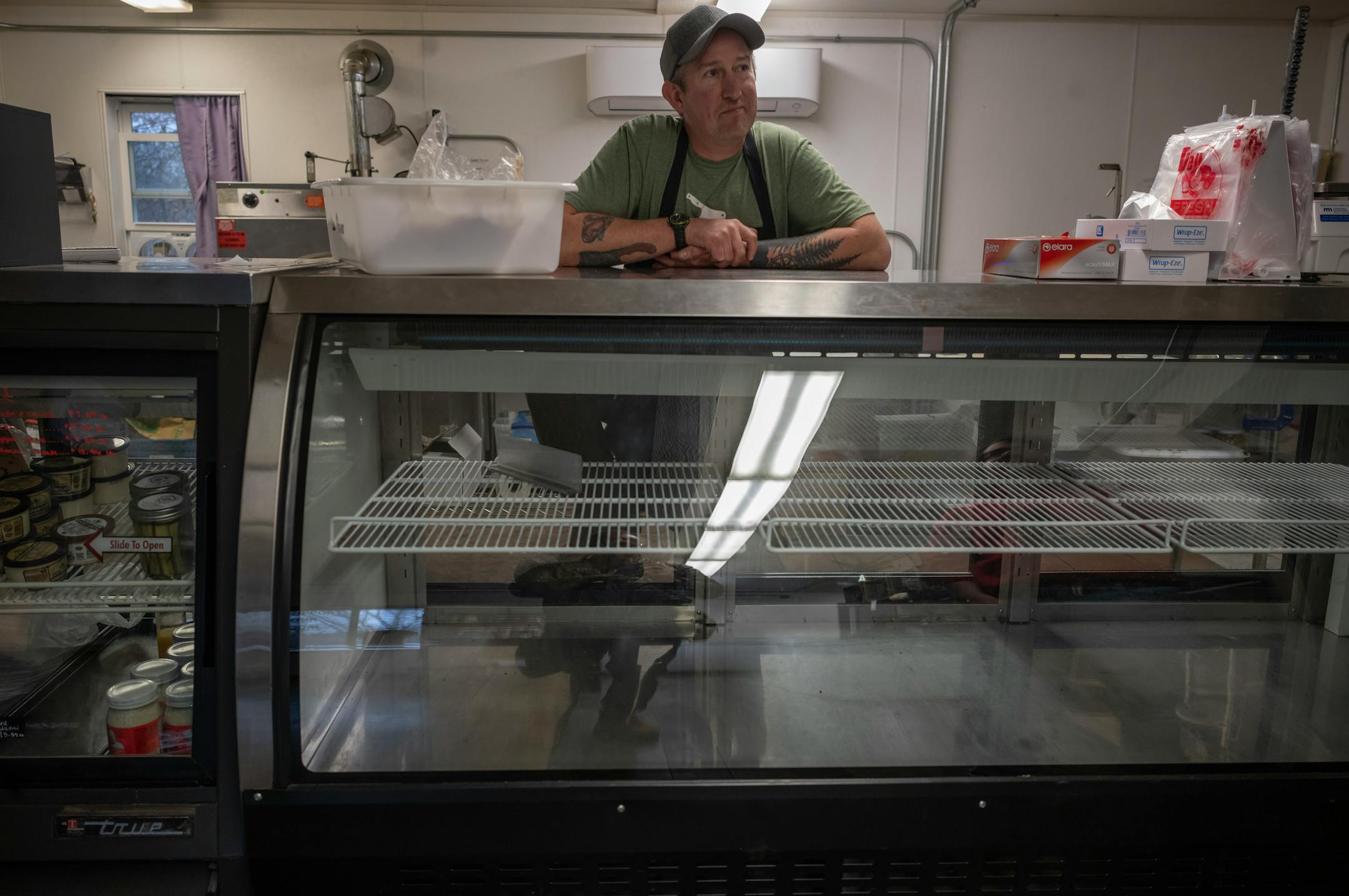
Justin Lenser stands behind the counter at The Butcher Shoppe in Hokah, Minn. (Jerry Holt/The Minnesota Star Tribune)

With costs unlikely to ease any time soon, butchers and markets across Minnesota are preparing for industry conditions to get even worse. Some also blame excessive state and federal mandates.

“It’s a Bermuda Triangle of bad things,” said Pat Garofalo, head of the Minnesota Grocers Association. “Drought, government interference and [workforce] demographics. That’s the three-headed monster that’s really hurting all small businesses, but particularly local meat markets and butchers.”
Cattle prices were on the rise at the beginning of 2025, to ranchers’ relief, after the COVID-19 pandemic and years of drought that thinned cattle herds across the U.S. to historic lows.

Yet retailers found little relief from high beef prices as federal tariffs under President Donald Trump hit this year, reducing beef exports from key places such as Australia and Brazil. Trump last month announced a deal to buy more beef from Argentina, but industry experts say the agreement isn’t nearly enough to meet demand.

In Minnesota, Garofalo and other advocates point to what they see as too many unfriendly regulations such as arduous inspection processes and upcoming mandates like the state’s paid family medical leave law.

Those extra costs hit small business owners harder.

The major driver for the Lensers was the lack of store traffic this summer. It’s typically slower in the summer months for the shop, a former restaurant created from combining two trailers behind Hokah’s city center building.

In previous years, people still came in to buy everything from chicken to meat sticks to scores of smoked eggs the Lensers learned to make from one of their five part-time employees.

But the customers just didn’t come this year.

“I kept looking and going, ‘OK, any time now,’ ” Justin said.

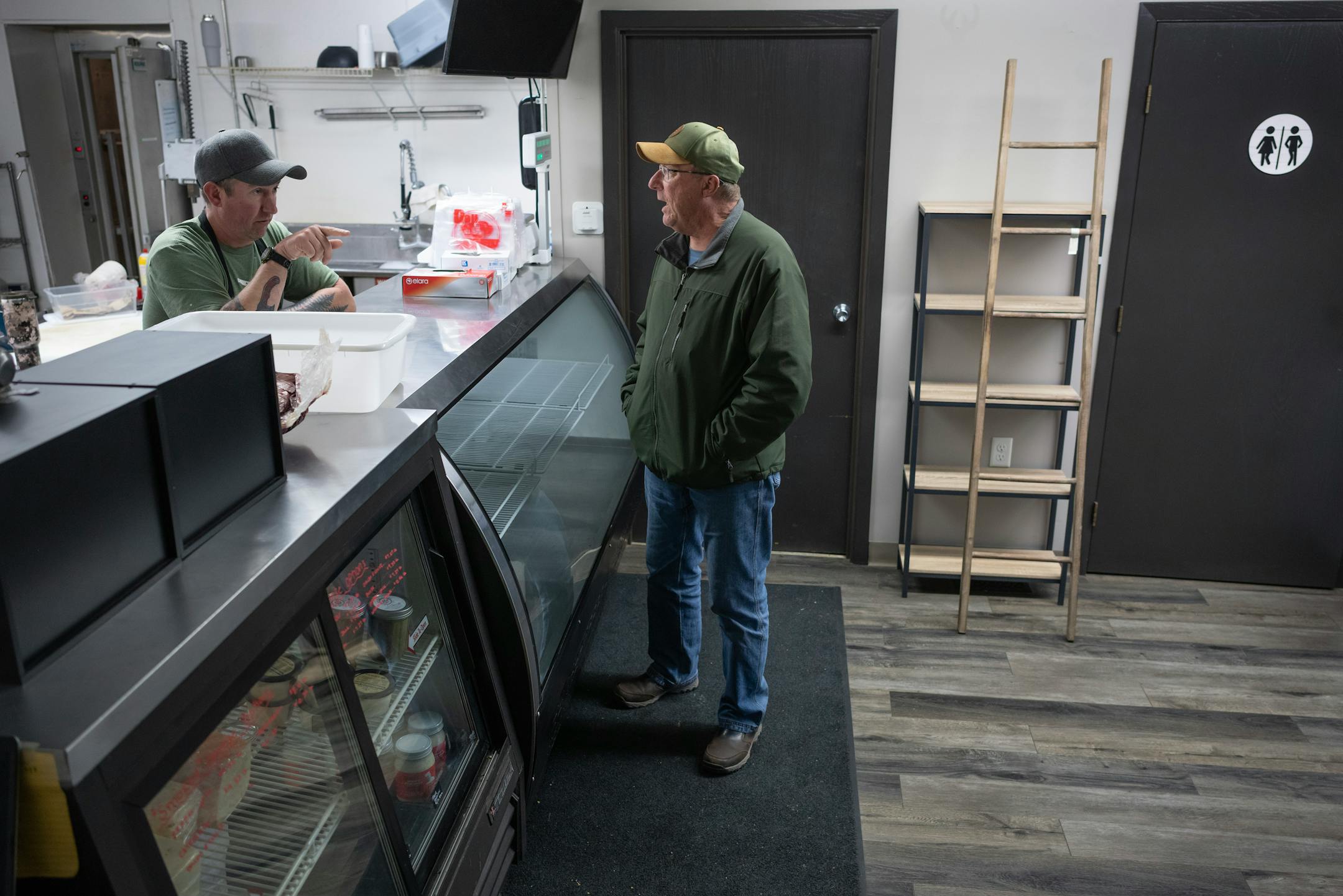
Justin Lenser, left, talks with customer Tom Storandt, who stopped by Tuesday to pick up his processed venison at The Butcher Shoppe. This year's ongoing economic turmoil, from rising meat prices to tariffs affecting the cost of materials to the expenses incurred processing meat, has forced the Lensers to close down in the next few weeks. (Jerry Holt/The Minnesota Star Tribune)

One week, The Butcher Shoppe sold about three 10-pound bags of chicken — far below the 50 to 60 bags they used to move in a summer week. All told, they had close to $10,000 in sales that week, a “super good week.”

It all went to rent, bills, payroll. Justin said he hasn’t taken a paycheck in at least five months.

Sales have been tough across the state. Lindsey Loken, owner of Blondies Butcher Shop in Wanamingo, Minn., said she’s heard of nearby meat locker owners and staff running Amazon packages for a couple hours a day to make up for slow sales.

While Blondies has built up business in catering, butchering and retail sales, Loken said her prices have shot up along with her costs: Hamburger is up more than $2 per pound, while prime rib will likely be sold around $20 per pound during the holidays; last year it sold for around $14 per pound.

It cost Loken about $850 last year to buy and process a quarter of beef. This year, it’s about $1,500.

“Even now on my kill floor, we’ve harvested more hogs than we have beef this year just because it’s more in the affordability range,” Loken said.

Schmidts Meat Market, a longtime grocer near Mankato in Nicollet, Minn., has weathered the storm thus far, said owner Ryan Schmidt.

The store had to pass more costs onto customers than he prefers as prices stay high, and although it’s not doing the same volume in ground beef compared with last year, he said some will pay to keep buying meat.

“Beef demand still is fairly strong, so it’s supporting the higher prices at this point,” he said.

The Lensers were optimistic about opening their shop after Justin grew a following processing venison out of their house. They decided to close their shop about a month ago after consulting with their vendors.

“From what they see and hear from their suppliers, it’s not going to get any better, and it’s just going to actually get worse,” Mandi said.

The Butcher Shoppe will close the day before Thanksgiving. Mandi will continue working for the nearby La Crescent school district. Justin, who has two decades of experience at meat markets and grocers, has accepted a job managing meat departments for People’s Food co-ops.

He said he’s at peace with the store closing. He’ll still be able to process venison for hunters in the area, and he plans to keep a few pieces of equipment to help with that side hustle.

But longtime customers and friends like Tom Storandt were sad to see the shop close.

“I was happy to see him come here,” Storandt said Tuesday as he stopped by to pick up venison. “He had a good thing going. But I guess the way of the times got to him like they have to so many people.”

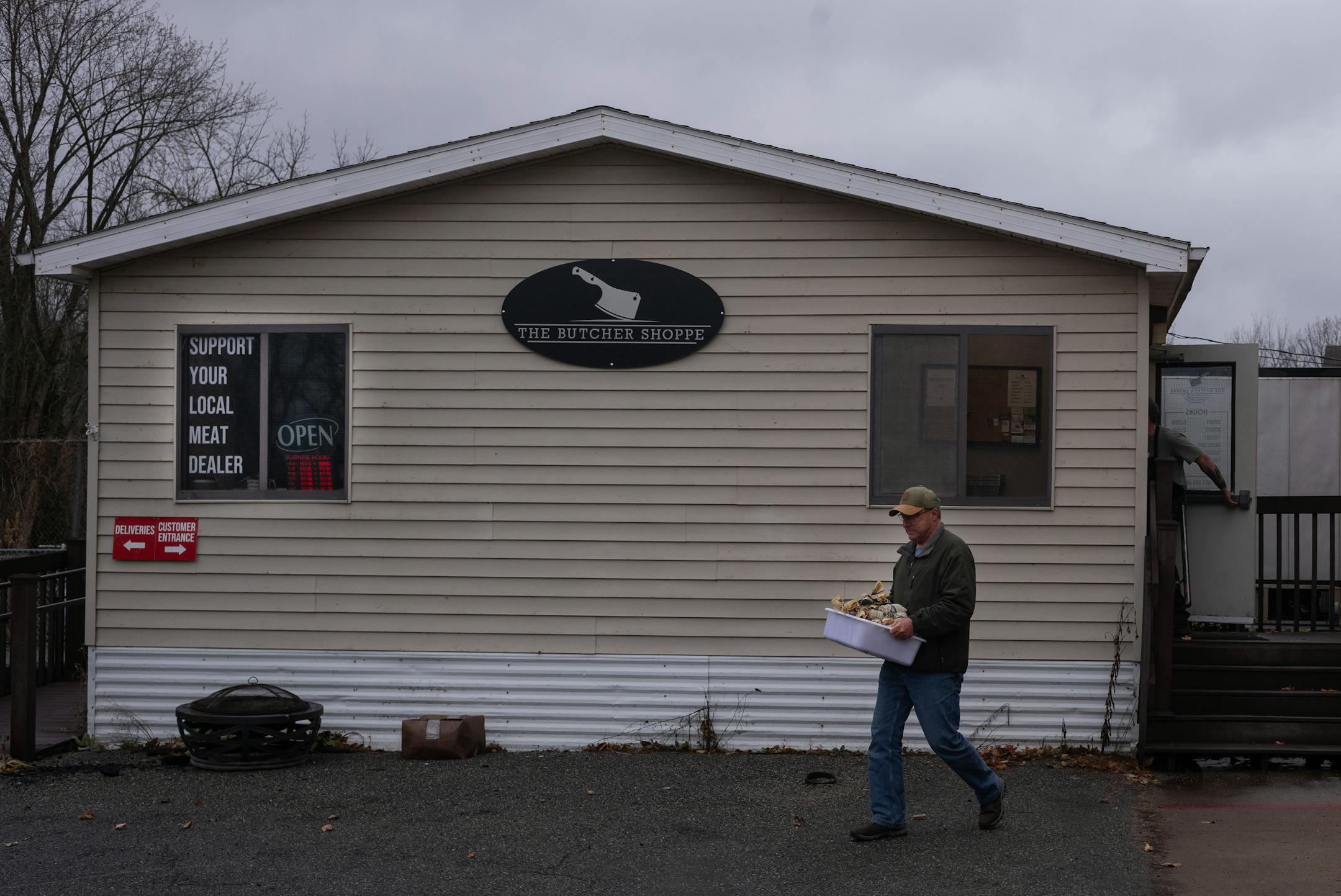
Tom Storandt walks out of The Butcher Shoppe on Tuesday, after picking up his processed venison. (Jerry Holt/The Minnesota Star Tribune)
about the writer

about the writer

Trey Mewes

Rochester reporter

Trey Mewes is a reporter based in Rochester for the Star Tribune. Sign up to receive the Rochester Now newsletter.

See Moreicon

More from Greater Minnesota

See More
card image
Kim Hyatt/The Minnesota Star Tribune

Jacob and Owen Mahon of jam band Saltydog reflect on their musical journey ahead of album release in the new year.

card image
card image