
Hilton removes Minnesota hotel from chain for refusing to house ICE agents; staff maintains all welcome

The hotel chain has removed the Lakeville Hampton Inn after a video appeared to show the inn was still refusing to offer lodging to federal immigration officers.

The Minnesota Star Tribune
January 7, 2026 at 12:34AM
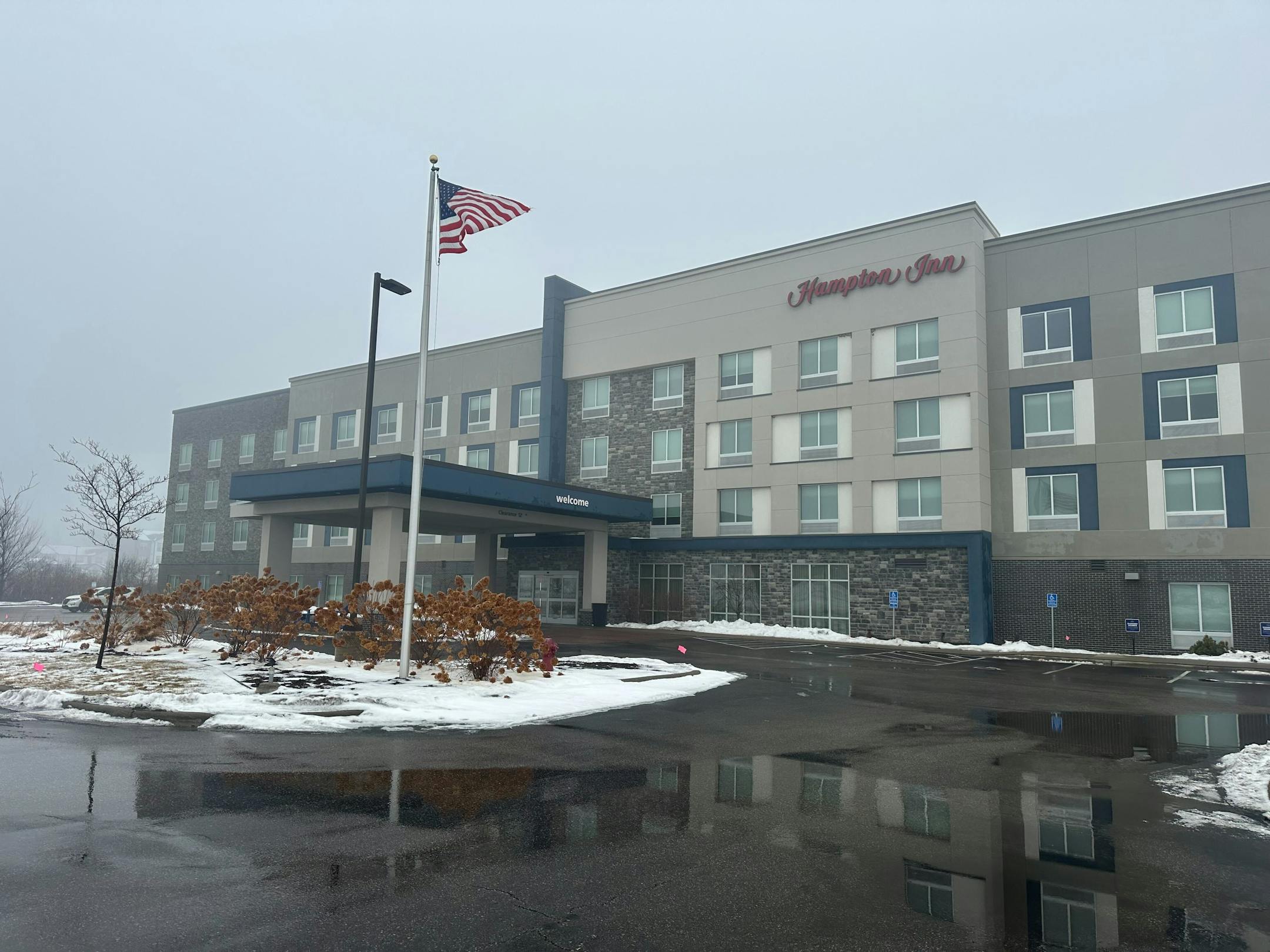
Hilton has removed this Lakeville Hampton Inn from its chain after service was refused to federal agents with the Department of Homeland Security. (Louis Krauss)

Hilton has dropped a Lakeville Hampton Inn from its chain of franchisees on Tuesday, Jan. 6 after learning that the hotel continued to bar federal immigration officers from staying there.

The decision came in response to a video by conservative influencer Nick Sortor, who filmed as he entered the hotel late Jan. 5 and presented himself as a Department of Homeland Security employee looking for a room. He then confirmed with a front desk worker that the hotel was not allowing any federal officers who conduct immigration enforcement to enter the property.

According to the worker in the video, the policy was still in effect hours after the management company, Everpeak Hospitality, issued a statement Monday apologizing and saying it’s “committed to welcoming all guests.”

“We’re not accepting people from immigration, ICE agents, DHS, into our property,” the worker says in the video. “I just talked to the owner of the building, and he didn’t say there had been any changes.”

After reviewing the video, Hilton decided it would take “immediate action to remove this hotel from our systems.”

“The independent hotel owner had assured us that they had fixed this problem and published a message confirming this,” a Hilton corporate spokesperson said in a statement Tuesday. “A recent video clearly raises concerns that they are not meeting our standards and values.”

The hotel was operating as normal just before 1 p.m. on Tuesday. A front desk employee named Robert, who did not wish to provide his last name, told a Minnesota Star Tribune reporter that all people are welcome at the hotel, including Immigration and Customs Enforcement agents. The hotel had a copy of a statement from Everpeak displayed at the front counter, which stated it is welcoming of “all guests and agencies.”

The employee was not aware of any plans to close due to Hilton’s statement about removing the franchise hotel from its system.

Hilton’s decision to separate comes a day after DHS blasted the hotel chain on social media. On Monday, DHS posted screenshots on social media of emails sent Jan. 2 between a federal agent and the Hampton Inn in Lakeville. The email showed the hotel stating it is “not allowing any ICE or immigration agents to stay at our property” and that the officer’s reservation will be canceled.

The hotel added that it had seen a surge in government employee reservations last week, days before it was reported that the Trump administration is sending hundreds of additional federal agents to the Twin Cities in a significant escalation of its immigration enforcement presence in Minnesota.

The Hilton spokesperson said in an email on Monday that the company is investigating the Lakeville hotel’s decision, adding that the property is independently owned and operated. Everpeak later sent out an apologetic statement, saying the cancellation was “inconsistent with our policy of being a welcoming place for all.”

“We are in touch with the impacted guests to ensure they are accommodated,” Everpeak said.

Following the Everpeak statement, DHS spokeswoman Tricia McLaughlin raised skepticism that any changes had been made and said on social media nothing had been relayed to the federal government.

“I wonder how Everpeak Hospitality has ‘moved swiftly to address this matter’ when @DHSgov and @ICEgov haven’t heard anything from them?” McLaughlin wrote on X.

The hotel has not publicly said why it canceled the reservations. But the hotel may have been influenced by protest efforts by the local group Sunrise Movement Twin Cities, which urged those opposed to ICE’s presence in Minnesota to swamp the Lakeville hotel’s phone lines for hosting agents.

The group has worked to identify a variety of Twin Cities hotels that have housed agents and protest ICE’s presence in the community. The group posts which hotels are housing the agents, before protesting by either swamping the phone lines or holding “noise demonstrations” in which protesters chant and play loud music to disturb the agents inside the hotels.

Megan Newcomb, an organizer with Sunrise, said the group heard from the hotel staff in Lakeville that it had received “a ton” of calls recently that influenced the decision to cancel reservations.

As more federal agents fly into the Twin Cities, Newcomb said Sunrise and other organizations will continue to protest ICE’s presence in the region.

“We’re not stopping; we’re actually speeding up,” Newcomb said. “These hotels can expect more action. They can expect more calls. They can expect more demonstrations. As as the agents flood into the Cities, more and more people are inspired to take action, and we will.”

The case poses questions about whether the government could be found in violation of the U.S. Constitution for pressuring a hotel into housing agents, two law professors said in interviews with the Star Tribune.

The beginning of the Third Amendment states: “No Soldier shall, in time of peace be quartered in any house, without the consent of the Owner …”

David Schultz, a professor of legal studies at Hamline University, said an argument could be made that ICE agents qualify as “soldiers” and are therefore pressuring or forcing the Hampton Inn to house federal agents.

“Could you make an argument to say that the quartering of troops applies to maybe any forced government occupation of your building? Possibly yes,” Schultz said.

Jill Hasday, a constitutional law professor at the University of Minnesota, said it’s difficult to envision how a lawsuit based on the Third Amendment would play out given there has never been one in the U.S. Supreme Court.

Hasday said “there would be so many questions before the Third Amendment applied,” and if it was determined that agents don’t count as “soldiers,” then a hotel owner could simply argue on general private property rights that they don’t have to house agents if they choose not to.

She noted that while there are civil rights laws to protect people from being discriminated against based on race or sex, a government agent isn’t a protected class.

“If anything, the Third Amendment protects the idea that private property owners can’t be forced to house members of the military,” she said.

about the writer

about the writer

Louis Krauss

Reporter

Louis Krauss is a general assignment reporter for the Star Tribune.

See Moreicon

More from Twin Cities Suburbs

See More
card image
card image