
Burcum: Hospital takeover is a ‘naive’ and dubious prescription

Hennepin County commissioners have failed to forge consensus on a Hennepin Healthcare governance change. They should delay a final vote.

Columnist Icon
The Minnesota Star Tribune
August 11, 2025 at 11:00AM
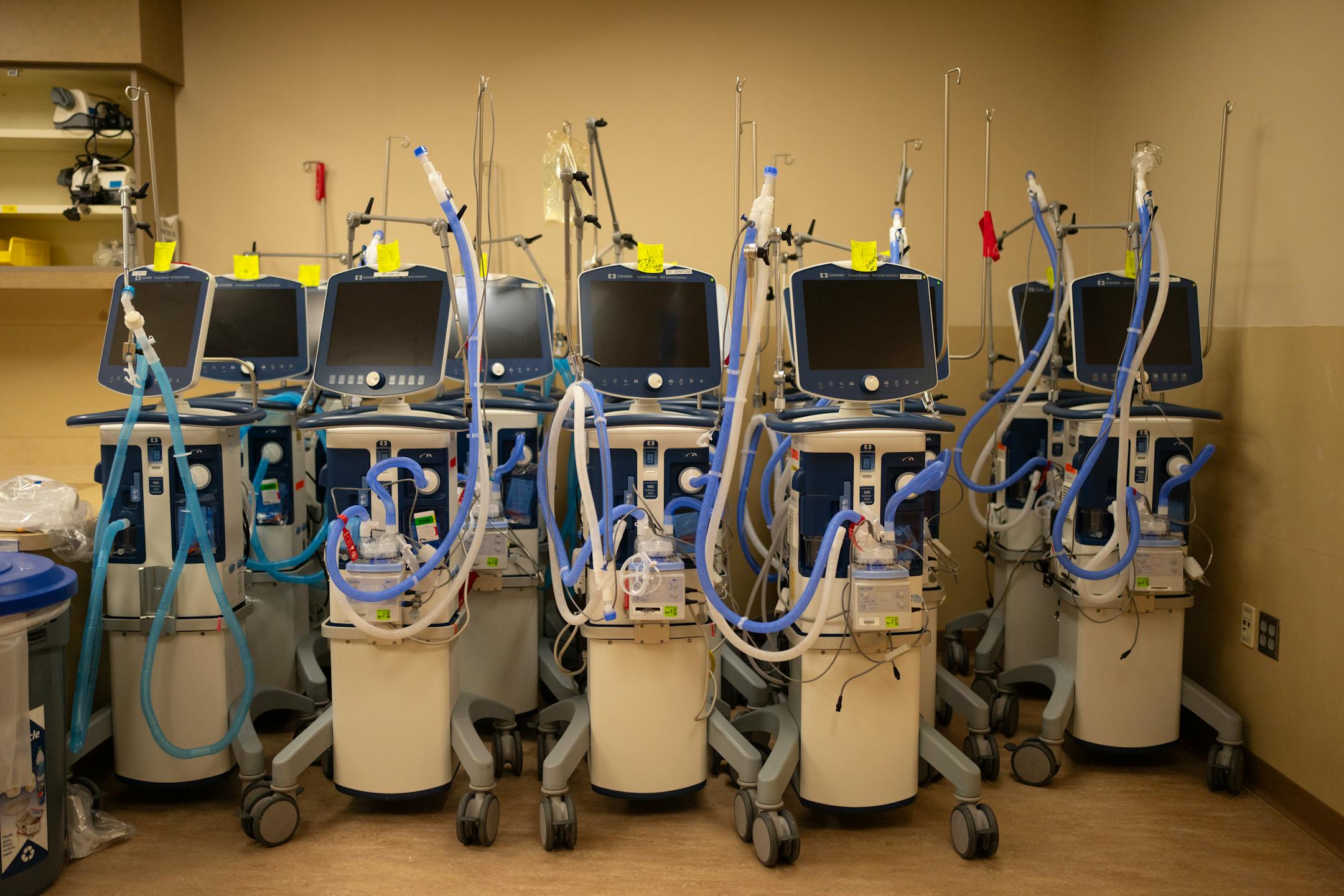
A storage room houses the most common ventilator in use at HCMC, the Covidien Puritan Bennett 980 Series Ventilator, in Minneapolis.
A storage room houses the most common ventilator in use at HCMC, the Covidien Puritan Bennett 980 Series Ventilator, in Minneapolis. (Jeff Wheeler/The Minnesota Star Tribune)

Opinion editor’s note: Strib Voices publishes a mix of commentary online and in print each day. To contribute, click here.

•••

Among Hennepin County commissioners’ most critical responsibilities is stewardship of the Hennepin Healthcare system’s 484-bed medical center in Minneapolis and the affiliated clinics serving downtown and suburban communities.

If a governance overhaul is to be made — and such a measure is currently under serious consideration — it’s imperative to forge broad consensus that the reform is in the best interest of the health care system and all who rely on it.

The seven-member Hennepin County Board has failed to meet that obligation even as a final vote on the governance change and the system’s $1.6 billion budget looms on Tuesday. The governance overhaul would remove the current corporate board of community and health care leaders, allowing the elected county commissioners more direct management of operations on an “interim” basis.

The responsible course of action for the county commissioners is to hit pause on the vote. The time afforded should be used to convince more stakeholders that the change will better enable the medical center, which has posted operating net losses “for seven of the past eight years,” to weather daunting headwinds battering all hospitals’ bottom lines across the nation.

The commissioners appear to have the votes to approve the measure. But among those in doubt it will right the ship: eight Hennepin County legislators.

On Wednesday evening, eight members of the county’s State Capitol delegation sent a letter to county commissioners expressing “deep concern” and called on them to delay the vote.

The move, which the legislators acknowledge is permitted under law, nevertheless “risks undermining public trust and long-term institutional stability. The proposed action is not simply administrative — it is a fundamental restructuring of public hospital governance, and it deserves due process and scrutiny. We urge you to take the time to get it right.”

Other prominent health care experts and policymakers are sounding the alarm.

Former Minnesota Department of Health Commissioner Jan Malcolm is one of them. She served in that role under three governors.

In an interview Thursday, she noted that the county medical center’s struggles are “structural.”

Let me translate that, with help from the American Hospital Association (AHA). Medical centers face “a perfect storm of financial pressures,” the AHA reports. Among them: rising labor costs, expenses for nonlabor supplies rising faster than inflation, and reimbursements from public-funded programs such as Medicare and Medicaid not keeping up with cost of caring for enrollees.

The Hennepin Healthcare system’s challenges are compounded by its so-called “payer mix.” It’s a safety-net hospital, so many of its patients are uninsured (resulting in uncompensated care) or rely on the public programs that typically reimburse less than private health plans.

The idea that the current governance structure “is singularly responsible for the structural challenges is naive, to put it mildly,” Malcolm said.

Reps. Robert Bierman, DFL-Apple Valley, and Rep. Danny Nadeau, R-Rogers, voiced concerns, as well, in interviews on Thursday. Both sit on the Minnesota House’s Health Finance and Policy Committee, with Bierman serving as co-chair and Nadeau co-vice chair in the 2024 session.

Nadeau noted an important risk: that instability at the medical center could cause doctors to leave the health care system at a time when it’s difficult to recruit and retain providers. In addition, he raised questions about the risks to Hennepin County taxpayers, who might have to foot the bill if the more direct management by elected commissioners exacerbates finances.

Bierman and Nadeau also point out that legislators made their discomfort clear last year as county commissioners began eyeing getting rid of the corporate board. Legislation, HF 5442, was introduced late in the 2024 session that would have put commonsense guardrails in place, such as requiring a finding of malfeasance by the corporate board. It also would have allowed the state health commissioner to analyze the move’s impact on patient access and public health.

The bill didn’t move forward in 2024. Nor was it enacted this year. One potential reason why is that a May 7, 2024, letter signed by Hennepin County Commissioner and Board Chair Irene Fernando said this: “I offer support for its direction.”

Did that language lead legislators to believe that county commissioners would undertake the due diligence the bill would have required?

Fernando did not respond to interview requests. Nor did Commissioner Jeffrey Lunde, who has publicly supported the change. But Commissioner Heather Edelson did speak with me, and her perspective is valuable, because she’s a former legislator who told me she supported HF 5442. Now she holds the opposite view.

Edelson was a public health standout at the Capitol. Her case for the overhaul includes greater transparency and more innovation but basically boils down to the “dynamic” between the current corporate board and county commissioners.

A reset is needed, she said. “I don’t see it getting better without doing something drastic like this.”

Edelson spoke about consultants coming in with a plan to ensure an orderly transition and the necessary expertise to run a large system.

I was left wanting more details, however. How much of a plan was in place? Who are the consultants? What does the plan call for? What does “interim” mean?

I also remain unclear how it will help to take the heath care system’s governance model back to the early 2000s, before the corporate board was set up to provide more focused and expert leadership than the county commissioners could provide.

Edelson said she believes the votes are there to approve the overhaul. But having the votes doesn’t mean it’s the right thing to do.

The commissioners need to take a breath, take a step back and convince more stakeholders that the proposed move will take the medical center forward, not backward.

about the writer

about the writer

Jill Burcum

Editorial Columnist

See Moreicon

More from Columnists

See More
card image
KARSTEN MORAN/The New York Times

Maduro’s capture occurred amid an erosion of the rules-based international order.

card image