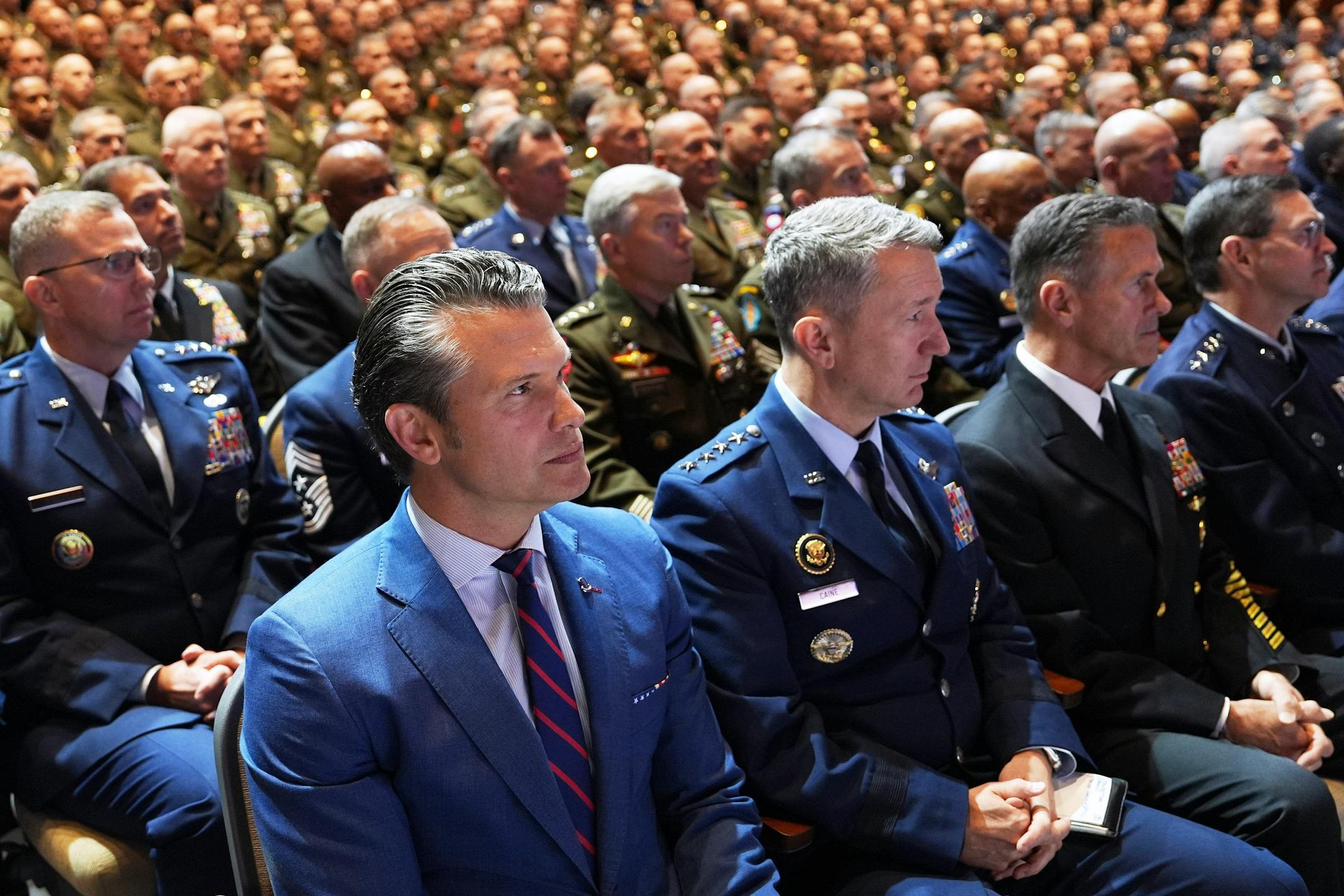
WASHINGTON — Defense Secretary Pete Hegseth has fired or sidelined at least two dozen generals and admirals over the past nine months in a series of ousters that could reshape the U.S. military for years to come.
His actions, which are without precedent in recent decades, have come with little explanation. In many cases, they have run counter to the advice of top military leaders who fought alongside the officers in combat, senior military officials said.
The utter unpredictability of Hegseth’s moves, as described in interviews with 20 current and former military officials, has created an atmosphere of anxiety and mistrust that has forced senior officers to take sides and, at times, pitted them against one another.
Hegseth has delayed or canceled the promotions of at least four senior military officers because they previously worked for Gen. Mark Milley, a former chair of the Joint Chiefs of Staff whom President Donald Trump loathes and has repeatedly accused of disloyalty. One is Maj. Gen. James Patrick Work, who was expected to be the deputy commander at U.S. Central Command, which oversees troops in the Middle East, officials said.
Work, one of the Army’s most combat-experienced officers, played a crucial role leading U.S. and Iraqi troops to victory over the Islamic State group in Mosul, Iraq, during the first Trump administration. He also served as Milley’s executive officer in 2018, which might have led Hegseth to view him with skepticism, senior Army officials said.
Despite the strong backing of top Army leaders, Work remains in limbo, his future uncertain, senior military officials said.
Other officers fell out of favor after being targeted on social media by right-wing influencers or because they had voiced support years earlier for diversity, equity and inclusion programs. Rear Adm. Milton Sands, the commander of the Navy SEALs, who pushed to have female instructors in SEAL training, was fired by Hegseth in August.
Some leaders were ousted for offering candid military assessments. Hegseth soured on Adm. Alvin Holsey, the head of U.S. Southern Command, after he raised questions about deadly military strikes on boats in the Caribbean Sea. The Trump administration has said, without offering detailed evidence, that the boats were trafficking drugs. Holsey abruptly announced last month that he was stepping down, less than one year into what is typically a three-year assignment.