

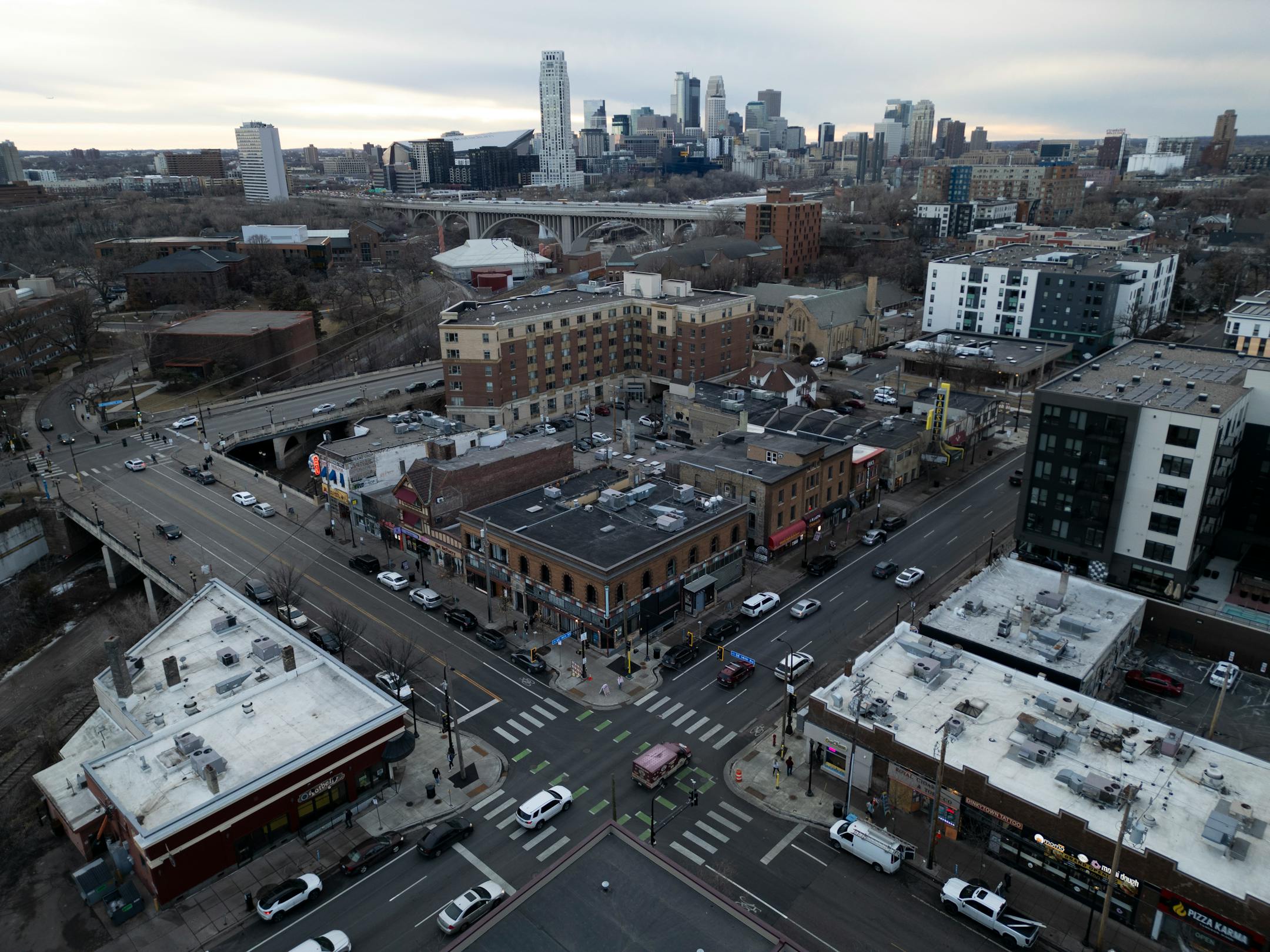
A late-night shooting near the University of Minnesota earlier this month has renewed concerns over student safety in Dinkytown and raised questions about whether campus borders should dictate what real-time alerts are sent.
At around 2:30 a.m. on Nov. 1, just after bars closed and students filled the streets, a gunman unleashed automatic gunfire near 5th Street and 13th Avenue SE., injuring two people and killing one man whose identity has still not been released. No arrests have been made.
The shooting along the bustling thoroughfare was only a block away from the U’s campus. A student was caught in the gunfire and hospitalized. But because the shooting happened off campus, the U’s alert system, known as Safe-U, was not used to inform students. A notification known as a Dinkytown Alert was instead issued.
Dinkytown Alerts, offered by the U’s Department of Public Safety and Minneapolis police, cover incidents east of Interstate 35W, south of SE. 8th Street, and northwest of the East Bank campus, and include crimes ranging from robbery and homicide to sexual assaults and active shooters. Situations that are no longer active are not alerted. Students and community members must opt-in to receive the messages through text, phone or email — a difference from Safe-U alerts, which are automatically sent by email to students and faculty.
Before the shooting, some students expressed surprise they did not receive an automatic alert, and were unaware the opt-in Dinkytown alerts existed.
U freshman Joey Welch said that in his first semester, he has been unimpressed with the alert system.
“A lot of times, they’re later than we would like them to be, and then there’s always an apology like three days later,” Welch said. “But I’m pretty used to that.”
Joe Linstroth, a member of the U’s public relations team, said different types of alerts give students the ability to choose the information they receive.


