
General Mills to cut $100 million in costs as profits fall

The packaged-food giant has been coping with weak sales in its key U.S. retail division, leaving little choice but to cut back on costs.

September 18, 2014 at 10:42AM
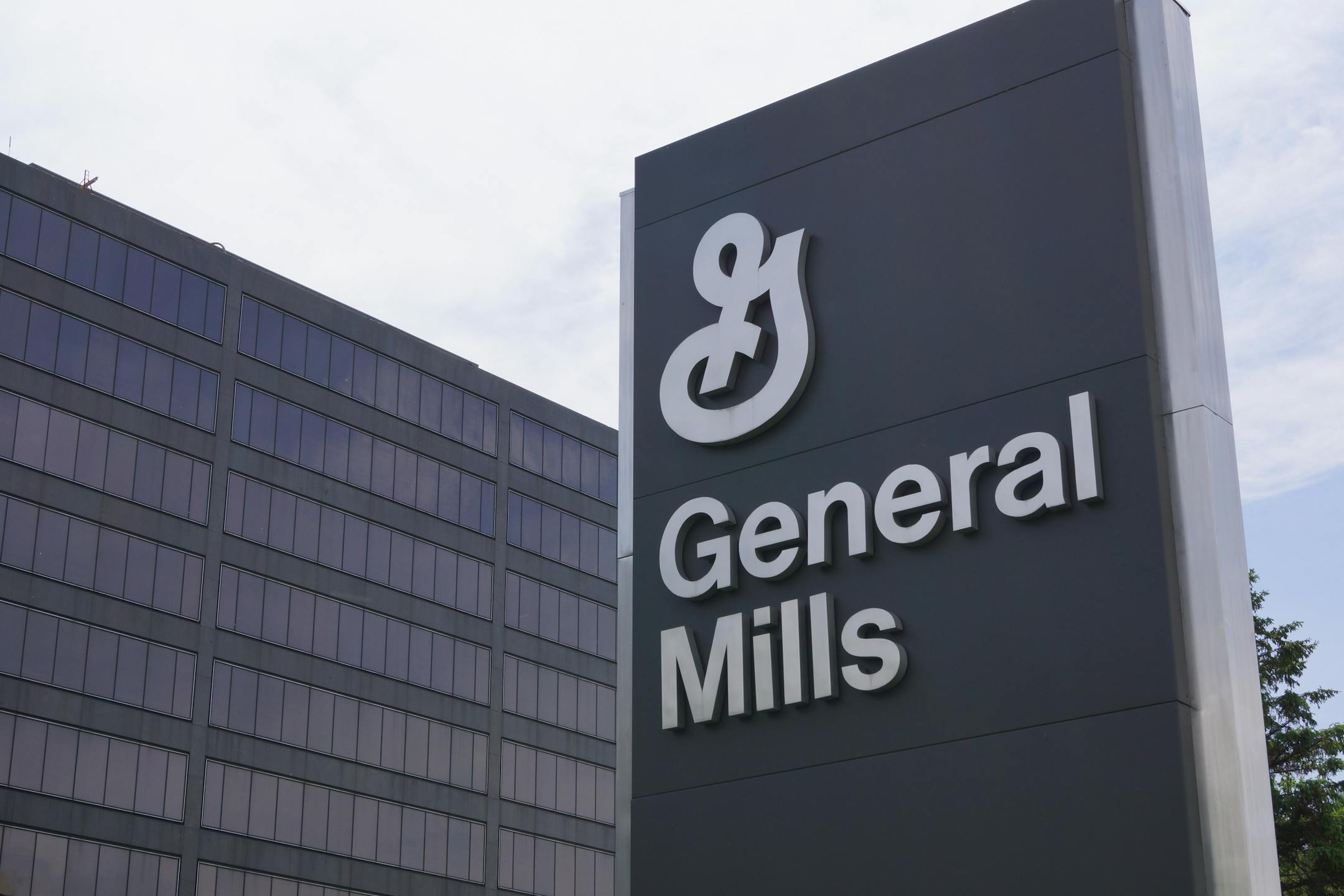
General Mills shares fell in early trading today after the company's latest profit came in below expectations. (Evan Ramstad/The Minnesota Star Tribune)

General Mills Inc.'s first-quarter financial performance was about as appealing as a soggy bowl of cereal.

The Golden Valley-based company reported results Wednesday that fell well short of Wall Street expectations, amid ongoing weakness in consumer spending.

And with much of the packaged food industry floundering, General Mills said it will implement an additional $100 million in unspecified cost reductions.

"If General Mills' first-quarter results are any indication, then the state of the U.S. packaged-food industry is quite bleak," said Erin Lash, a stock analyst at Morningstar. "This was a very tough quarter."

General Mills' stock closed at $50.83, down $2.35, or 4.4 percent.

General Mills, maker of everything from Cheerios to Green Giant vegetables, Wednesday posted fiscal first-quarter net earnings of $345 million, or 55 cents per share, down from 70 cents a year ago. Adjusted for nonrecurring items, General Mills per-share earnings were 61 cents, while stock analysts on average were expecting 69 cents.

The company's net sales for the quarter ended Aug. 24 were $4.27 billion, 2.6 percent shy of analysts' forecasts. Sales were particularly soft in its big U.S. retail business, falling 5 percent over a year ago, dragging profits down with them.

First-quarter sales of cereal — General Mills' largest U.S. retail business — fell 9 percent from a year ago, reflecting general weakness in the category. Revenue fell 6 percent, 11 percent and 13 percent in General Mills' frozen foods, baking goods and meals divisions, respectively.

"Given secular shifts in consumer tastes toward healthier, clean-label products coupled with increasing competition for the breakfast occasion, there is little surprise that General Mills continues to see declining demand in these categories," Alexia Howard, an analyst at Bernstein Research wrote in a report Wednesday titled "Cheeri-uh-ohs!"

Still, General Mills' battered Yoplait yogurt division was a bright spot as it returned to positive sales growth — 1 percent over a year ago — after several quarters of decline.

General Mills and the rest of the packaged food industry have experienced several quarters of stagnant sales. "Some of the factors are just economic," General Mills CEO Ken Powell said in an interview with the Star Tribune. "We think in part it has to do with the lack of income growth across the country."

Powell said the firm's latest performance was also hurt by a considerably higher level of merchandising and promotional spending compared with a year ago. In addition to discounting, this would include money paid to retailers for such things as advertising and in-store product placement.

"That was a key factor for us in the quarter," Powell said. However, promotional spending is expected to fall in ensuing quarters, a key reason that General Mills is maintaining its sales and profit growth targets for its current fiscal year, he said.

But Howard wrote that without "some stabilization" in the U.S. cereal category, General Mills will be "hard-pressed to make its numbers going forward."

Joseph Agnese, an analyst at S&P Capital IQ, said General Mills will have difficulty meeting its forecasts from operational gains alone. Instead, financial tools like stock buybacks might be used to reach earnings goals, but those would be "lower quality" earnings, Agnese said. He cut his rating on General Mills on Wednesday from "hold" to "sell."

General Mills reiterated that it is undertaking a "formal review" of its North American manufacturing and distribution network. Dubbed "Project Century," the review's goal is "streamlining operations and identifying potential capacity reductions," the company said in a statement.

The initiative, expected to begin during the company's current quarter, is slated to generate $100 million in annualized savings by General Mills' 2017 fiscal year. The company previously hadn't put a dollar number on the manufacturing and supply chain cuts.

In June, General Mills announced efforts to cut $40 million in overhead costs in its 2015 fiscal year. Together, the $140 million in cuts announced this year come in addition to General Mills' ongoing annual efficiency program, which is expected to generate supply chain cost savings exceeding $400 million in the firm's current fiscal year.

General Mills hasn't said how many jobs might be lost or factories closed due the new round of cost cuts. But they are likely to start soon.

In a conference call with stock analysts Wednesday, John Church, General Mills' executive vice president for supply chain said, "We will be announcing specific actions related to Project Century in the very near future."

Mike Hughlett • 612-673-7003

about the writer

about the writer

Mike Hughlett

Reporter

Mike Hughlett covers energy and other topics for the Minnesota Star Tribune, where he has worked since 2010. Before that he was a reporter at newspapers in Chicago, St. Paul, New Orleans and Duluth.

See Moreicon

More from Business

See More
card image
Richard Tsong-Taatarii/The Minnesota Star Tribune

The “economic blackout” day creates unnecessary risk for people who are on the side of getting ICE out of Minnesota.

card image