

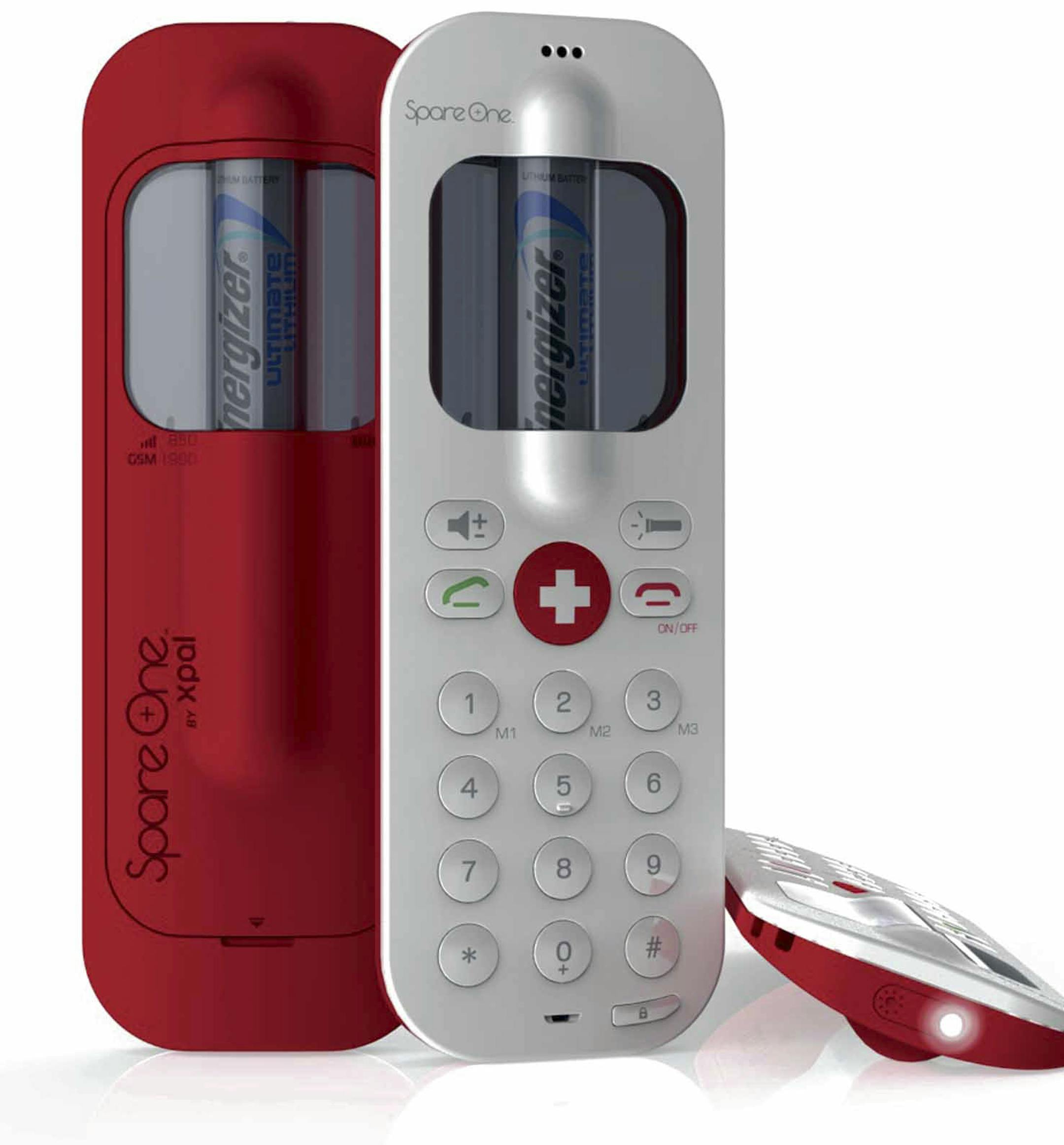
SPAREONE EMERGENCY PHONE $49 plus subscription
A phone that runs on AA batteries
You might want to include a backup phone in a modern emergency preparedness kit.
The SpareOne Emergency Phone (the subscription is $25 per year for 120 minutes) is cheap enough that most people can afford to keep one or more on hand. The SpareOne is unique. It does not have a screen and runs on AA batteries. And it has GPS monitoring, so it can be located on a map if it's turned on. If you hold down the volume button for seven seconds, an emergency siren sounds. If you hold down the flashlight button for seven seconds, it will flash the Morse code for SOS. Through an online account, you can set up emergency contacts. When you press a button, those contacts, plus 911, are called.
What the SpareOne doesn't have is any type of data service, which means no texting and no Internet access. You can store up to nine speed-dial numbers, and you can get voice mail.
DALLAS MORNING NEWS
OMNITY $99
Search engine geared toward research
Search engines that aren't Google rarely have much that's interesting to offer to the average consumer. But Omnity — a new search engine aimed at researchers — offers some glimmers of something new that make it worth taking notice.
Omnity stands out by offering results that best match any given search term and also how those results relate to each other. So if you're about to start a research project on a topic you know little about, you can quickly see who is getting cited the most, whose research is the most influential or which university is leading the pack on that subject. It draws from a number of data sets, including SEC filings, public news organization reports, scientific journals, financial reports and legal histories.
You can also drag and drop documents into the search engine to get an analysis of the "rare words" in them. For example, with a legal document, Omnity turned up links to other cases that were relevant but not directly cited in the filing, as well as the names of some experts that might be worth calling.
Omnity illustrates a trend that's cropping up more and more in data products these days: a focus on context. The full version allows for expansive searches; a free student version yields more basic results.


