

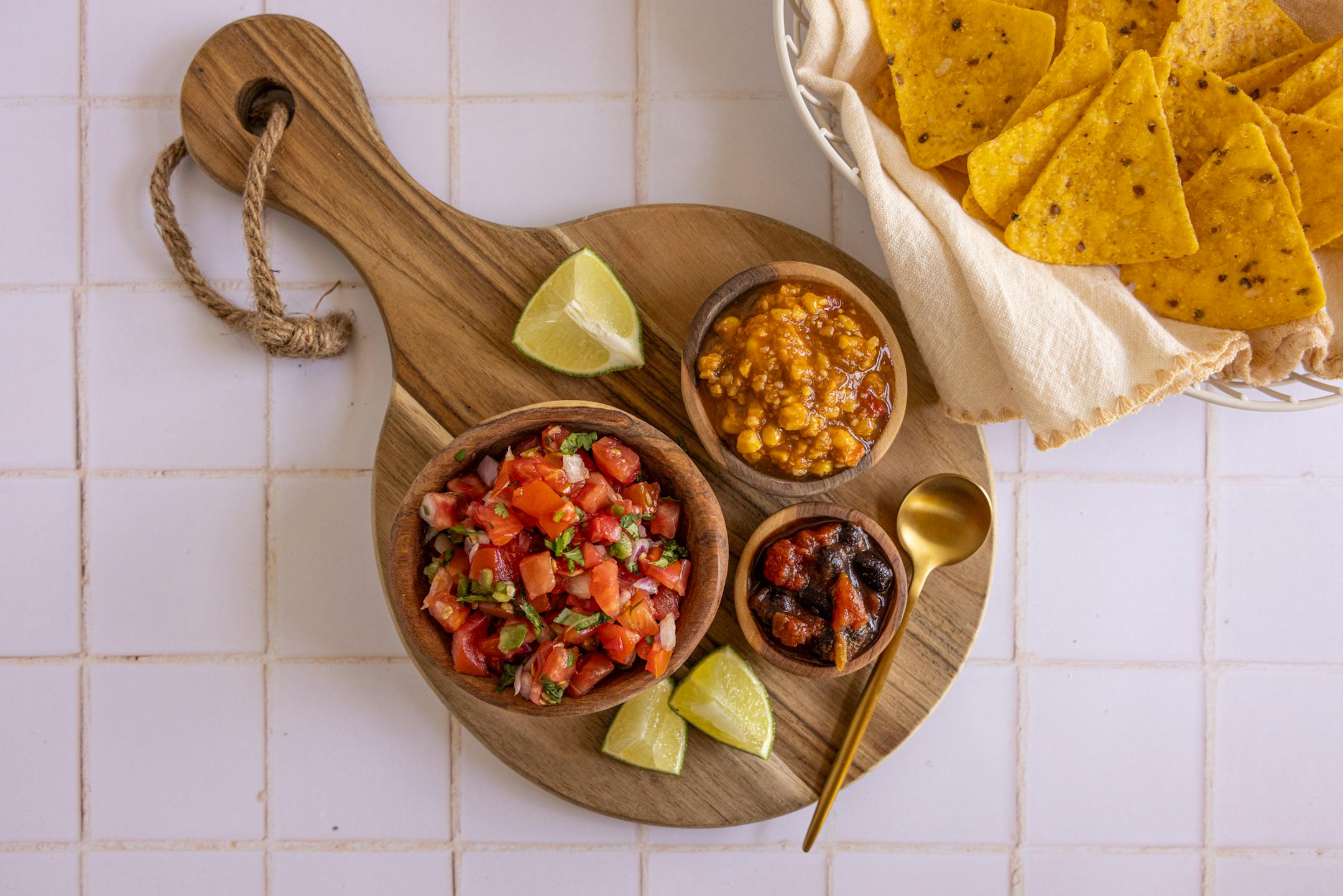
Salsa is the Spanish word for sauce, but it does a whole lot more.
A good salsa will complement and catapult the most ordinary dish with sweet, tangy, fiery depth and zest. It’s a delicious way to dispatch a seasonal bounty of fresh herbs, veggies and fruit, and is great in just about anything, regardless of the culture or country of a particular dish. Fresh tomato salsa adds zing to panzanella; sweet corn salsa lifts chicken salad; roast pepper-tomato salsa sparks buttery sautéed shrimp.
Chiles are the star of any salsa, providing a stunning range of flavor and heat. The level of spiciness is really up to the salsa maker, so feel free to experiment and choose chiles you like.
Generally, the smaller the chile the hotter it will be. Green chiles taste grassier, red chiles are sweeter and fruitier. Dried chiles, like grapes and raisins, are quite different from fresh; their flavors are more concentrated, and they’re often dried over a fire to infuse them with a smoky taste. Look for dried chiles that are soft and pliable, indicating that they are relatively fresh. To tamp down the heat level in any chile, remove the seeds. Be sure to wear gloves and do not touch your eyes or lips. The residual oil on your fingers can burn sensitive skin.
Chiles are relatively interchangeable so feel free to swap one for another. In desperation I’ve substituted a generous pinch of red pepper flakes or chili powder, but the resulting salsa never tastes as good as when I use fresh.
Fresh salsas will keep for several days in the refrigerator; cooked salsa can be frozen for months. They’re also a source of creativity — the cook’s playground — and a delicious way to capture summer’s flavors in a jar.
Fresh Tomato Salsa (Salsa Fresca)
Makes 2 cups.
It’s tomato season, and salsa fresca is a great way to enjoy such ripe sweetness. Lime juice bumps up the flavor; choose chiles with heat you like best. This is your classic salsa for chips, and it’s great on turkey burgers, too. From Beth Dooley.


