

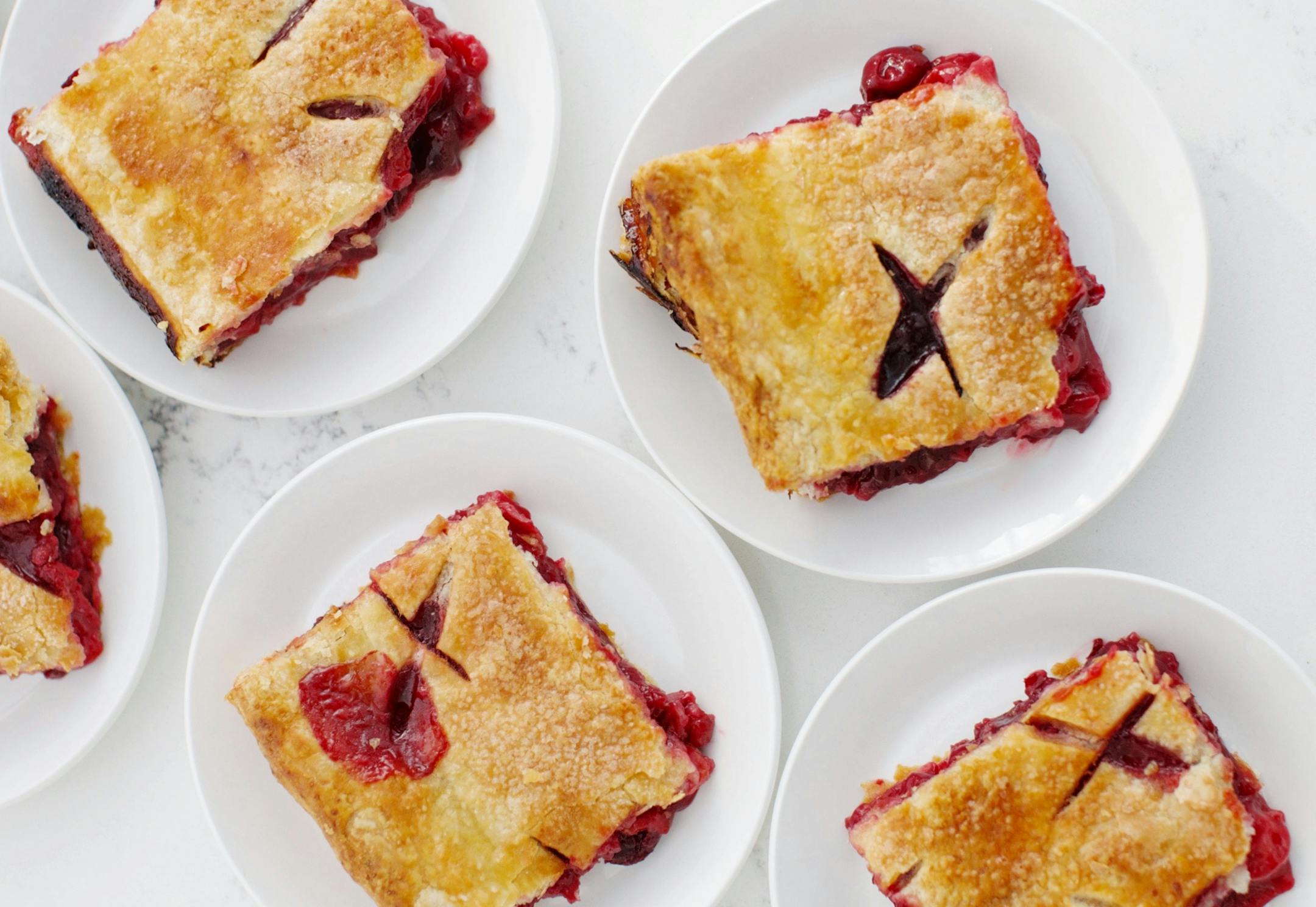
At age 28, I made my first pie from scratch, and it was incredible: a perfect apple pie.
The crust was flaky and golden brown and the filling perfectly cooked, with apples soft but not mushy. I immediately brought it to my grandma’s house, and she raved and raved about it (she may have even mentioned it was better than my mom’s apple pie, but we will never tell her that). And I’m pretty sure she ate the rest of it for dinner that night.
Brimming with confidence, I made another pie the next day: same recipe, same apples, same kitchen equipment. Alas, it was a total disaster.
Pies are tricky that way. We expect so much from them: a perfectly flaky crust (top and bottom!), an exterior that is not too light but not too golden brown, that is delicate yet rich in flavor, and a filling that is not too sweet but not too tart, and baked so the fruit is not too firm but not too soft. I don’t think Goldilocks was even this picky.
When it all bakes down, so much of pie baking depends on the fruit, and, well, fruit isn’t consistent. But after years of pie baking, I have landed on a technique that works for me. I first learned about it in “The Pie and Pastry Bible,” by Rose Levy Beranbaum.
Her method involves tossing the peeled and sliced fruit with sugar, then letting it sit until the fruit releases its juice. After straining the juice, it is then boiled down into a syrup and mixed back in with the fruit. Releasing the fruit juice and then cooking it down helps control how much liquid is in the filling, which solves so many problems. The fruit syrup also is a more concentrated flavor, another benefit.
I have played on Beranaum’s idea, adding a bit more sugar to the syrup as it cooks, and sometimes adding liqueur, vanilla and a little butter. Sometimes heavy cream is mixed in, to balance the fruit’s sweetness or tartness. I also taste the syrup as I add ingredients, so I can balance flavor before adding it to the fruit, which ensures a perfect filling.
This method (as with anything) isn’t completely foolproof; there are variables that can sneak up and ruin a pie. After baking many, many pies this way, I’ve found that it gives me the most consistently delicious pies and gives me room to play with different fruits without worry.


