
For Minnesota restaurants, price transparency law adds unwanted layer of regulation

More than 60 businesses have received letters from the Attorney General’s Office in response to price transparency complaints.

The Minnesota Star Tribune
July 23, 2025 at 10:30AM
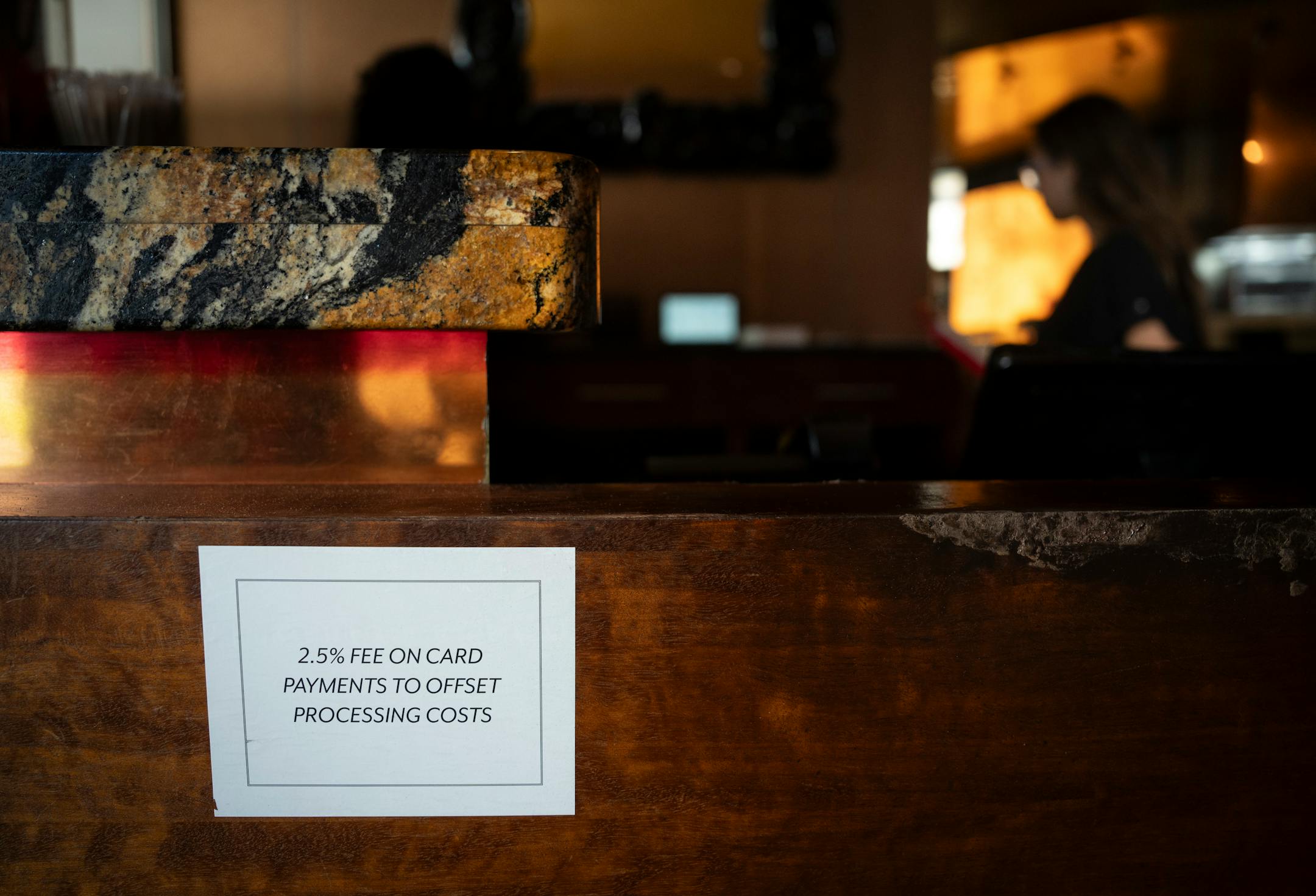
A sign indicating a 2.5% fee for credit cards is at the hostess station and on the menu at Crave in Minneapolis. (Renée Jones Schneider/The Minnesota Star Tribune)

At the front counter of a downtown Crave rests a small sign telling diners they will need to pay a fee for using a credit card. The restaurant was recently sued for adding undisclosed mandatory fees to customer bills.

But Kam Talebi, owner of the Minneapolis Crave and a chain of popular Twin Cities restaurants, says the sign plus his waitstaff’s practice of warning customers about the surcharge mean his establishments fully comply with relevant state laws.

Charging a credit card fee, which is a common practice at restaurants across Minnesota, is now at the center of a potential class-action lawsuit involving customers who argue the fees for credit cards are effectively unavoidable and should be regulated under a consumer protection law that took effect Jan. 1.

Because Crave customers have the choice to pay with cash or a debit card for free, Talebi says Minnesota’s new state statute outlawing hidden, mandatory fees does not apply to the 2.5% upcharge applied to credit card users at his restaurants.

He said he firmly believes his business is following the law, and had not heard a complaint about the fee until the issue landed in court last week.

Kam Talebi, owner of several popular Twin Cities bars/restaurants, is being sued over a 2.5% fee charged to diners who use a credit card. (Renée Jones Schneider/The Minnesota Star Tribune)

He said other restaurateurs are calling him and asking: “Am I next?” In challenging the lawsuit, he said, he is standing up for other restaurateurs who may find themselves in the same spot.

“I owe it to my peer group to help them avoid the heartburn that we’re going through now,” he said.

In seeking class-action status, the lawsuit questions whether Talebi — and by extension, anyone charging a “swipe fee” for credit card processing charges — can legally do so in the modern and dynamic digital payments system of today, where most people transact without paper currency. Some local businesses now refuse to accept cash at all.

Business owners say such fees are intended to offset the charges added by credit card companies for processing payments. Under Minnesota law, such fees are capped at 5% or whatever the cost is to a business charging them, whichever is lower.

The lawsuit, which Talebi has vowed to fight, may test in court the bounds of what is legally “reasonable.”

Under the guidance of Minnesota Attorney General Keith Ellison’s Office, a credit card surcharge is not considered mandatory if a person can “reasonably avoid” paying the fee by using cash. Another chapter of Minnesota law that specifically deals with credit card surcharges requires businesses to inform in-person customers through a conspicuously posted sign and an oral instruction at the point of sale.

The Attorney General’s Office, which encourages consumers to raise suspected violations of its price transparency law, has not kept track of how many such complaints consumers have filed since January.

But since the law took effect, more than 60 businesses received letters from the Attorney General’s Office in response to price transparency complaints, Attorney General’s Office spokesman Brian Evans said. Those letters generally summarize individual complaints, request compliance from businesses and include a set of frequently asked questions with plain-language answers.

Officials declined to share details that would identify which businesses received complaints, saying that information is confidential.

Consumer advocates have taken broad aim at so-called “junk fees,” prompting laws to require that businesses clearly spell out up front what a customer will pay for goods and services. Consumers have complained about the practice with many businesses, including concert ticket brokers, car-rental companies, airlines, hotels, food-delivery services.

In May, a new Federal Trade Commission rule took effect banning junk fees for businesses offering live-ticketing and short-term lodging. Restaurants faced being subject to the new requirements, but successfully lobbied for exclusion in December.

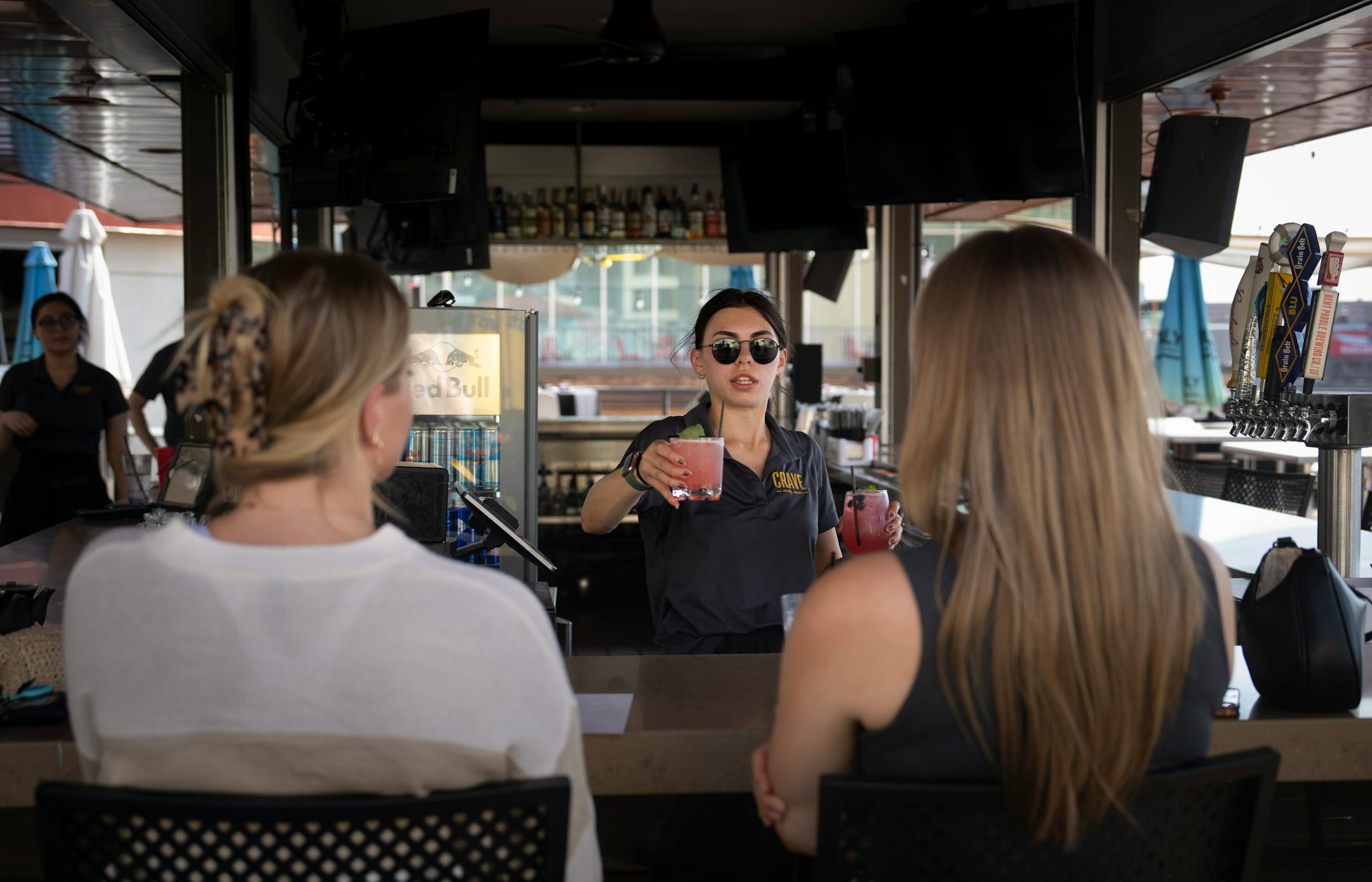
Bartender Haley Traufler serves drinks at the rooftop Crave restaurant in Minneapolis. (Renée Jones Schneider/The Minnesota Star Tribune)

Other states have taken steps to ban or limit fees in response to fed-up consumers. California went so far as to outlaw credit card surcharges entirely as part of a broader attempt to enhance price transparency. The state specifically walked back that requirement for restaurants and bars two days before the law took effect.

Prentiss Cox, a University of Minnesota professor specializing in consumer protection law, said the state’s price transparency law is simple. Many businesses, including his local hardware store, have adapted by offering customers the choice of paying a list price with a credit card processing fee attached or a cash discount. At the end of the day, he said, the law’s purpose is making the price consumers see the same as the price they ultimately pay.

“If it’s a charge that a reasonable person would expect to be included in the price, it’s not that hard to comply. Just include it in the price,” Cox said.

The legal questions over credit card surcharges in the context of price transparency come as some restaurant owners found themselves at odds with the new state law over health and wellness fees.

Since Jan. 1 Minnesota’s restaurants were required to drop the practice of including those fees, which grew in popularity as hospitality businesses struggled through the COVID-19 pandemic, as a separate item on the check. Eateries including some of the Twin Cities’ most prized restaurants adopted the practice while seeking to offer better pay and benefits to employees, including for back-of-the-restaurant workers such as cooks and dishwashers.

The price transparency law beefed up Minnesota’s Deceptive Trade Practices Act, requiring meals and drinks listed on the menu to reflect all the mandatory fees a customer needs to pay. It still permits restaurants to disclose to customers that a certain percentage of the bill goes toward employee expenses like employee health insurance.

Angie Whitcomb, CEO of restaurant trade group Hospitality Minnesota, said the state has created some confusion and a more complex regulatory environment for businesses. She said Minnesota is among a few without tip credits, which allow restaurants to factor in a gratuity as part of wages, or tip pooling, which allow employees to share tips.

Now, she said, the state appears to be the only one with a price transparency law misaligned with the FTC’s.

“We keep layering on these laws, and it’s tough to keep them straight,” she said.

Crave owner Kam Talebi talks about being sued for adding a 2.5% fee for diners using a credit card at Crave in Minneapolis. (Renée Jones Schneider/The Minnesota Star Tribune)
about the writer

about the writer

Bill Lukitsch

Reporter

Bill Lukitsch is a business reporter for the Star Tribune.

See Moreicon

More from Business

See More
card image
Provided by Exact Sciences

The late Dr. David Ahlquist co-invented ColoGuard, which is helping drive Abbott Laboratories’ acquisition of Exact Sciences. After an ALS diagnosis in 2019, Ahlquist wasn’t done inventing.

card image
card image