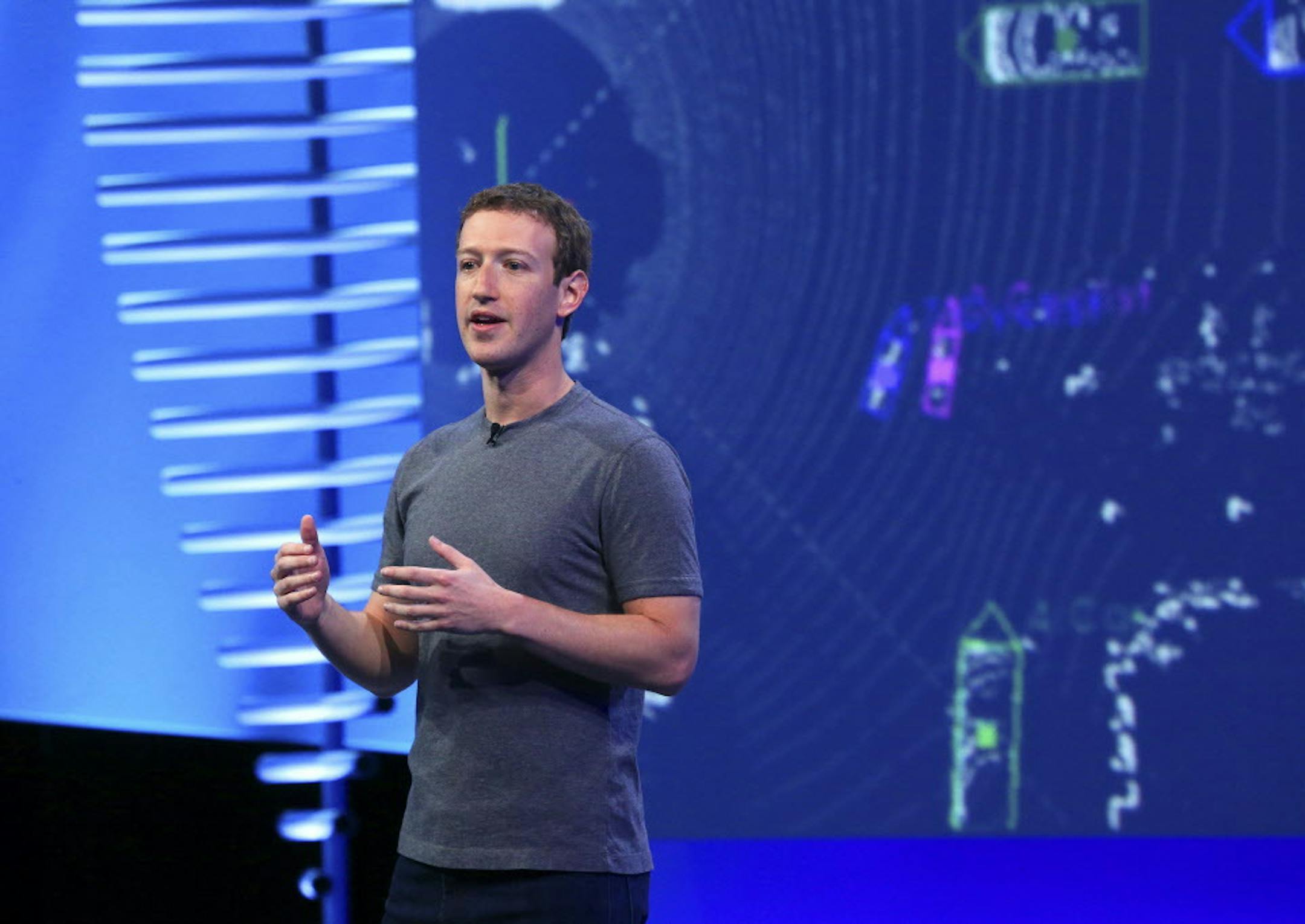
"Mark Zuckerberg, dead at 32, denies Facebook has problem with fake news."
The satirical headline, which made the rounds online this week, nicely encapsulates the most recent woes of the world's largest social network: its algorithms, critics contend, filled users' newsfeeds with misinformation — and in the process influenced the American election result.
But this is not the only problem the firm is grappling with. A volatile share price, privacy policies and advertising metrics have also kept Zuckerberg busy.
"News" that the Pope had endorsed Donald Trump or that a pizzeria in Washington, D.C., is the home base of a child-abuse ring led by Hillary Clinton, were not confined to Facebook (nor were fake stories only a right-wing phenomenon). They often originate elsewhere, for instance on fake news websites in Macedonia, which make good money via online ads, and on Twitter. But Facebook's algorithms give prominence to such misinformation. They are tuned to maximize "engagement," meaning they present users with the type of content that has already piqued their interest, as outrageous headlines tend to do.
Yet despite all the attention given to fake news, the other problems probably have Zuckerberg just as worried. On Nov. 18, to the surprise of many, Facebook announced that it would buy back up to $6 billion of its shares. That seemed to be in reaction to a 10 percent drop in its share price since it warned earlier this month that growth next year would be slower and margins lower, as ad space on its services gets tighter and it invests heavily in data centers. The buyback signals that Facebook considers its shares undervalued, said Mark Mahaney of RBC Capital, an investment bank.
A couple of days earlier, Facebook had to admit flaws in how it measures its traffic (for the second time in just a few weeks, after disclosing that it had overestimated the average viewing time for its video ads). This time it said that other numbers, including the quantity of clicks from Facebook posts to apps or websites, were smaller than previously stated. Although this did not lead advertisers to overpay, they are likely to make new demands of Facebook, for instance to provide more data about exactly how its ads are viewed.
It has also emerged that Facebook has "paused" the ongoing process of merging its data with those of WhatsApp, the messaging app it bought in 2014 for $19 billion in shares. When the takeover was announced, Jan Koum, WhatsApp's founder, promised users their data would stay apart. In August Facebook reneged on the pledge, which upset various privacy watchdogs in Europe. In September, the city of Hamburg, Germany's data-protection commissioner issued an order that stops Facebook collecting data from German users of WhatsApp.
Whether all this will have a discernible impact on Facebook's finances is a matter of debate among analysts. If advertisers have extra money to spend they do it where they get most bang for their buck, which, Google aside, is Facebook, said Peter Stabler of Wells Fargo Securities. In contrast, Brian Wieser of Pivotal Research recently wrote that the focus on fake news and the concerns over the measurement of advertising could well cut revenue growth by a couple of percentage points.