

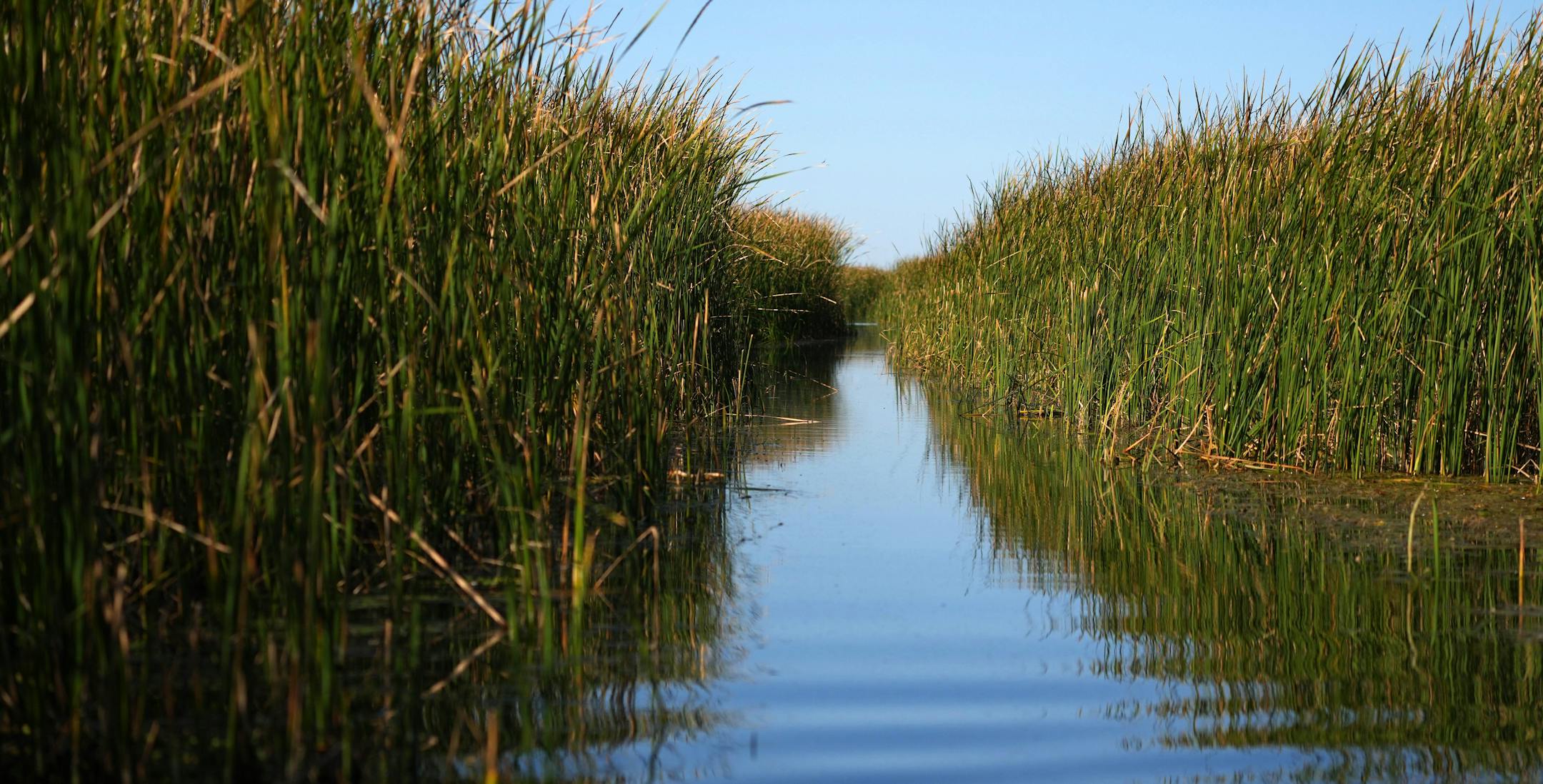
As fall’s reds and oranges fade away, cattails add their brown velvety spikes to the edge of lakes and wetlands. Cattail bouquets can create rustic, autumn decor, but this plant offers many year-round gifts. Almost every part of it can be used or consumed by humans, birds and animals.
This time of year, migrating geese and muskrats can be spotted diving beneath the water to eat cattails’ underground rhizomes (a bulbous root), where nutrients have collected throughout the growing season. Human foragers also wade in to harvest the rhizomes. They can be dried and ground into flour for baking or thickening winter stews.
The plant spreads mostly through the rhizomes, sending up new shoots as roots grow. The wind can also carry seeds to new locations. Cattails’ distinctive brown seed heads, which can look like a skewered cigar or dark sausage on a stick, can hold more than 200,000 seeds. Seed heads explode into fluff as early winter arrives. You can also release the fluff by running a fingernail firmly along the brown exterior.
That fluff was used as early diaper material for babies. It also added insulation to footwear and outerwear and could be used to start fires.
The plant’s sturdy water-repellent leaves could be woven into baskets and used for shelters. Muskrats also use the plants’ stalks to build their distinctive round lodges that dot Minnesota’s wetlands.
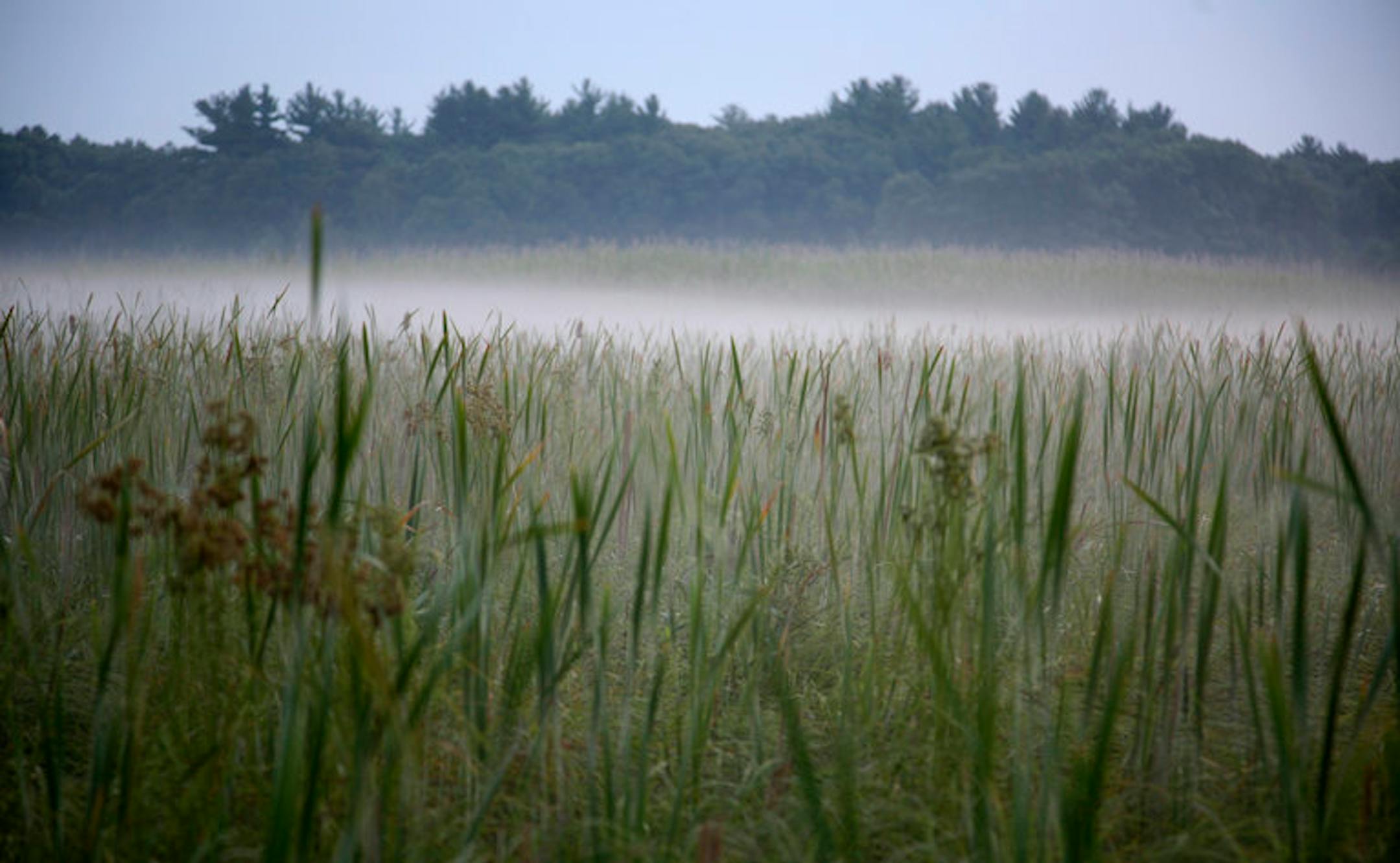
In the spring, cattails become edible again. Foragers harvest the young, tender shoots as they first emerge. Some will harvest the yellow pollen as well. Aquatic plant foraging requires a permit from the Minnesota Department of Natural Resources.
Nonnative narrow-leafed cattails can hybridize with native broadleaf cattails and aggressively spread across a lakeshore or fill up a shallow pond — something property owners don’t always welcome. The hybrids can also crowd out shoreline natives such as bulrush, arrowhead and bur-reed.
By contrast, native cattails coexist with diverse plant life. They stabilize shorelines by preventing erosion, filter the water and provide nesting habit for fish and birds such as red-winged blackbirds, marsh wrens and rails.


