Air travel takes off at MSP during MEA weekend, despite federal government shutdown

Officials stepped up staffing for the four-day MEA weekend, which tends to spike travel at the airport.

The Minnesota Star Tribune
October 15, 2025 at 10:23PM
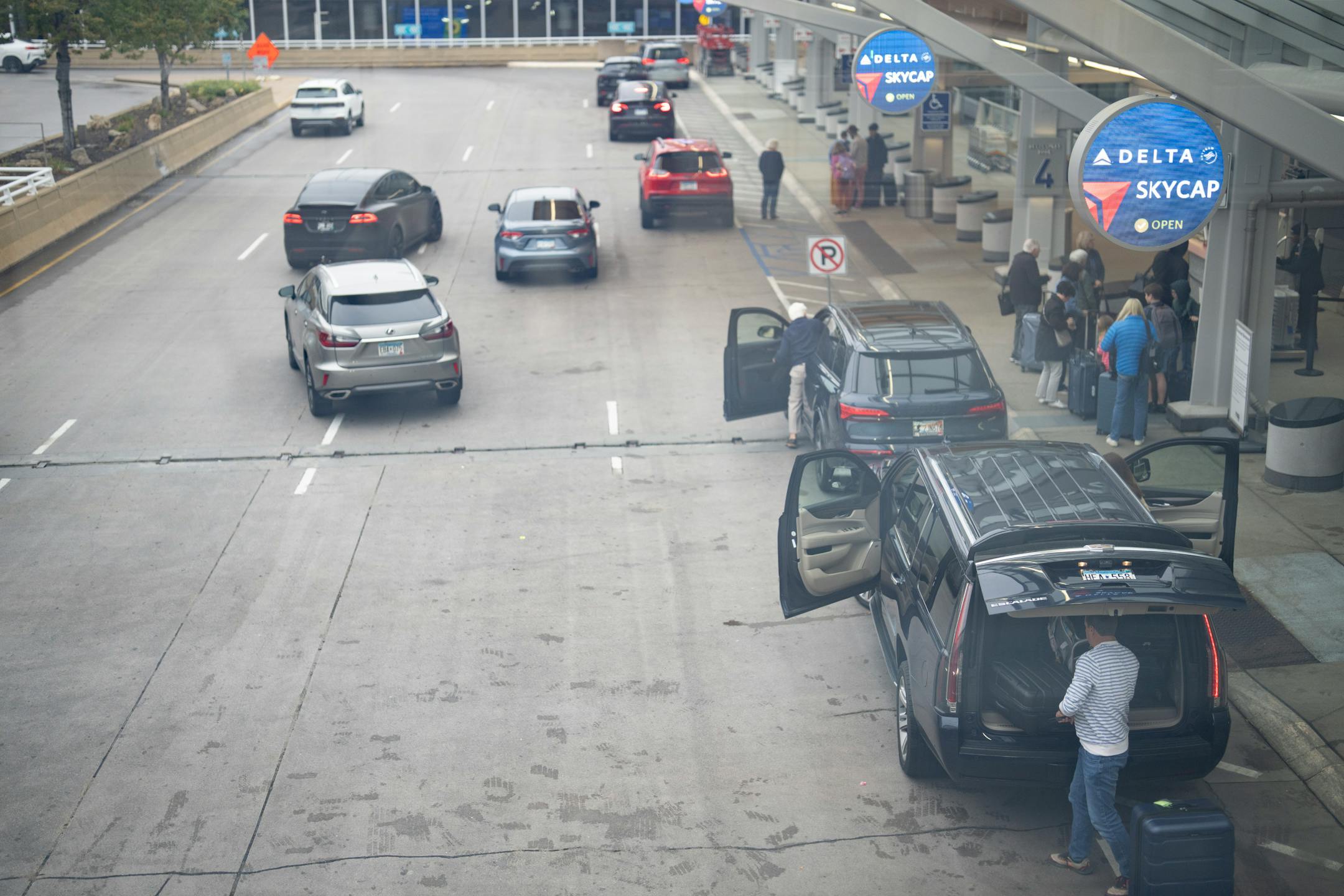
Cars drop off travelers at Terminal 1 at Minneapolis-St. Paul International Airport on Wednesday. (Alex Kormann/The Minnesota Star Tribune)

With the federal government shutdown coinciding with the historically busy travel on MEA break, many travelers at Minneapolis-St. Paul International Airport on Wednesday had potential flight delays and cancellations on the mind.

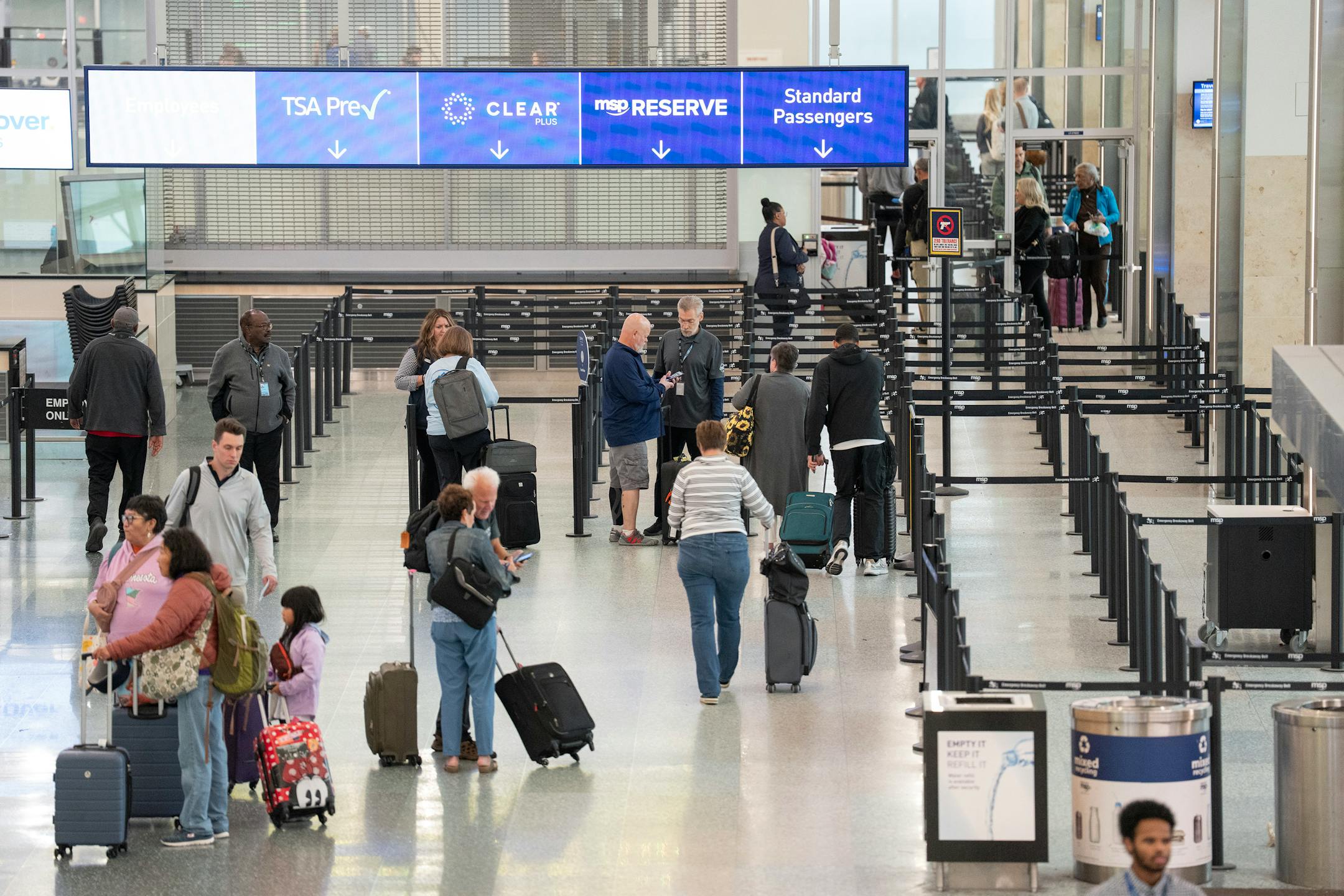
But schedules and TSA lines were running smoothly at MSP.

“No problems so far,” said Katie Lins, 47, who was traveling with her kids for the long weekend. “A lot of people are staying home, and I don’t know if that [government shutdown and MEA weekend] is why. MEA isn’t that long, so traveling somewhere far may not be worth it for them. And things are expensive these days.”

Federal employees are clocking in this week without the security of an upcoming paycheck at the same time as the usually busy four-day MEA weekend. Named for and timed with the annual Minnesota Educators Academy conference, the extended break tends to bring heavier traffic to the airport, as families take fall getaways before winter arrives.

Airport officials anticipated Wednesday and Thursday would be among the busiest travel days this week and staffed workers at multiple ticketing levels and TSA checkpoints to deal with the expected surge.

Despite some national news reports of air travel hiccups attributed to federal worker shortages, MSP has shown minimal impact, according to officials with the Metropolitan Airports Commission (MAC). As of Wednesday, the airport had yet to see any major disruptions since the federal government shutdown began, said MAC spokesman Jeff Lea.

Delta Air Lines, the dominant carrier at MSP, and Sun County, the airport’s second-busiest carrier, both said the federal shutdown’s effect on operations has been little to unnoticeable.

On-time flight performance at MSP for the past 15 days remained above average and above most airports in its class, according to data from Cirium, an aviation analytics company. The cancellation rate Wednesday was 0.15%.
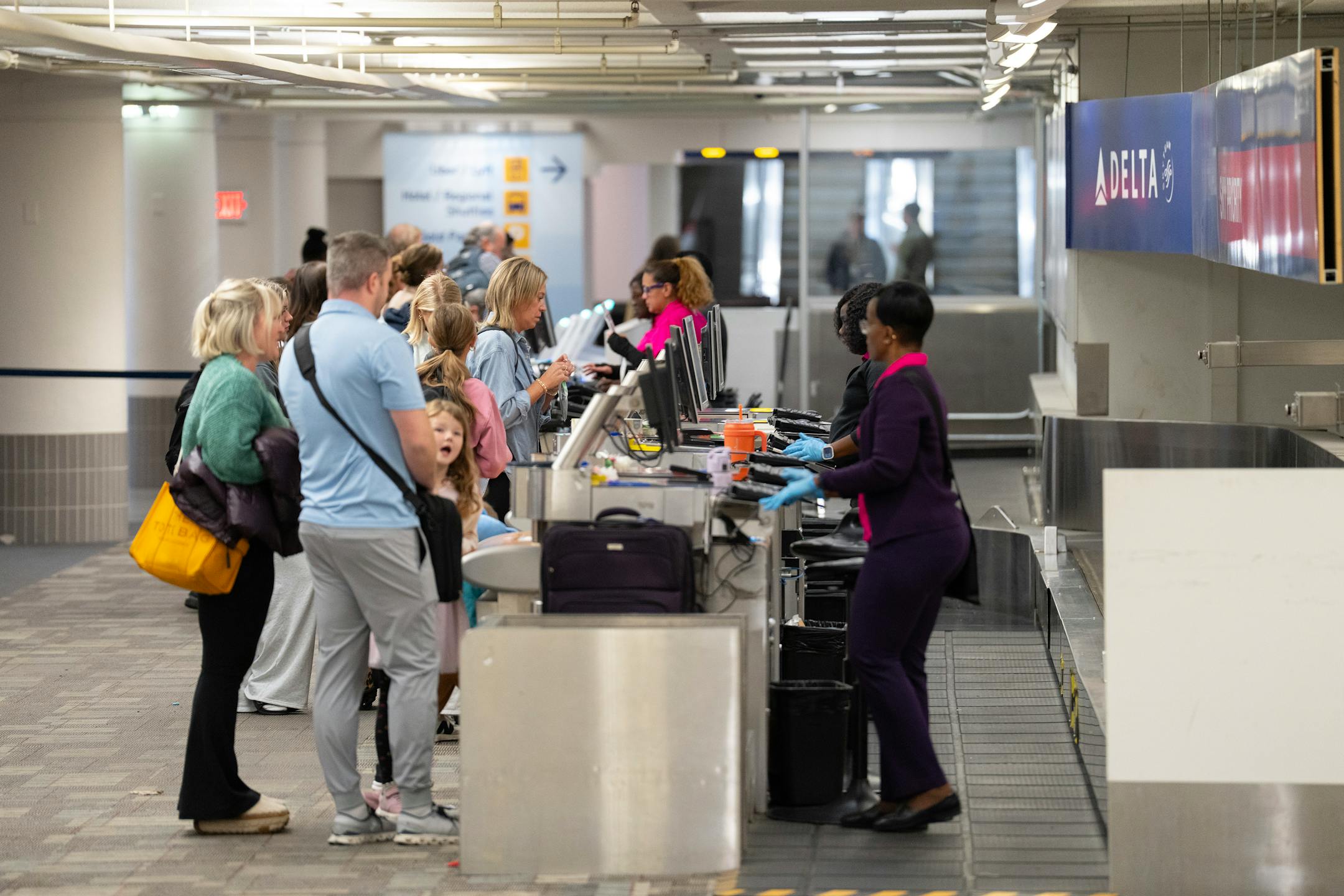
Travelers wait in line to check their bags at a Delta Air Lines counter below Terminal 1 on Wednesday. (Alex Kormann/The Minnesota Star Tribune)

Air travel has become a political flashpoint after the federal government shut down Oct. 1, with pressure building on Republicans and Democrats to end the impasse in Washington, D.C.

Transportation Secretary Sean Duffy made several public appearances last week warning of a prolonged shutdown’s potential to affect airspace operations. And Department of Homeland Security Secretary Kristi Noem released a controversial video for airports to play on loop in TSA security lines that placed sole blame for any hassle on Democrats.

Other lawmakers have alleged the video violates the Hatch Act, which prohibits some federal employees from participating in some political activity. MSP is among a handful of airports that have refused to air the video.

In the meantime, federal employee unions and the airline industry are calling for a swift resolution to the stoppage.

A continuing federal shutdown means air traffic controllers and TSA employees are working without paychecks. While TSA and air traffic workers are doing their jobs without compensation for now, federal union leaders warn the essential workers can only go without pay for so long.

Drew MacQueen, a Midwestern regional union leader with the National Air Traffic Controllers Association and an air traffic controller in Cleveland, said the government shutdown is “an unnecessary distraction on top of an already challenging and stressful job.” The system is already fragile, he said, as air traffic control towers are understaffed by roughly 3,800 people, and controllers are putting in longer hours and work weeks.

Now the threat of working without pay is weighing on the minds of those workers. Many are thinking about how to pay for child care and housing and are looking for second jobs delivering pizza or driving for Uber.

“We want controllers coming into work rested, focused, not worrying about paying their bills. And not being fatigued from working a side job,” MacQueen said, adding federal lawmakers need to come together and end the shutdown immediately.

TSA officers are also starting to feel the sting of a lighter wallet.

Employees who lived through earlier shutdowns knew what to expect and how to plan for when the paycheck suddenly gets smaller, said Neal Gosman, a TSA officer at MSP and treasurer for AFGE Local 899. He said younger workers were taken more by surprise.

Gosman said Wednesday a few workers had called off, leaving officers slightly shorthanded. He said passengers have been courteous and understanding, thanking the TSA officials for coming to work without being paid.

“At this point, people are not panicked. But we’re only a couple of weeks in,” Gosman said, adding, “It’s clearly not right that we’re doing our jobs (without pay) and people in Congress are not doing theirs.”

Some commercial airlines might also see the shutdown dent profit margins.

In 2018, during the first Trump administration, a record 35-day federal shutdown ground government travel to a halt. Delta executives at the time said the slowdown amounted to about a $25 million loss, at one point reaching $1 million per day.

Glen Hauenstein, Delta’s president, said during a call with investors last week those losses would be less today, partly because travel at Ronald Reagan Washington National Airport has “not been a real driver in terms of revenue improvement this year.”

Travelers move toward a security checkpoint at Terminal 1 at Minneapolis-St. Paul International Airport on Wednesday. (Alex Kormann/The Minnesota Star Tribune)

Back at MSP, Cindy Siegel, 67, of Moorhead, was keeping an eye on impacts while traveling with her daughter for a trip to visit national forests in Utah.

“We’ve had no problems,” Siegel said, adding this is her first time traveling during MEA weekend. “We anticipate if there’s delays, we’ll just roll with it.”

Mark Gausman, 68, said his family usually drives during MEA but chose a flight to Chicago this time.

“We haven’t experienced anything different than a normal day so far,” Gausman said. “Of course it’s only Wednesday. Thursday sounds like it might be a whole different ballgame,” Gausman said.

about the writers

about the writers

Bill Lukitsch

Reporter

Bill Lukitsch is a business reporter for the Star Tribune.

See Moreicon

Kyeland Jackson

General Assignment Reporter

Kyeland Jackson is a general assignment reporter for the Star Tribune.

See Moreicon

More from Business

See More
card image
Provided by AGNT Media

A former Cold War-era missile launch site is among three Minnesota listings with their own “safe rooms.”

card image