Federal funding cuts have Enterprise Minnesota, job training programs scrambling

Some are canceling projects, others are cutting staff.

The Minnesota Star Tribune
August 28, 2025 at 8:59PM
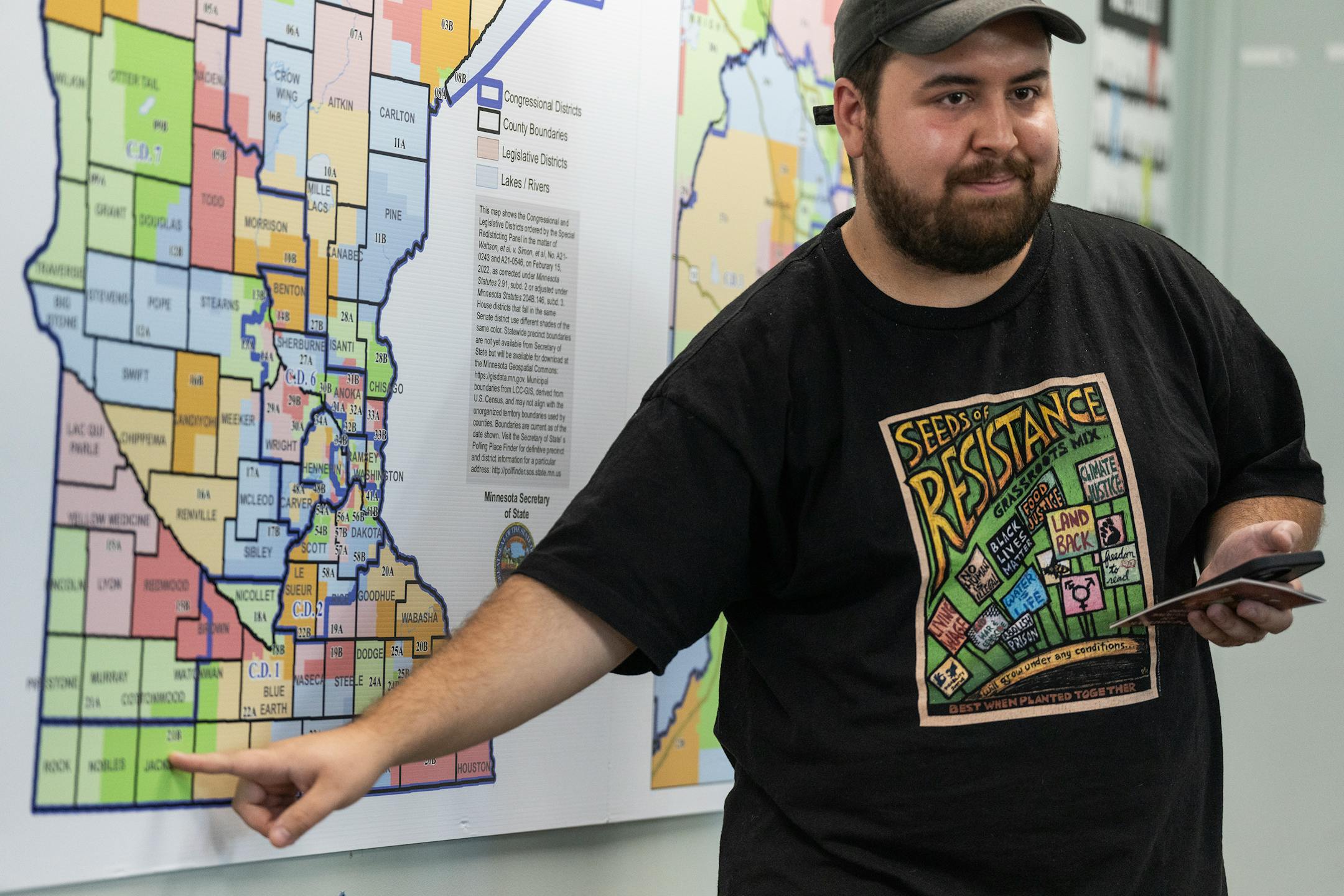
Ryan Perez, the organizing director of COPAL Minnesota, runs a staff training session on what to know about the immigration crackdown. The nonprofit has lost federal grants funding a new job training center and is scrambling to raise money so it can finish the building project. (Richard Tsong-Taatarii/The Minnesota Star Tribune)

Latino nonprofit COPAL Minnesota is scrambling, trying to save a building project to support its job training program after two key government grants were cut.

Dozens of other nonprofits providing help to businesses and job seekers also are pivoting, as their funding either declined or was canceled.

Included is Wildflyer Coffee, which provides training for homeless youth at two coffee shops in St. Paul and Minneapolis.

The cuts also affect groups like Enterprise Minnesota, which helps mostly rural manufacturers with all sorts of support from equipment and efficiency consulting to industry certifications.

And the AARP Foundation, which provides money for job training programs for older adults. It recently cut its staff after learning it will soon lose nearly $300 million in federal funding.

In Minneapolis, Communities Organizing Latine Power and Action (COPAL) just slashed staff hours by 25% and launched an emergency campaign to find replacement funds for the new $12 million job training center. The two grants cut totaled $3.5 million.

The space is badly needed for COPAL’s program that trains nearly 1,000 Latinos each month as tax preparers, nursing assistants, solar-panel installers and energy auditors.

“Money we thought was secured at the end of last year is not coming anymore,” said COPAL Minnesota Associate Director Carolina Ortiz. “We’re having to get creative and rethink our strategy.”

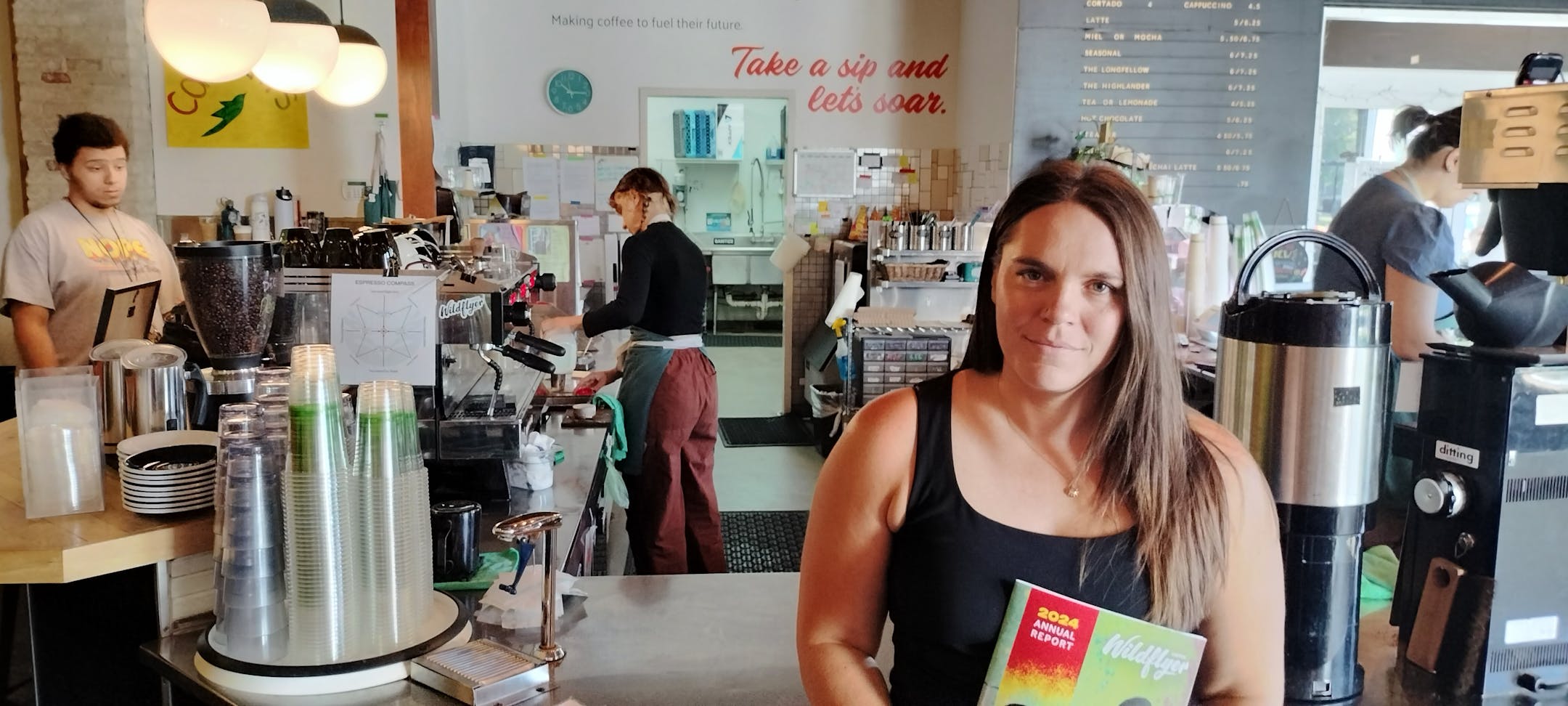
Carolina Ortiz, associate director of COPAL Minnesota, shows the rendering of the nonprofit's planned job training center. Federal funding for the center was cut. (Richard Tsong-Taatarii/The Minnesota Star Tribune)

Nonprofits like COPAL turning to fundraisers

COPAL has planned a large fundraising gala for this fall and launched a campaign to find new donors.

The Graves Foundation, through Lake Street Lift, gave COPAL money to finish predevelopment site work at the corner of Lake Street and 29th Avenue S. The site is where an O’Reilly Auto Parts store stood before being damaged by fire during riots that followed the police murder of George Floyd.

With luck, the construction of the new building will just be delayed, but not canceled.

“At least that’s the hope,” Otriz said.

Wildflyer Coffee co-founder Carley Kammerer said her nonprofit's federal funding has been cut in half. The nonprofit social enterprise uses the money to train homeless youth and place them in permanent jobs at Twin Cities businesses. (Provided)

Wildflyer makes cuts, looks for new funding

Wildflyer Coffee is now trying to pivot after the federal government abruptly cut its $400,000 job training grant in half, said Carley Kammerer, co-founder of the social enterprise.

The group was forced to cut services “until we figure this out,” Kammerer said.

Next week, Wildflyer will accept four young adults to its fall program. It normally has 15 each quarter.

For eight years, the government provided 32% of the funds needed to train, counsel and employ 60 homeless youth each year. The trainees work at Wildflyer for 16 weeks and then are permanently placed in jobs at Twin Cities businesses such as Caribou Coffee, Target, Frances Burger Joint and Butter Bakery.

“We’d been holding our breath. Now it’s real,” Kammerer said. “The $200,000 cut is a pretty big loss in a year where it’s not like it’s easy to make that up.”

Kammerer also is worried about other funding. Wildflyer also depends on two other federal grants, which are soon due for renewal.

One is funded by the Supplemental Nutrition Assistance Program, or SNAP. Congress cut the program’s funding by $186 billion over 10 years in the federal budget bill passed earlier this summer.

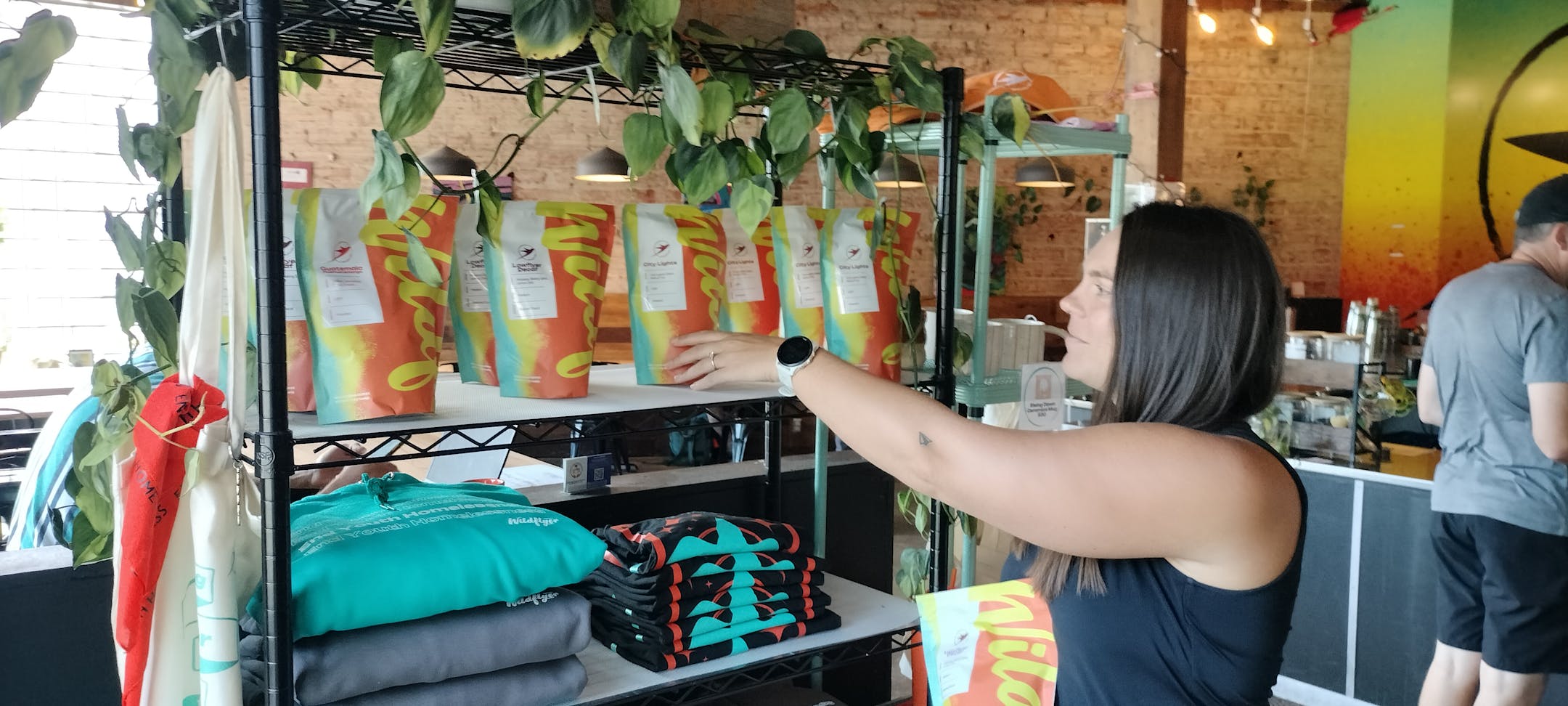
Wildflyer Coffee co-founder Carley Kammerer rearranges bagged coffee on display shelves in Minneapolis. She is trying to sell more bagged coffee and is leaning more into her wholesale business to fund more of the nonprofit's job training. (Dee DePass/The Minnesota Star Tribune)

Wildflyer is leaning harder on funding its job training through its coffee sales in hopes the eight-year-old social enterprise will survive.

Wildflyer spends $2 million a year on salaries, rent, job training, transportation and other support for youths scrambling to secure housing, skills and income.

Government contracts traditionally covered 32% of all costs, while donations covered 24%.

Only 44% of the budget comes from coffee revenue. That has to rise, Kammerer said.

Now the coffee shop is asking customers to buy coffee by the bag, not just the cup. And the business is trying to expand its wholesale revenue.

“For every 3,300 pounds of coffee we sell, we can put a young person through our four-month work and life skills training program. But it’s tough,” Kammerer said.

Most nonprofits are now asking more of their donors. “It just feels like every day is kind of a new pivot,” she said.

The specter of Enterprise Minnesota losing its funding and the cancellation of the U.S. Department of Agriculture solar subsidy program resulted in Brandon Andersen, founder of Lonesome Cottage Furniture, joining a lobbying trip to Washington, D.C. (provided)

Programs like Enterprise Minnesota in jeopardy with funding cuts

The business consulting nonprofit Enterprise Minnesota is trying to save the federal program that funds it.

In July, officials found out the U.S. Commerce Department plans to defund the national Manufacturing Extension Partnership Program [MEP]. Nearly half of Enterprise Minnesota’s costs are funded through the program.

So the organization and hundreds of its clients took an unusual step for them: lobbying Minnesota Reps. Tom Emmer and Brad Finstad and others in Washington, D.C., to try to save the organization’s services.

Enterprise Minnesota and organizations like it across the country provide strategic consulting, help with certification to compete for government and specialized contracts, advice on lean manufacturing and other methods and more.

Congress would likely need to take action to save the MEP funding.

“If there’s no federal funding, we’d have to reduce the number of counties we cover” from 80 to about 15, said Enterprise Minnesota Vice President Lynn Shelton. “It’s the [rural manufacturing] companies that will miss out on services.”

Those businesses farthest from the Twin Cities would be the most adversely affected, said CEO Bob Kill.

Brandon Andersen, founder of Lonesome Cottage Furniture, with northern Minnesota factories in Pequot Lakes and Breezy Point, said losing Enterprise Minnesota’s consulting help would be painful.

The group trained his 75 workers to spot factory waste. Now, the company is on track to save $300,000 this year by reducing wood scraps and standardizing its furniture production.

Enterprise also enrolled Andersen in its executive peer counsel program. That problem-solving group helped him save “hundreds of thousand of dollars” over the last few years.

Without Enterprise Minnesota’s help, he’d have hefty consulting bills he could not afford.

The fear is that without the MEP groups, growth would be stunted because of the high cost of technical consulting for small and midsize firms.

That threat had Andersen lobbying for the first time in his life. He recently flew to Washington, D.C., with 45 other business owners to meet with Minnesota’s congressional delegation.

Andersen also is worried about solar subsidies. In October, Andersen installed $870,000 worth of solar panels on Lonesome Cottage’s Pequot Lakes plant.

Federal U.S. Department of Agriculture subsidies covered 50% of the project. The company also qualified for some tax breaks.

On top of the subsidies, the company saves $4,000 a month because of the panels.

Andersen was planning to put the solar panels on another factory in Minnesota and one in Idaho, but the USDA canceled the subsidies.

Without the federal help, “we won’t do it,” he said.

about the writer

about the writer

Dee DePass

Reporter

Dee DePass is an award-winning business reporter covering Minnesota small businesses for the Minnesota Star Tribune. She previously covered commercial real estate, manufacturing, the economy, workplace issues and banking.

See Moreicon

More from Small Business

See More
card image
Aaron Lavinsky/The Minnesota Star Tribune

Fifty trees and thousands of handmade ornaments make for one very merry St. Paul shop.

card image
card image