Federal agents are heavily deploying chemical irritants. What are the health consequences?

Munitions experts say ingredients can vary and can be considered proprietary.

The Minnesota Star Tribune
January 26, 2026 at 12:00PM
Federal agents attempt to push protesters back near the scene of a shooting by a federal agent in north Minneapolis on Jan. 14. (Richard Tsong-Taatarii/The Minnesota Star Tribune)

U.S. Border Patrol Cmdr. Greg Bovino recently took to the streets of Minneapolis, pulling the pin from a grenade and lobbing it into a crowd of protesters as plumes of vibrant green smoke filled the air and stained snow in the residential neighborhood.

Bovino yelled, “Gas, gas, gas!” as he wound his arm back. He was maskless. Protesters scattered and warned others it was toxic.

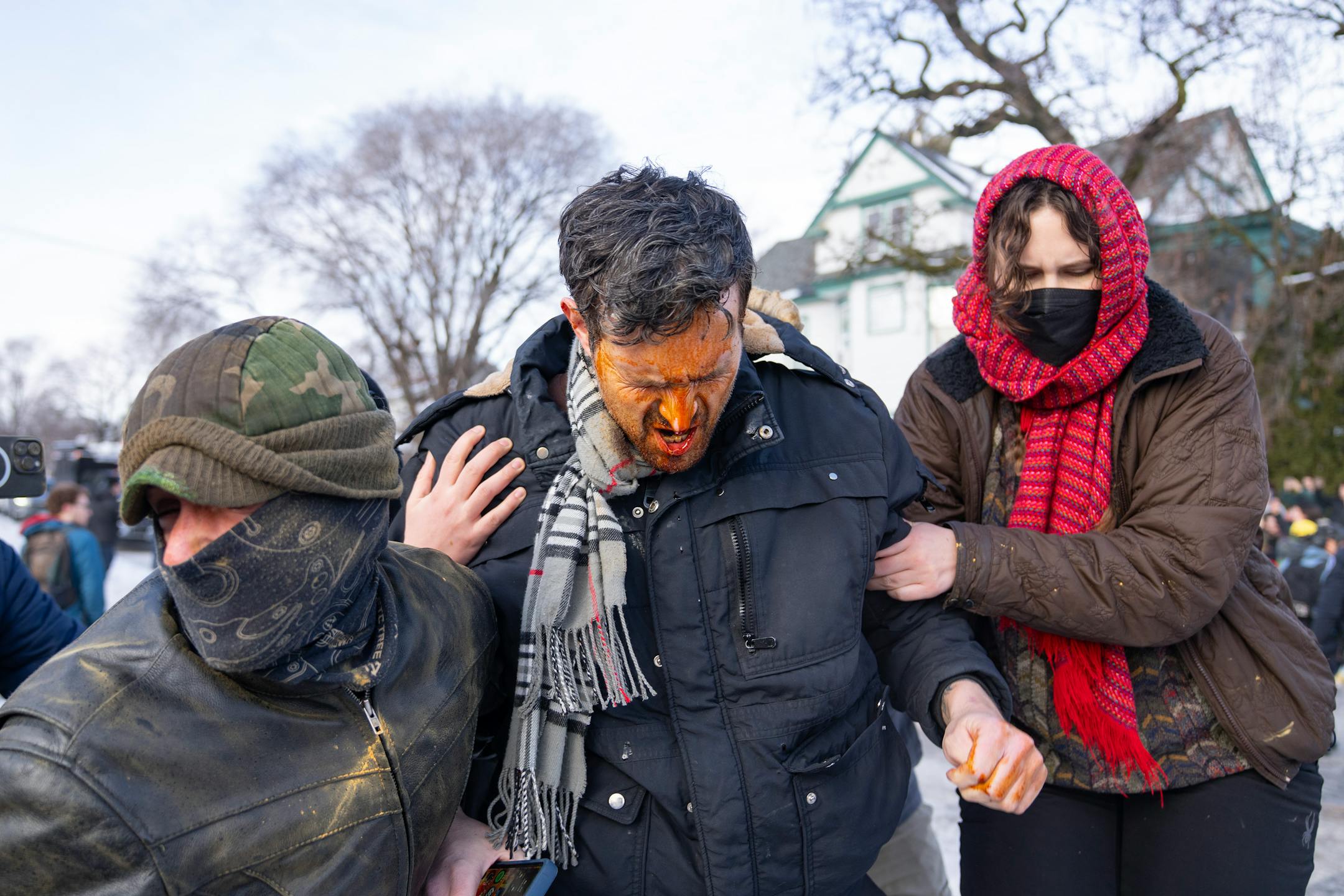
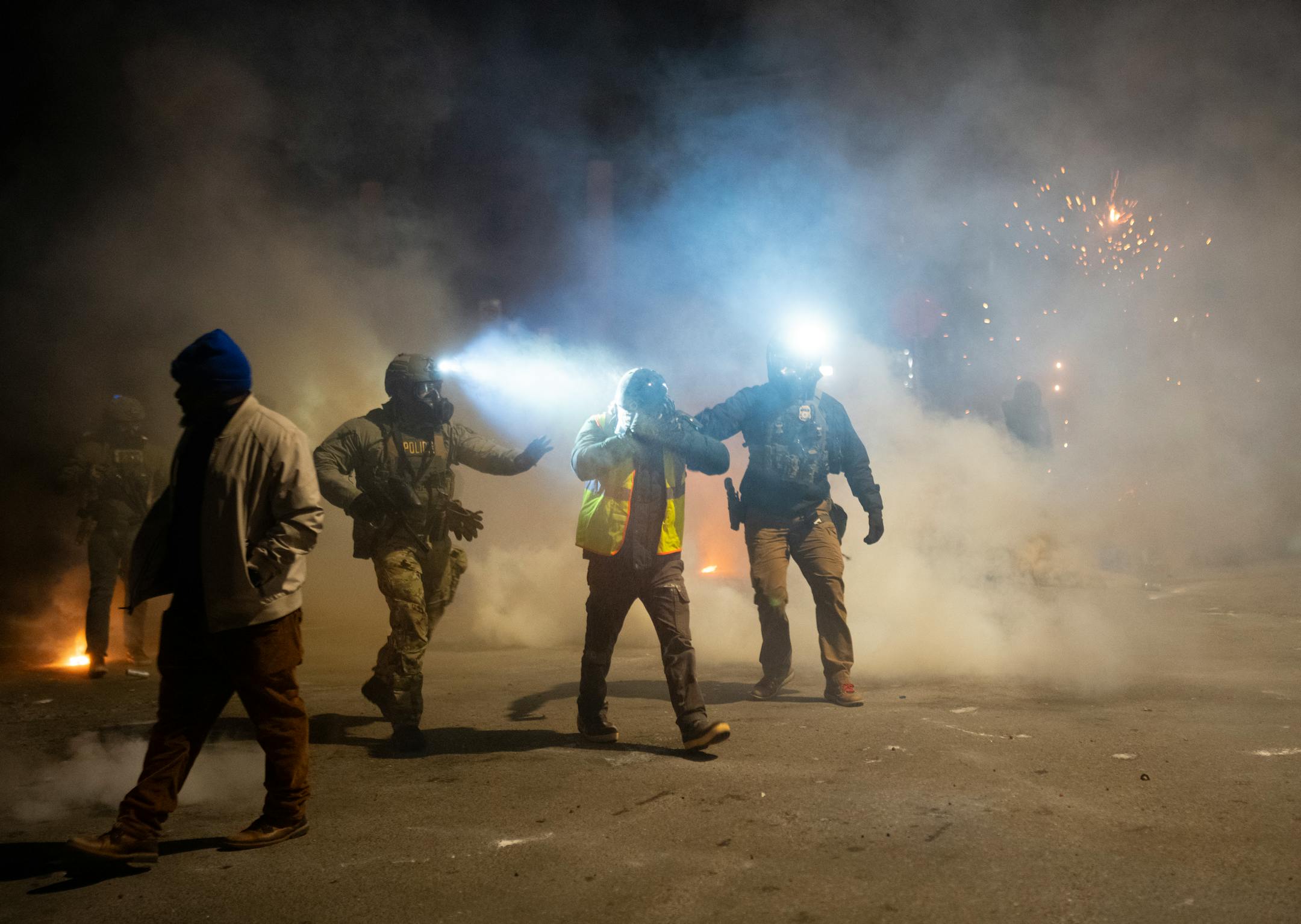
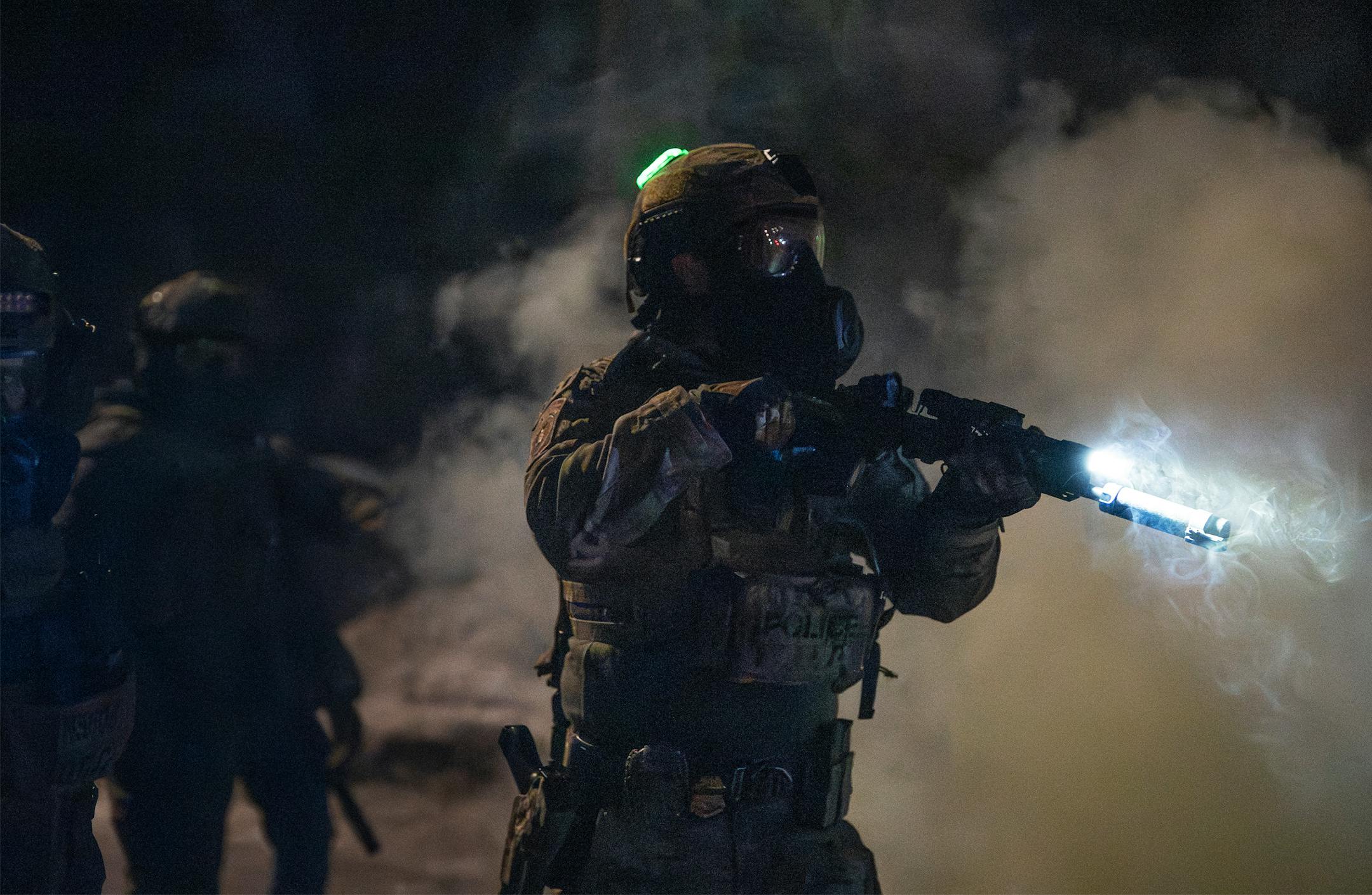
It was one of many plumes, sprays and blasts of chemical irritants that federal agents have deployed in Minnesota the past few weeks during Immigration and Customs Enforcement’s (ICE) surge in the state. Protesters and observers have speculated about the chemicals and worried about the short- and long-term health effects of such crowd-control munitions.

The Department of Homeland Security and Border Patrol did not respond to questions about what chemicals have been used during Operation Metro Surge.

Munitions experts warn that ingredients in grenades and canisters — some of which can be harmful and some less so — fall under proprietary information and can vary by the private companies that produce them.
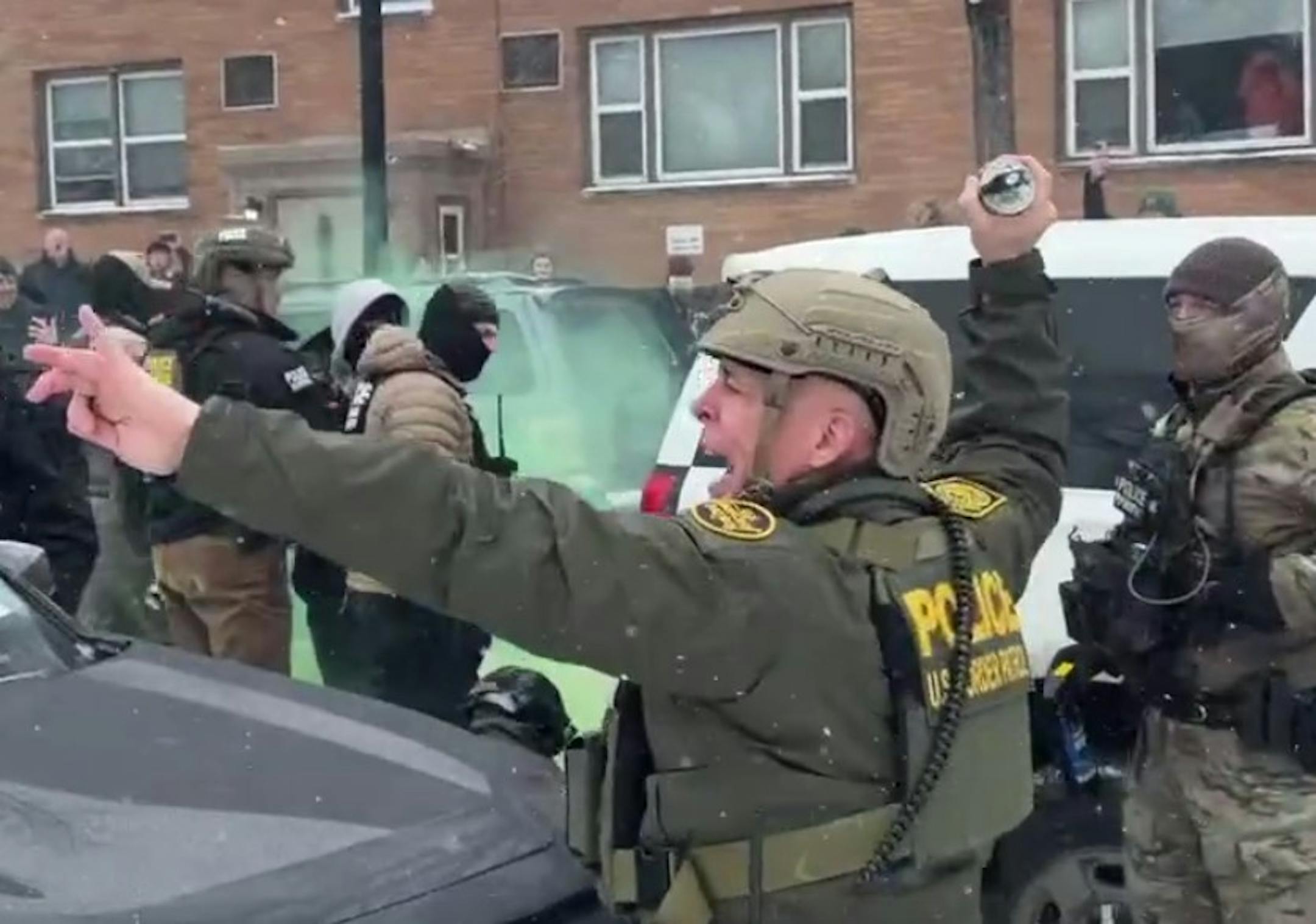
U.S. Border Patrol Cmdr. Greg Bovino hurls a canister on Jan. 21 at anti-ICE activists at Mueller Park in south Minneapolis. (Image from video provided by Ben Luhmann)

The Minnesota Star Tribune spoke with three experts who reviewed videos and photos of the grenades that Bovino threw on Jan. 21 and determined it was more than likely smoke, though many had thought it was a far more toxic gas, given Bovino’s warning.

The morning of Jan. 24, after agents killed 37-year-old Alex Pretti in south Minneapolis, agents and State Patrol officers deployed thick clouds of several types of tear gas on the crowd surrounding the scene. Residents found empty canisters afterward listing ingredients including capsaicin, the active component that gives chili peppers their heat.
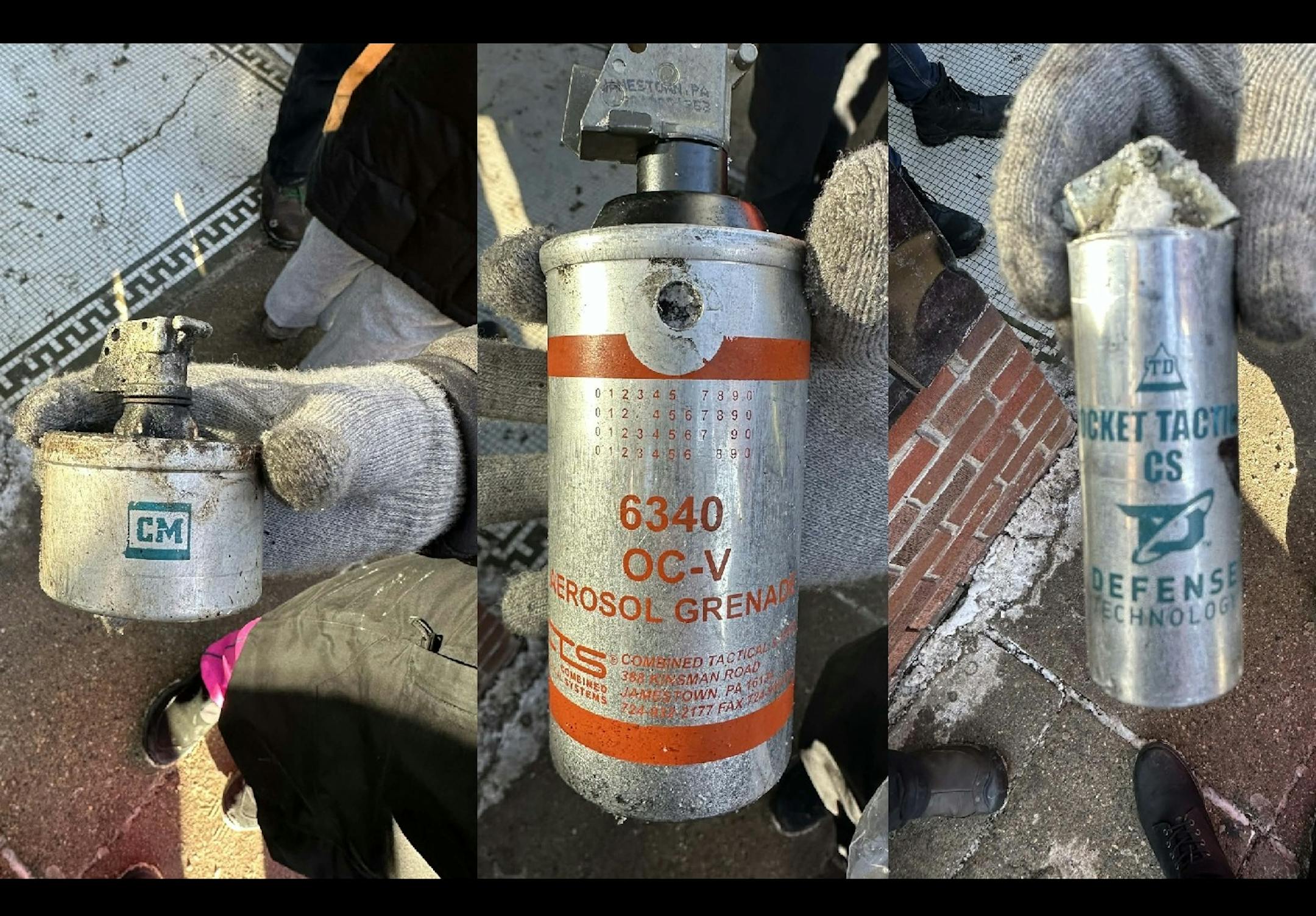
It is unclear whether the highly corrosive and carcinogenic hexachloroethane, or HC smoke, has been deployed in the immigration enforcement surge in Minnesota. It was used during the 2020 protests in Portland, Ore., following the Minneapolis police killing of George Floyd.
Defense Technology, a maker of chemical munitions, has many products with Proposition 65 warnings in California. The cautions say the products can expose people to lead salts, which can cause birth defects or reproductive harm, and methylene chloride (MC) and HC, both known to cause cancer.

“Whether it’s smoke or if it’s tear gas, whatever it is, each one of them has different toxic levels,” said Charlie Mesloh, a criminal justice professor at Northern Michigan University. “Smoke is actually at the very bottom of that scale. It would take a remarkable amount for it to even come close to being a problem.”

Mesloh, a former police officer, researched crowd-control munitions — grenades, flash-bangs, Tasers — for seven years before 2010 when funding was rescinded for such research. He said the munitions are unregulated, underexamined and there is no oversight or full understanding of what the munitions actually contain.

When it comes to their health impacts, it boils down to density, Mesloh said. If deployed outside, the health risks can be less severe but still pose a risk for those with asthma or other health conditions, he said.

“There’s not going to be a toxic level outside. You would have to have so many deployed at one time,” he said.

It’s a different story if the crowd-control munitions are released into an enclosed space.

“Where we get into the toxic part of it is indoors or in a car, or in a portable toilet,” Mesloh said. “You throw one in there, you could hit a toxic level pretty quick.”

A family in north Minneapolis was caught up in a violent clash between federal agents and protesters on Jan. 14 when, the parents said, chemical irritants filled their SUV after agents threw tear gas and flash-bangs beneath the vehicle. The parents said their children had to go to a hospital and their 6-month-old was unconscious and foaming at the mouth.

Tear gas and smoke bombs burn as federal agents moved to push protesters from the intersection of Lyndale Avenue N. and 25th Avenue in north Minneapolis on Jan. 14. Protesters converged on a few blocks after a federal agent shot a man that night. (Jeff Wheeler/The Minnesota Star Tribune)

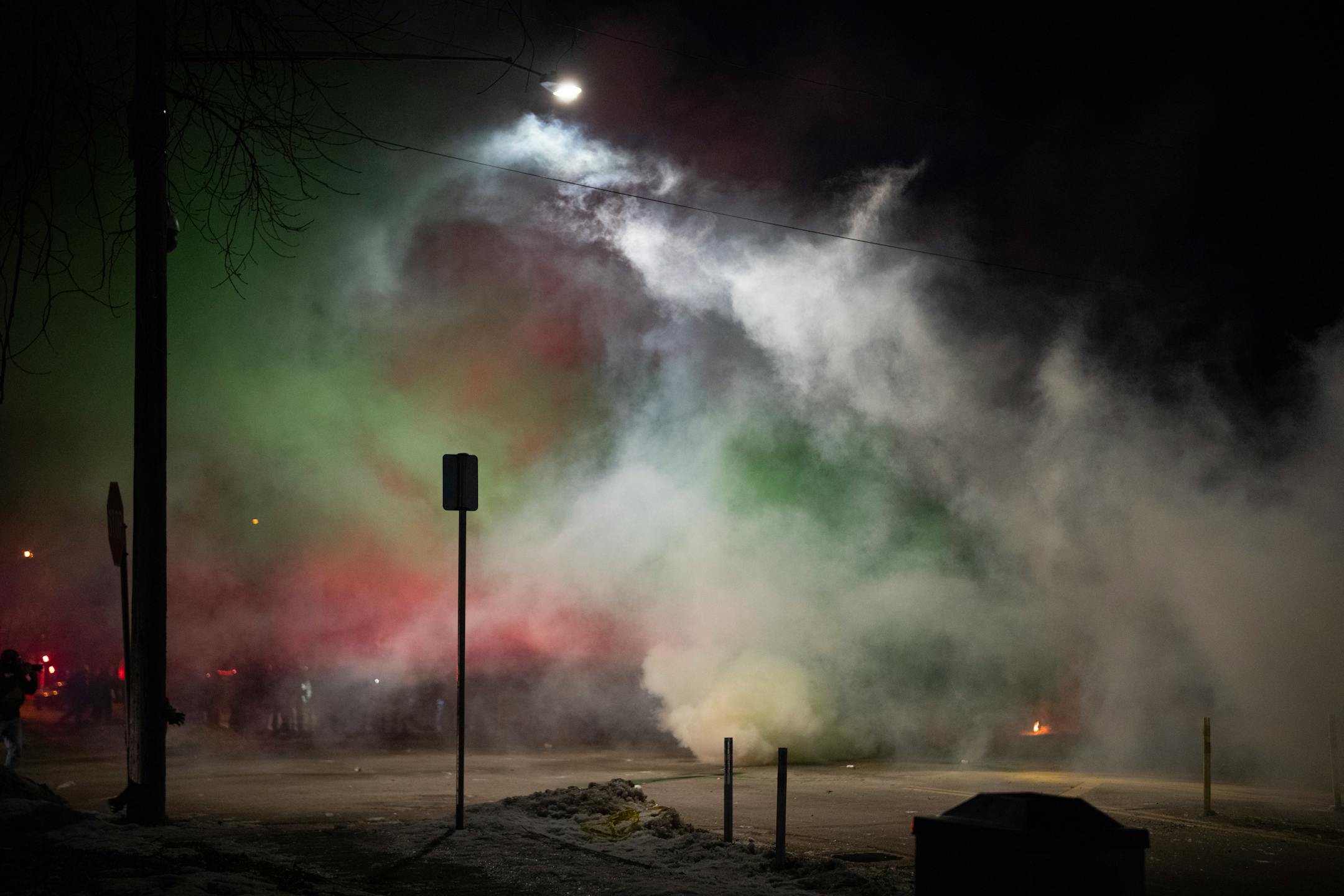
Similar green plumes filled the north Minneapolis neighborhood that night after a federal agent shot a man and protesters showed up in droves. It’s unclear if those plumes were smoke, toxic tear gas or a combination of the two.

Juniper Simonis, an environmental biologist based in Oregon who has studied the kinds of smoke grenades used in Portland, said HC gas is not green, but instead white or gray.

Tear gas is an umbrella term for various types of irritants. In order to identify HC tear gas, there are three characteristics, according to Simonis:

  • An intense orange-colored, metallic fire coming from the canister as it’s burning.
    • Fire that emits sparks and burns considerably hotter and longer than other grenades.
      • A white, gray or black smoke.

        Asha Hassan, a professor at the University of Minnesota School of Medicine who has studied the reproductive health impacts of tear gas, said it’s sometimes difficult to find out what is in each canister because the information is private for the companies that make them.

        “What could potentially be in one canister might be very different from another canister that’s being used by a different law enforcement agency,” Hassan said.

        There’s been little research on tear gas impacts in recent decades, but Hassan said short-term symptoms can include blurred vision, runny nose, chest tightness, nausea and vomiting.

        It can also cause long-term effects, including blindness, respiratory failure and, in some cases, death, Hassan said.

        In recent years, Hassan and others studied how tear gas affects women and found it can harm their reproductive health. She said there’s still a need to look into how breathing such chemicals uniquely affects children, who are still developing.

        Colored smoke, such as the green plumes, are typically only colorful due to a chemical that dyes the smoke and is not considered more dangerous.

        Mesloh said the military initially used green smoke to signal a safe place to land a helicopter. Red smoke would warn others to avoid the area.

        The use of the smoke has significantly changed with civil unrest, Mesloh said, as it’s now often used as a visual deterrent and warning sign.

        “When you start to see smoke grenades,” he said, “it is very possible that the next grenades are not going to be smoke, that the next ones are actually going to be a chemical irritant.”

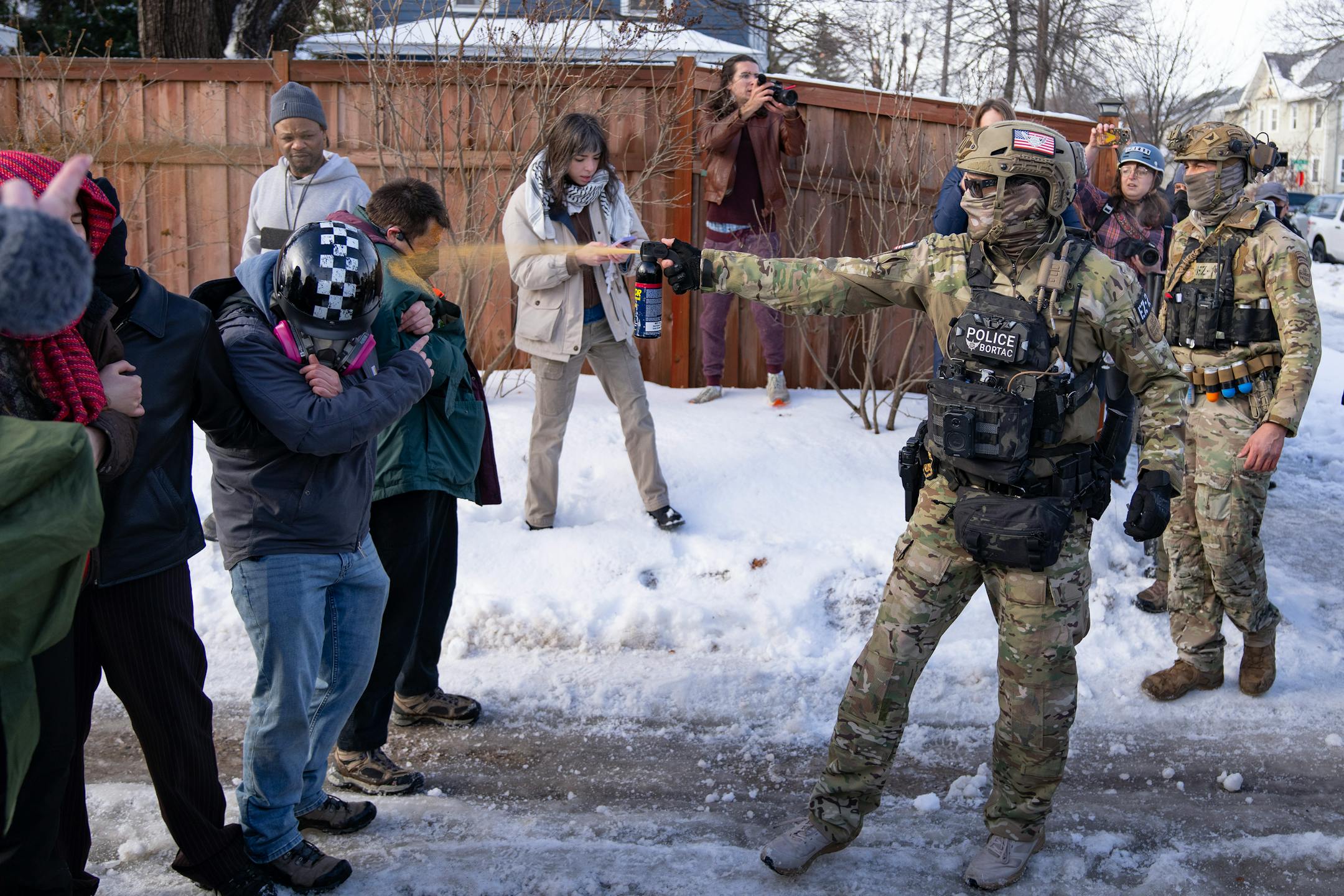
        A federal agent fires a chemical agent into the faces of bystanders attempting to block one of their vehicles from leaving the scene where Renee Good was shot and killed by a federal agent on Jan. 7. (Alex Kormann/The Minnesota Star Tribune)
        A bystander is helped Jan. 7 after being hit with pepper spray fired point-blank by a federal agent near the scene of Renee Good's shooting death earlier in the day. (Alex Kormann/The Minnesota Star Tribune)

        Treatment to irritant exposure

        Federal agents have been liberal in the use of sprays, flash-bangs and various types of grenades during Operation Metro Surge. A lawsuit filed by the ACLU of Minnesota seeks to rein in such tactics against citizens, including the use of chemical irritants.

        In many cases, residents have been outraged with the use of pepper spray at point-blank range.

        As the green smoke from Bovino’s munition drifted across a chaotic scene Jan. 21, Ben Luhmann, 17, yelled as he filmed protesters running away with coats pulled over their noses.

        Luhmann, who traveled from Illinois to Minnesota to document the immigration enforcement surge, said his hands were stinging from the different smoke bombs and pepper sprays deployed that day.

        His brother Sam Luhmann, 16, said, “Everything was burning, like, my eyes, my nose, my lungs were all just like, spicy, almost.

        “I was trying to breathe, and I just couldn’t,” he said. “I was starting to feel like I was maybe gonna black out, so I just had to kind of back away.”

        A protester walks away as smoke filled the air while federal officers moved to push protesters away from the scene where a federal agent shot a man on Jan. 14. (Jeff Wheeler/The Minnesota Star Tribune)

        The Centers for Disease Control and Prevention (CDC) says people exposed to chemical munitions should leave the area and get fresh air immediately.

        If munitions were released indoors, the CDC advises to get out of the building.

        The CDC recommends throwing away clothing exposed to chemical munitions and using caution when touching the clothing of others who were exposed.

        Wash skin with soap and water and rinse eyes with plain water.

        A significant risk with any type of grenade or flash-bang is heat. Masloh said they are pyrotechnics burning extremely hot — some 1,800 degrees. He said people should avoid picking them up or even kicking them.

        And because federal agents have been using chemical agents, he said people should assume that they will continue to be used.

        about the writers

        about the writers

        Kim Hyatt

        Reporter

        Kim Hyatt reports on North Central Minnesota. She previously covered Hennepin County courts.

        See Moreicon

        Louis Krauss

        Reporter

        Louis Krauss is a general assignment reporter for the Star Tribune.

        See Moreicon

        More from News & Politics

        See More
        card image
        Carlos Gonzalez/The Minnesota Star Tribune

        Minnesota officials asked a federal judge to rule immediately on the ICE operation after another fatal shooting in Minneapolis.

        card image