

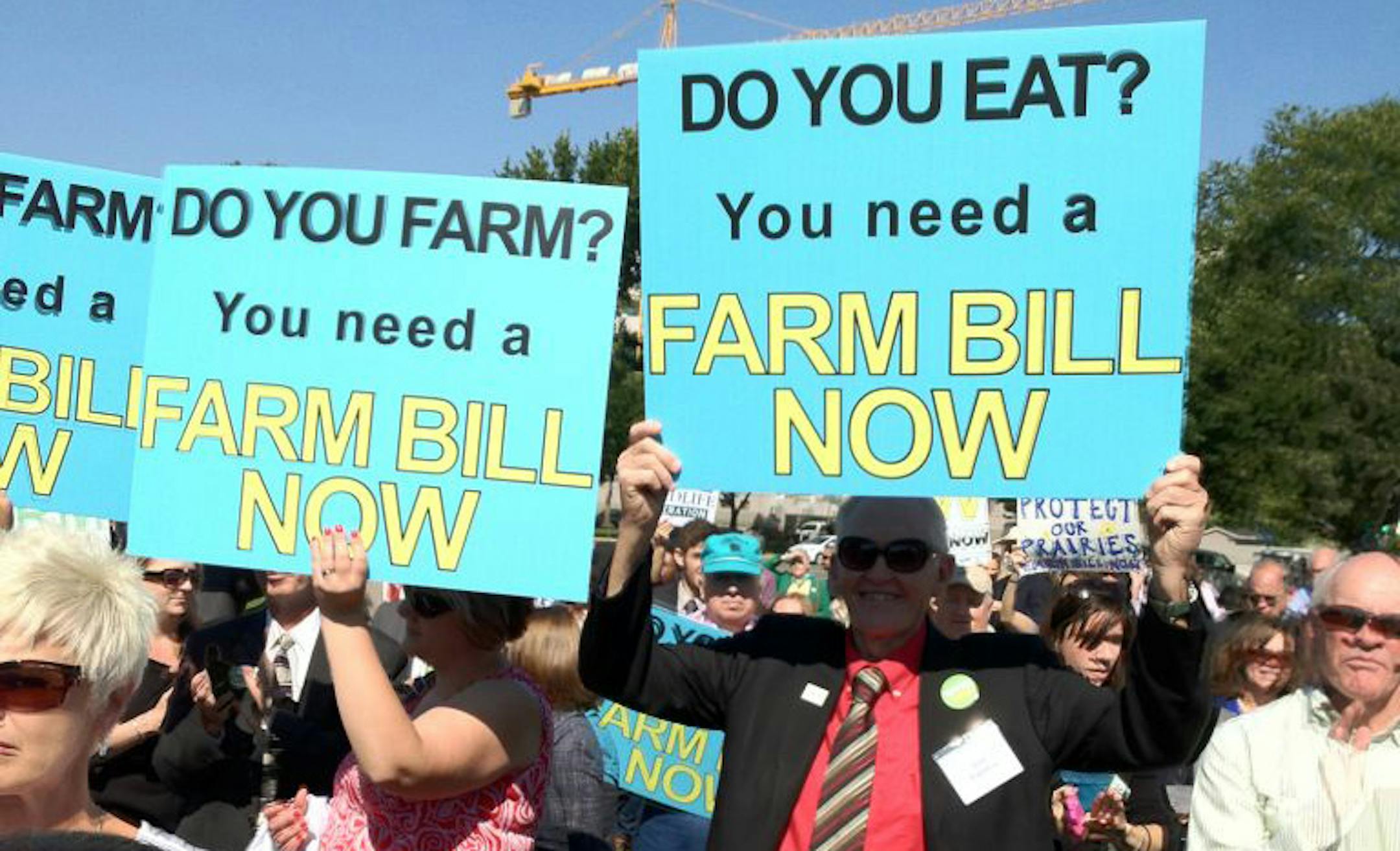
WASHINGTON - Minnesota farmer Dale Fladeboe hoisted a sign above his head that read, "Do you eat? You need a farm bill now."
Fladeboe was among hundreds of farmers from across the country who flew in to the nation's capital for a Wednesday rally aimed at accomplishing something that most political insiders believe is impossible: Getting the House of Representatives to pass a new five-year farm bill by the end of September, when the federal fiscal year ends.
"The farm bill has been passed by the Senate," said Fladeboe, who grows corn, soybeans, hay and alfalfa and raises cattle in Kandiyohi County, 100 miles west of Minneapolis. "It's being held up in the House because they want to cut it so much. ... I'm frustrated because of the inability of House members to cross [party] lines and see the importance of farmers."
Speakers at the rally, including U.S. Rep. Collin Peterson, D-Minn., echoed that sentiment. Peterson, the ranking minority member on the House Agriculture Committee and the author of much of the bipartisan farm bill that passed the committee, called on the crowd of several hundred to call their representatives and tell their friends to do the same. So far, Peterson said, there has been no groundswell of grass roots pressure on the House to act.
Peterson believes Republicans in charge of the House will pass a drought relief bill and extend the existing farm bill, waiting to see if their party will take the control of the White House and Senate in the November election. If that happens, he predicted that the Republicans will gut the farm bill passed by the Senate and a slightly different House version passed by the agriculture committee.
"There will be no good outcome from an extension [of the current farm bill]," he said.
In an interview, Peterson said the price the government must pay for milk will rise extensively on Jan. 1 without a new farm bill.
Also at risk, a series of Democratic and Republican House and Senate members told the rally, are programs that help farmers but also fund nutrition programs such as food stamps and land conservation that some House Republicans would like to cut.


