
Enemies become lovers! Strangers share a bed! Discover the tropes of romance.

In the month of love, Minnesota romance novelists share their favorite ways to connect sweethearts.

The Minnesota Star Tribune
January 29, 2026 at 12:00PM
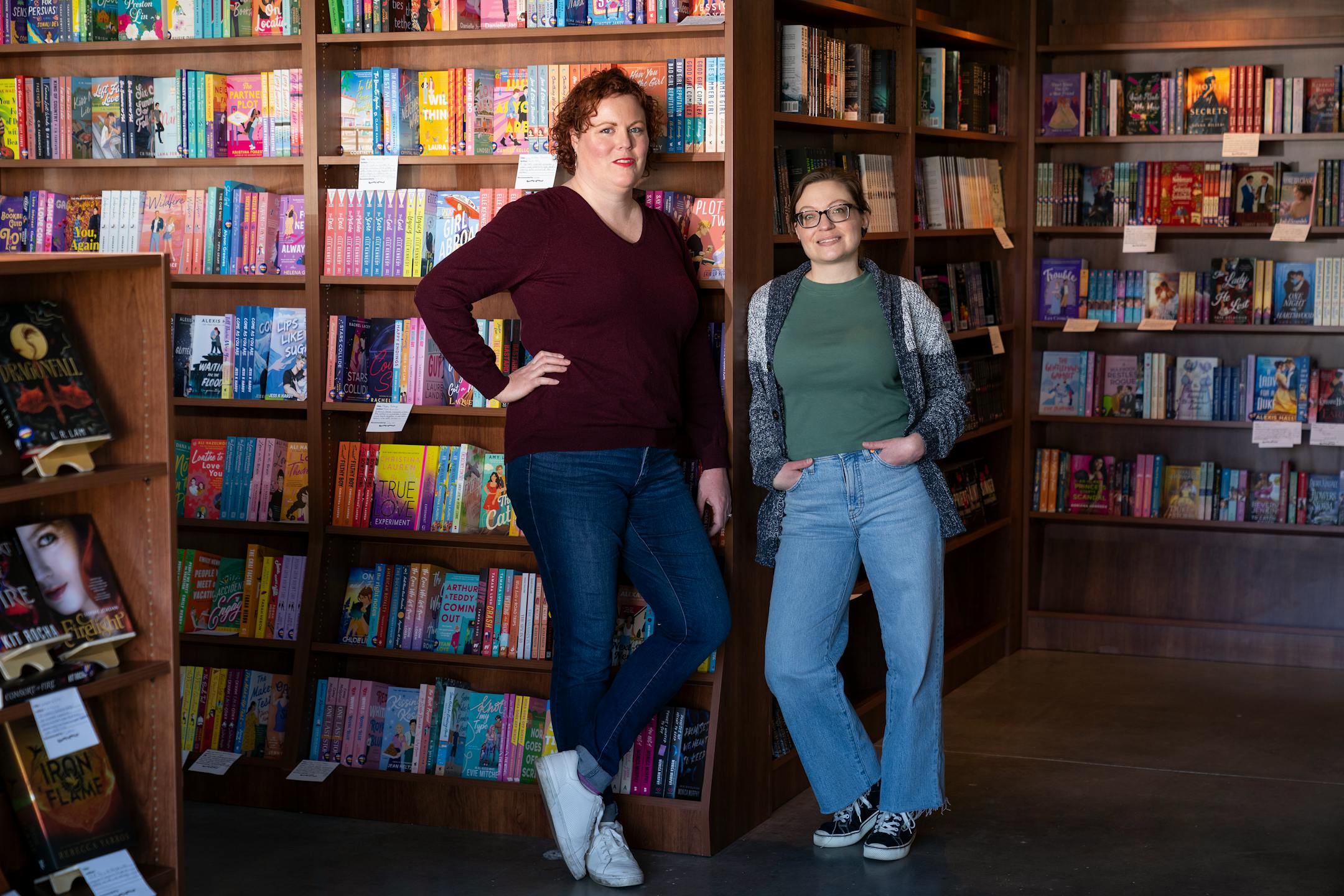
Lauren Richards, left, and Caitlin O'Neil, co-owners of romance bookstore Tropes & Trifles, inside their bookstore in Minneapolis. (Leila Navidi/The Minnesota Star Tribune)

Important Valentine’s Day update: Fake dating is out; second-chance romances are in.

That may or may not be true IRL but it’s definitely a thing in the world of romantic fiction, according to Lauren Richards, co-owner of Tropes & Trifles bookstore in south Minneapolis. “Fake dating,” meaning a character who pretends they’re wooing someone (as in Burnsville author Ellie Palmer’s “Four Weekends and a Funeral”) and “second-chance romance” (when a couple reunites, as in Hastings writer MaryJanice Davidson’s “Truth, Lies and Second Dates”) are both tropes, common plot devices that hook in romance fans.

“We’re coming off the end of the fake dating thing but it was really on the upswing for a while,” said Richards, who’s ahead of the curve because she reads many romances before they’re published. “Second-chance romances are becoming a lot more popular, although I will admit it’s a trope I do not love.”

Romantic fiction is the most popular genre of books, accounting for nearly $1.5 billion in sales annually. When Tropes & Trifles opened in 2024, it was one of nine romance bookstores in the country; now, there are more than 100 (including another in Austin, Minn.).

Tropes are so important to the genre that Richards and business partner Caitlin O’Neil named their store after them. So important that O’Neil says tropes are to romances as bricks are to buildings: “You might even call tropes the periodic table of romance. They’re fundamental to the genre. People who love romance always have their favorite tropes. They also have their least favorites, which causes some fun discussion.”

Hard to pick favorites

Davidson, who wrote her “Danger” trilogy specifically to have fun with tropes in the same way the movie “Shaun of the Dead” ribs zombie movie conventions, is so fond of tropes that she can’t name a favorite: “Just ask me to choose between my children. That would be easier.”

St. Paul writer Mary E. Roach has no hesitation when asked her favorite, which she used in last year’s “We Are the Match.”

“I love ‘enemies-to-lovers,’” said Roach, also a fan of “only one bed,” a relative of enemies-to-lovers in which two people are forced to share a bed because it’s the only option (Alfred Hitchcock’s ”The 39 Steps” is an example). “People talk about enemies-to-lovers romances but, a lot of times, it’s really that they just don’t like each other at first. They’re not enemies. I mean, if they’re not holding knives to each other’s throats, really, what’s the point?”

Richards also enjoys “enemies-to-lovers” and “only one bed,” especially if there’s a road trip involved: “With a road trip, you are guaranteed to get a forced-proximity situation.”

O’Neil is a fan of one of the basic building blocks of romance, “friends-to-lovers,” meaning a “When Harry Met Sally”-like tale of friendship blossoming into romance.

“My hot take is that friends-to-lovers is even higher stakes than enemies-to-lovers because if it all goes south, you’ve lost not only your lover but also your friend,” said O’Neil.

‘I hate amnesia’

Just as second-chance romance is on the rise, other tropes are waning, according to experts.

“I do not like a book with a surprise pregnancy,” said Richards. “And ‘secret baby.’ A lot of people hate that one: They hooked up or were together at some point, usually prior to the book’s beginning, and some years have gone by and all of a sudden he finds out he has a 6-year-old.”

Her business partner has a different take.

“I hate amnesia,” said O’Neal. “I have read good ‘secret baby’ books and surprise pregnancy books, although I would not call them my favorites. But I have not ready any good amnesia books.”

All of the romance buffs agree that the fun of tropes is messing with them.

“The joy of romance is we all know where we’re going to end up but we don’t know how, and what’s fun is playing with those tropes,” said Palmer, whose “Four Weekends” screwed around with “fake dating” by having the supposed date be deceased and whose “Anywhere With You,” about a wedding in the Boundary Waters Canoe Area Wilderness, also took a trope detour.

“There is the trope of you’re going to a wedding to ruin it. But it’s a little different than you’d expect,” said Palmer, avoiding spoilers. “You want to make sure you’re giving the reader what they came for, the promise of the premise, but it’s also fun to surprise them.”

Some surprises involve what could be called sub-tropes or character tropes. Writer Andie J. Christopher invented the concept of “stern brunch daddy,” which Richards describes as “a hero who is grumpy and crusty on the outside and also kind of stern in the bedroom but secretly wants to go to brunch with you and eat the fanciest waffles.”

There’s also “black cat/golden retriever,” in which one half of a couple is standoffish and the other is a lovebug, also sometimes called “grumpy/sunshine.”

The “only one bed” trope is both celebrated and lampooned in “The Lust Crusade,” which Richards says takes the concept several steps further by spotlighting a series of beds, each of them smaller and more claustrophobic than the last.

“Only one bed” is a classic but new tropes pop up all the time, such as romances inspired by reality TV. “At the Bride Hunt Ball” is essentially “The Bachelor,” with multiple women vying for one stud, except it’s set in Jane Austen’s pre-television Regency era.

Tropes are an integral part of marketing books, which often are preceded by news releases that list the tropes included. They’re a handy hook for readers because they promise familiarity and surprises, because there are so many ways to use tropes.

Said Richards, “A really good romance author is able to show you there’s no way the story could have gone except the way it did.”

about the writer

about the writer

Chris Hewitt

Critic / Editor

Interim books editor Chris Hewitt previously worked at the Pioneer Press in St. Paul, where he wrote about movies and theater.

See Moreicon

More from Books

See More
card image
Leila Navidi/The Minnesota Star Tribune

In the month of love, Minnesota romance novelists share their favorite ways to connect sweethearts.

photo of author Patmeena Sabit