

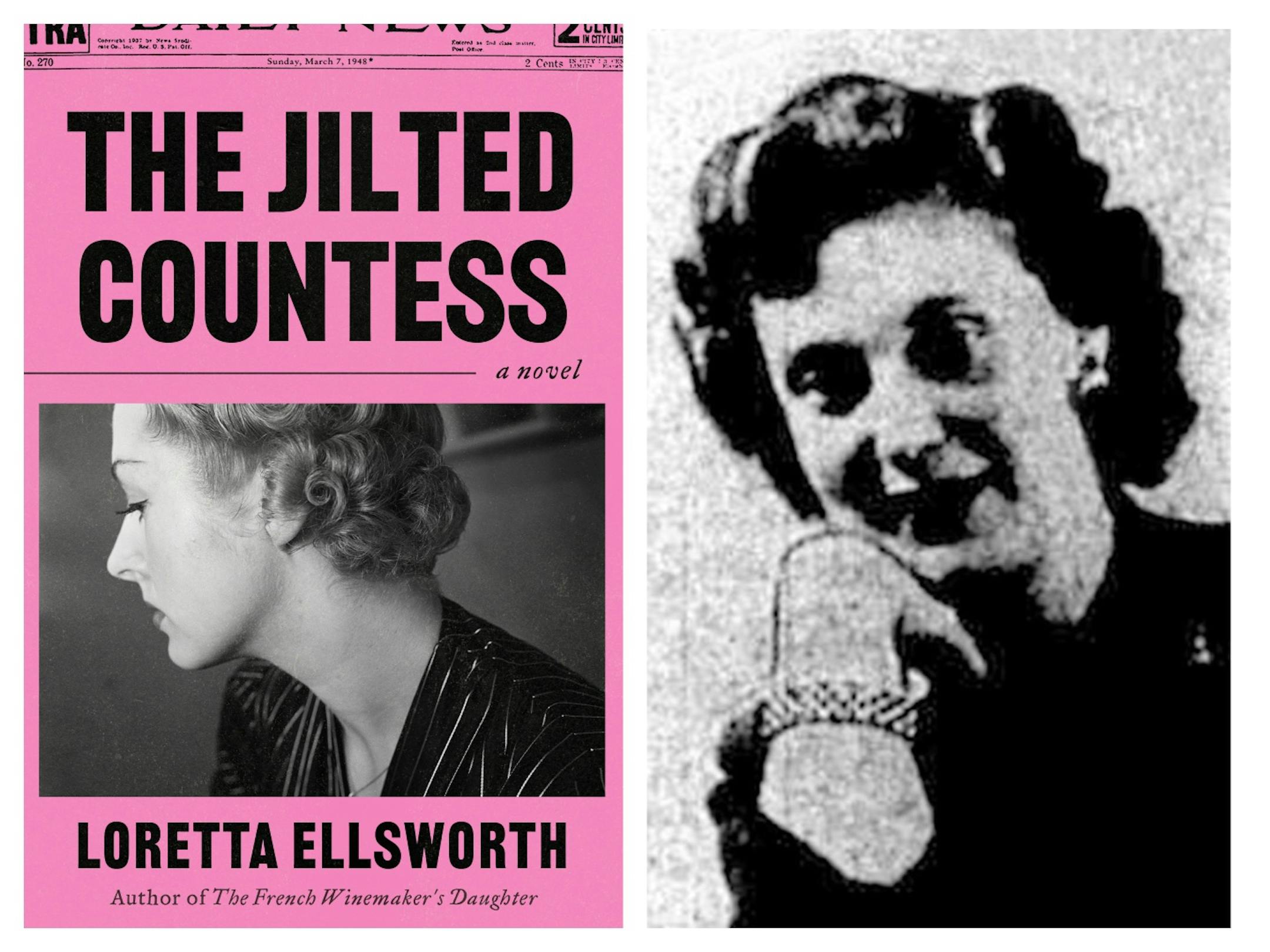
Loretta Ellsworth needs to be careful when she picks up the Minnesota Star Tribune because, when she does, there’s a decent chance what she reads will turn into a novel.
It’s happened to her twice already, with the latest being “The Jilted Countess,” inspired by the true story of a Hungarian who came to Minnesota in 1948 to marry the G.I. who had proposed to her overseas, only to learn he was already married. Needing to be wed before visa issues forced her to return to Europe, she met with Minneapolis Star writer Cedric Adams, who published a column that earned her 1,789 proposals, one of which she accepted before vanishing from public life.
Adams wrote several columns about her in the ‘40s, respecting her wishes not to use her real name or to follow up once she was married and had a baby. Ten years ago, Curt Brown wrote a column for this paper that revived the countess’ story, hoping she or someone who knew her (she’d have been in her 90s) would come forward.
No one did. But...
“A friend of mine sent me that column and said, ‘You should write this story,’” said Ellsworth, 71. The friend was Janet Graber, who is in Ellsworth’s writers’ group and who figured the historical romance would appeal to the Lakeville novelist, whose previous books include “The Winemaker’s Daughter,” about two women who are joined by the discovery of a rare bottle of wine that was hidden away during World War II.
So Ellsworth, whose 2007 “The Shrouding Woman” was also inspired by a Star Tribune article, began making like a detective.

She pored over microfiche at the Minnesota History Center, hoping to find countess details beyond what was in Adams’ handful of columns. No dice. She checked Hennepin County marriage records during the two-week period when the countess needed to marry a G. I. in order to stay in the U.S. under the Alien Fiancés Act of 1946. Nothing. She looked for Hungarian names in the public record in that time period. Nope. She reached out to the late Adams’ relatives to see if he passed along any secrets. Also a dead end.
“I never found anything, which is odd,” said Ellsworth, over coffee in Edina. “But the newspaper article gave me the sense of her story. I had the first half down, pretty much, knowing what happened. And then it was using my imagination to create the story after she got married: Would she ever encounter her fiancé again? How would she adjust to life in a small Minnesota town, being a Hungarian countess? Did she regret moving here? What was it like being married to someone she didn’t really know?”


