Electric vehicle sales leap with tax credit about to expire, but range still a worry in Minnesota

The state hosts about 1,000 public charging stations. Thousands more are needed for EVs to go mainstream, transportation officials said.

September 6, 2025 at 10:00AM
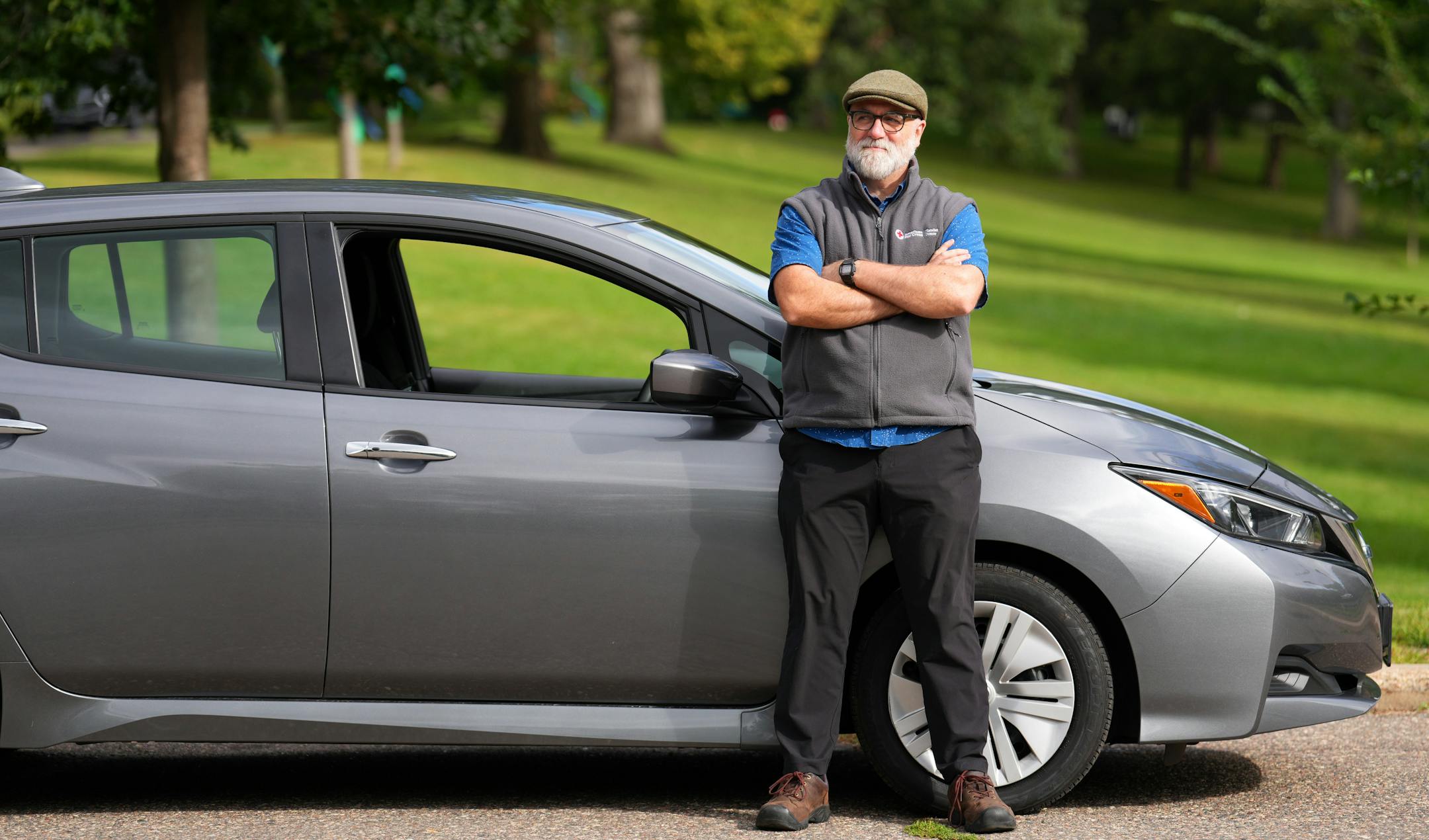
Leaf McGregor in south Minneapolis on Friday with his 2022 Nissan Leaf, which he bought the previous week. A tax credit saved him $4,000 on the $18,000 EV cost. (Anthony Souffle/The Minnesota Star Tribune)

Leaf McGregor has wanted an electric vehicle for years. With the federal tax credit set to expire at the end of the month, he decided now was the time to act.

“We got a 2022 Nissan Leaf,” said McGregor, who signed the papers at a dealership last week. “One of the few moments of pause was, ‘Do I really want a car with the same name as me?’”

More persuasive to McGregor, a 50-year-old attorney who lives in Minneapolis, was nabbing the tax credit. It saved him $4,000 on the cost of an $18,000 EV.

Electric vehicles sales are surging nationwide as buyers rush to dealerships to take advantage of the federal subsidy, which ends Oct. 1. That deadline helped drive EV sales to a record high in August, according to Cox Automotive, with 2025 expected to be a record year.

Pavel Ihnatovich, who owns GS Motors in Hopkins, said he sold nearly 30 EVs last month, roughly double his normal volume.

But Minnesota’s boost in EV sales has been relatively modest compared to states like Colorado, said Minnesota Automobile Dealers Association President Scott Lambert.

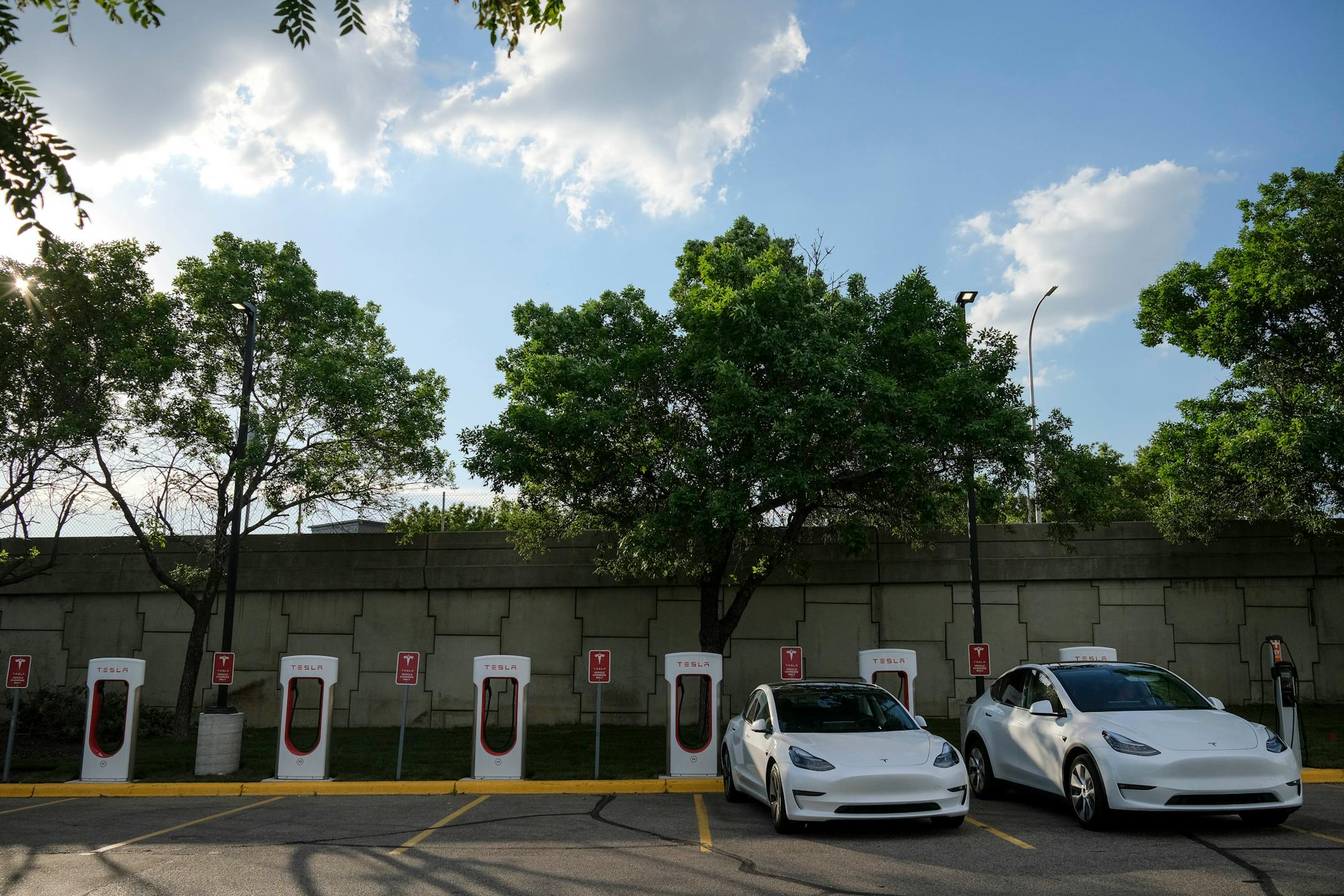
Range anxiety — the fear of running out of power while driving an EV — continues to dissuade buyers in Minnesota because of the lack of public chargers across the state, Lambert said. “Outside of your garage, assuming you have a garage, infrastructure in Minnesota is very weak, close to nonexistent,” he said.

As of last month, Minnesota had about 1,000 public charging stations, translating to nearly 2,800 charging ports, according to Department of Energy data. Lambert said that number is far short of what’s needed for widespread adoption of EVs, which last year made up 7.4% of all car and truck sales in the state.
McGregor, who can charge in his garage and owns a second car that uses gasoline, said he’s not sure he and his wife would have bought an EV if they didn’t have a home charger.

“That would be a struggle, I think, even with a second car,” he said. “It seems like it would be hard, especially in some areas of the country, to feel comfortable.”

State officials seem to agree. A July report from the Minnesota Department of Transportation noted that about 50,000 new public charging ports would be required to support the state’s goal of putting more than 700,000 EVs on the road by 2030, or about 20% of the total registered vehicles. That means adding several thousand new charging stations across Minnesota in five years.

State agencies, including MnDOT and the Minnesota Pollution Control Agency, are in the process of building at least 37 more charging stations. Several local governments and private companies have also committed to adding public-facing charging stations.

Minneapolis and St. Paul, in partnership with Xcel Energy, are pursuing 70 new charging stations. And a coalition of the nation’s largest automakers have pledged to build 30,000 charging stations across the nation by 2030 — though it’s unclear how many will be in Minnesota.

“We clearly are far behind. And the current policy landscape, especially if we look at the federal policy, also doesn’t make a lot of people in the industry very optimistic,” said Moaz Mian, a senior EV policy specialist with the clean energy advocacy group Drive Electric Minnesota.

Earlier this year, the Trump administration froze roughly $44 million in federal grants awarded to Minnesota to build charging stations along interstates 90, 94 and 35. The administration has since released new guidance, allowing states to reapply for the money so long as they remove any provisions related to environmental justice, which was a priority for the Biden administration.

MnDOT has already received $24 million from the federal government, which it is using to build 24 fast-charging stations. The agency is also working on an application under the new guidance to obtain the remaining funds that were frozen, as well as pursuing other potential funding sources, an agency spokesperson said.

Even as EV buyers rush to take advantage of a soon-to-expire tax credit, many are deterred by the lack of public EV charging stations, like this one in St. Louis Park. (Aaron Lavinsky/The Minnesota Star Tribune)

“The public and private sector will have to come together to meet our EV goals,” Mian said. “I don’t think we can expect the federal or the state government to cover the entire shortfall of these programs.”

Since many EV owners will charge their vehicles at home, it’s unlikely that the state will need as many as 50,000 public charging ports for Minnesota drivers to feel comfortable going electric, said Kyle Shelton, director of the University of Minnesota Center for Transportation Studies.

State records show that there are a little more than 2,000 gas stations across the state. Shelton said that could be interpreted as anywhere from 10,000 to 20,000 gas pumps, which can be seen as the equivalent of a charging port.

“If people could have a gas pump at their home and didn’t need to go around, people would probably do that,” he said. “There’s already the backbone of a system, especially for metro residents, for 95 percent of the trips you would take around the metro.”

For longer trips, however, range anxiety remains. Depending on the trim, a 2022 Nissan Leaf has a range of 149 to 226 miles on a full charge.

McGregor, at least, isn’t too worried about the road trips that he’s planning with his family of four.

“Duluth becomes easy enough,” he said. “But if we were going to do Chicago or something like that, we would need [more] opportunities to charge along the way.”

about the writers

about the writers

Kristoffer Tigue

Reporter

Kristoffer Tigue is a reporter for the Minnesota Star Tribune.

See Moreicon

Bill Lukitsch

Reporter

Bill Lukitsch is a business reporter for the Star Tribune.

See Moreicon

More from Environment

See More
Rising above the treeline (Top of this photo), on the shore of Birch Lake, the Twin Metals Copper Nickel Mine Plant site and Tailings Management site is part of the proposed plan. ] In theory, the copper-nickel mine Twin Metals wants to build in the headwaters of the Boundary Waters Canoe Area Wilderness is a zero-discharge mine — a closed loop that will endlessly recycle millions of gallons of water, including rainwater and the polluted process water it uses to extract ore and
Brian Peterson/The Minnesota Star Tribune

The copper-nickel mine is controversial for its proximity to the Boundary Waters Canoe Area Wilderness, and the Biden Administration had canceled its leases.

card image
card image